Pain & Assessment
Dit Da (Trauma) TCM treatment
Dit da (trauma) is a common musculoskeletal issue. Traditional Chinese Medicine utilizes topical herbal treatment and other external therapies to assist patients with bruise reduction and gradually restore daily mobility. Harmonia TCM Clinic in Kwun Tong offers detailed assessments and personalized care plans.
Quick answer: Dit da (trauma) typically involves acute or chronic strain of muscles and bones. Based on the injured area and individual constitution, TCM practitioners may apply topical herbal treatment to facilitate bruise reduction. If you experience severe pain or suspect a fracture, please seek immediate medical assessment first.
View pricesContact Clinic for Inquiries
CLEAR PRICES
Interested in a treatment? You are always welcome to ask.
We clearly list our current single, trial and package prices so you can explore at your own pace. You are always welcome to message us on WhatsApp about any service, timing or arrangement.
| Category and service | Content / terms | Public price (HK$) | Booking note | Enquire |
|---|---|---|---|---|
| Hair & scalp | Scalp health and hair-loss support | AI scalp analysis, deep follicle cleansing and oil-control support | Trial offerPackageTrial 380; 6 sessions 3,480; 12 sessions 5,760; 20 sessions 8,600; 30 sessions 11,400 | Average per session for 6/12/20/30: 580/480/430/380 | Ask on WhatsApp |
| Hair & scalp | Hair acupuncture with herbal medicine | Scalp acupuncture with 3 days of decoction-free herbal medicine | Single visitPackageSingle 580; 6 sessions 3,180; 12 sessions 5,760; 20 sessions 8,600; 30 sessions 11,400 | Average per session for 6/12/20/30: 530/480/430/380 | Ask on WhatsApp |
| Hair & scalp | Integrated hair support programme | Acupuncture, herbal medicine and follicle activation; packages include shampoo and serum | Single visitPackageSingle 1,260; 8 sessions 8,640; 16 sessions 15,680; 20 sessions 18,600; 30 sessions 26,400 | Average per session for 8/16/20/30: 1,080/980/930/880 | Ask on WhatsApp |
| Weight management | Full-body acupoint embedding | Full-body acupoint embedding; packages include proportionate days of herbal support | Single visitPackageSingle 980; 10 sessions 7,800; 20 sessions 14,600; 30 sessions 20,400 | Average per session for 10/20/30: 780/730/680 | Ask on WhatsApp |
| Facial acupuncture | Brightening V-face (Essential) | Facial acupuncture, meridian support and swelling management | Trial offerPackageTrial 480; 10 sessions 5,200; 20 sessions 9,600; 30 sessions 13,500 | Average per session for 10/20/30: 520/480/450 | Ask on WhatsApp |
| Facial acupuncture | Firming and refining (Advanced) | Enhanced facial acupuncture for firmness and fine-line concerns with a moisturising mask serum | Trial offerPackageTrial 780; 10 sessions 9,000; 20 sessions 16,600; 30 sessions 23,400 | Average per session for 10/20/30: 900/830/780 | Ask on WhatsApp |
| Pain care | Extracorporeal shockwave therapy | Deep inflammation support and fascial relaxation | Prince Edward: 250 per area; Kwun Tong: 250 for 1 area, 450 for 2, 600 for 3 | Clinic-specific pricing; confirm location before booking | Ask on WhatsApp |
| Pain care | Manual therapy | TCM bone-injury assessment, manual alignment and tui na techniques | Single visitSingle 580 | Suitability is confirmed after assessment | Ask on WhatsApp |
| Pain care | Acupuncture with manual therapy | Acupuncture with manual structural support | Single visitSingle 680 | Suitability is confirmed after assessment | Ask on WhatsApp |
| TCM regulation | Acupuncture with herbal medicine | TCM consultation, whole-body acupuncture and 3 days of decoction-free herbal medicine granules | Single visitSingle 580 | Confirm clinician availability and service arrangement when booking | Ask on WhatsApp |
TCM Perspective and Assessment of Dit Da (Trauma)
Dit da (trauma) is very common in daily life, often resulting from sports injuries, accidental falls, or prolonged poor posture. In Traditional Chinese Medicine theory, such injuries frequently lead to poor circulation of Qi and blood in the localized area, creating a condition where "blockage causes pain." Therefore, a TCM assessment focuses not only on the specific injured site but also considers the overall state of Qi and blood, as well as individual constitutional differences.
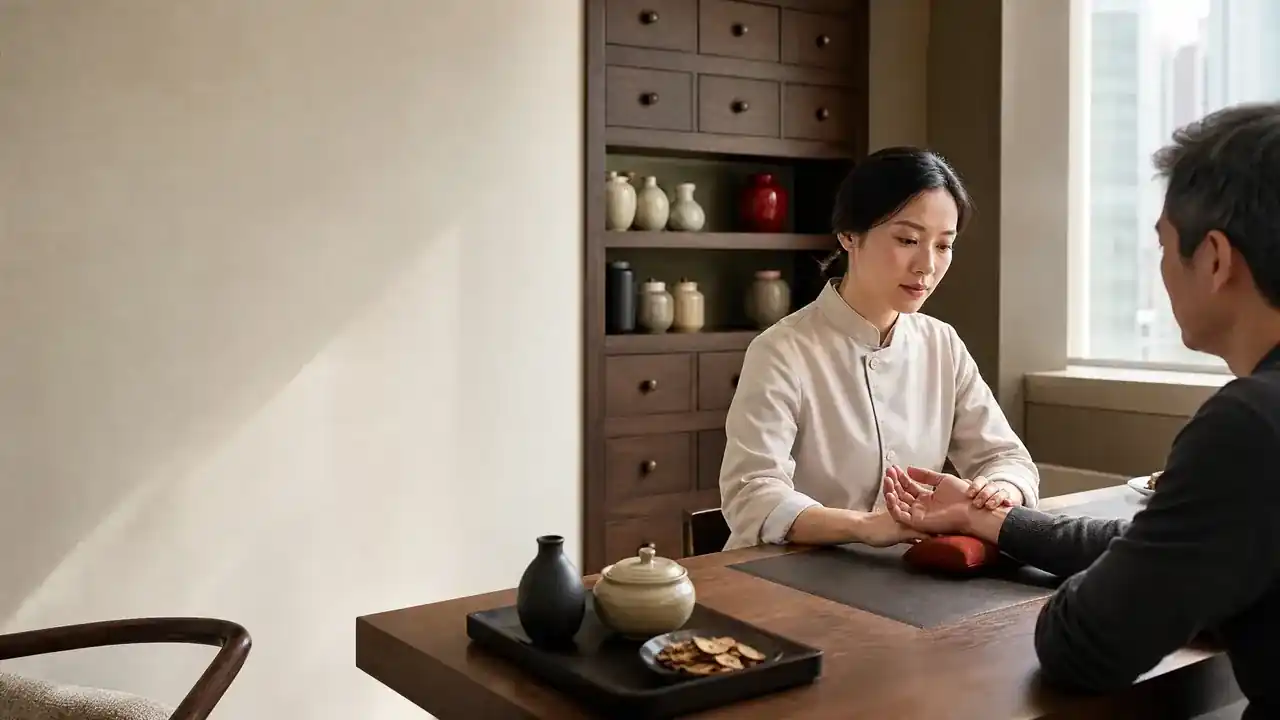
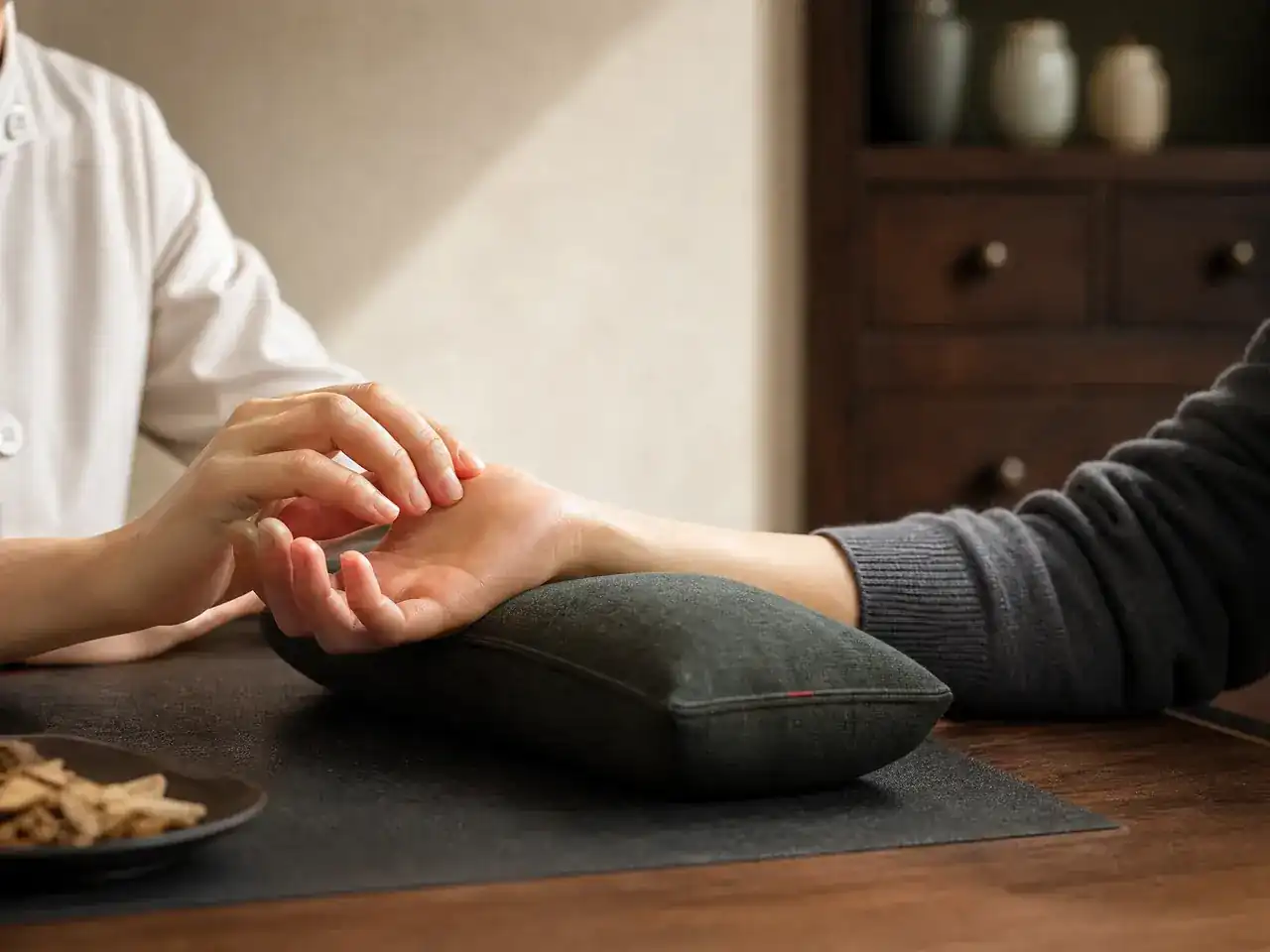
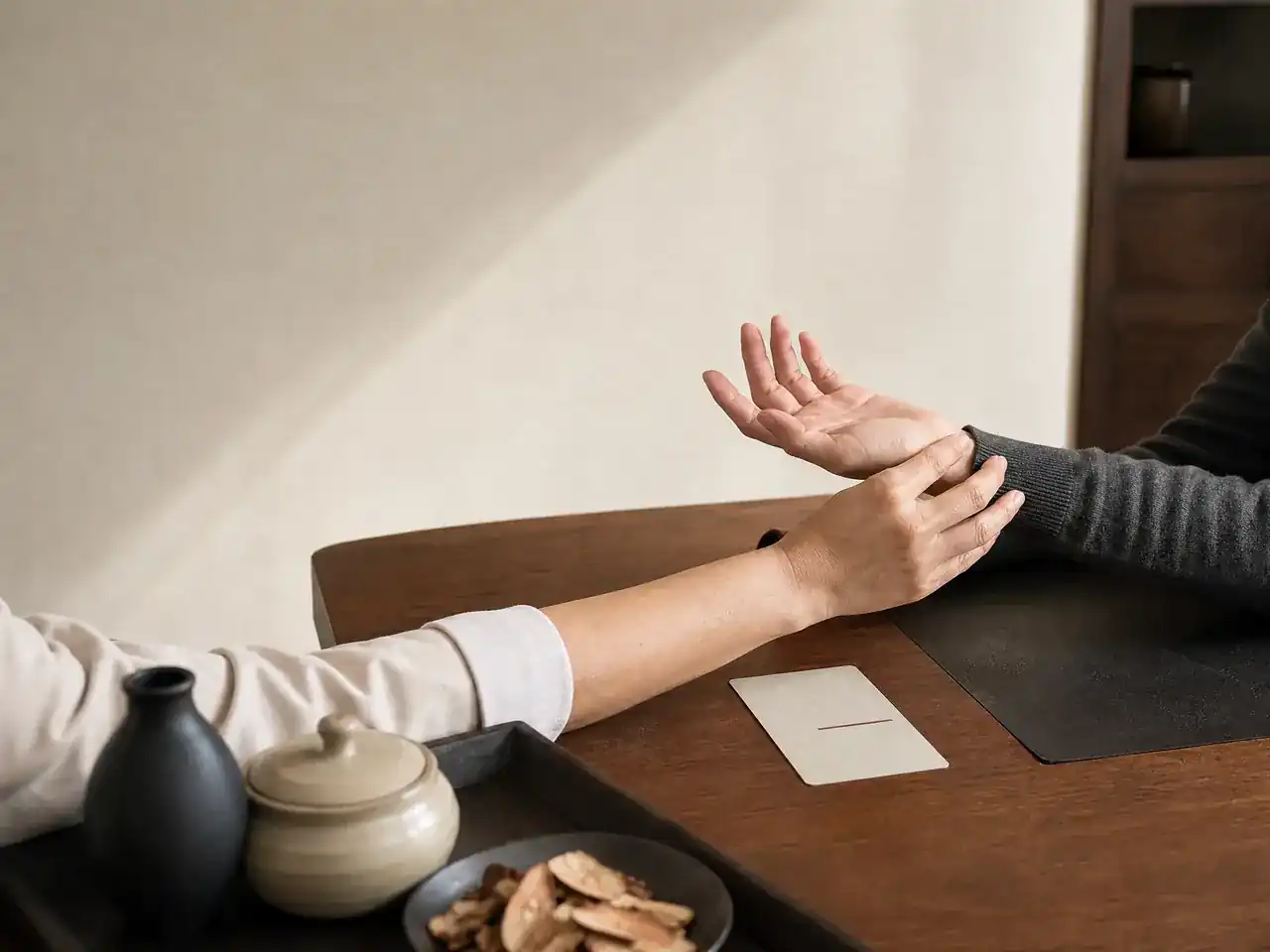
When a patient seeks consultation for dit da (trauma), the TCM practitioner will conduct a detailed inquiry and palpation to understand how the injury occurred, the nature of the pain, and the extent of mobility restriction. By observing the localized redness, swelling, heat, and pain, the practitioner can make an initial judgment about the depth and nature of the injury, thereby formulating an appropriate care plan. This comprehensive assessment helps address the issue in a targeted manner, rather than merely alleviating superficial discomfort.
Application of Topical Herbal Treatment and Bruise Reduction
In managing dit da (trauma), topical herbal treatment is one of the commonly used external therapies in TCM. Depending on the different stages of the injury, the practitioner will select herbs with varying properties. For instance, during the acute stage, there may be obvious localized redness, swelling, heat, and pain; at this time, herbs that clear heat, cool the blood, reduce swelling, and relieve pain are often chosen. In the chronic or recovery stage, the focus may shift towards formulas that warm the meridians, unblock collaterals, invigorate blood, and resolve stasis.
The purpose of topical herbal treatment is to act directly on the affected area through skin absorption, assisting in improving localized microcirculation and promoting bruise reduction. However, every patient's skin sensitivity and reaction to medications are different. Therefore, when using topical herbal treatments, they must be prepared and guided by a registered TCM practitioner based on the specific situation to ensure safety and appropriateness.
Different Stages of Dit Da (Trauma) and Care Priorities
The recovery process of dit da (trauma) can generally be divided into the acute stage, the alleviation stage, and the recovery stage. In the acute stage, the primary task is to control swelling and pain, preventing further tissue damage. At this time, patients should minimize movement of the affected area and rest appropriately according to the practitioner's advice.
Entering the alleviation stage, the localized redness, swelling, heat, and pain gradually decrease. The care priority then shifts to promoting bruise reduction and tissue repair. The practitioner may suggest light activities to maintain joint flexibility. In the recovery stage, the focus is on functional reconstruction and strengthening. Through appropriate exercises and continuous TCM conditioning, patients are helped to gradually regain their daily mobility.
Comparison of Dit Da (Trauma) Management Methods
When facing dit da (trauma), patients often consider different management approaches. The following table summarizes common management methods and their characteristics, helping patients better understand the applicable situations and precautions for each option. Please note that this is intended as general guidance, and the actual management plan should be determined after assessment by healthcare professionals.
| Management Method | Primary Function | Applicable Stage | Precautions |
|---|---|---|---|
| TCM Topical Herbal Treatment | Assists in bruise reduction, soothes localized discomfort | Acute to recovery stages | Must be prepared by a TCM practitioner; watch for skin allergic reactions |
| Acupuncture | Unblocks meridians, harmonizes Qi and blood | Alleviation to recovery stages | Must be performed by a registered TCM practitioner; some may feel slight soreness |
| Tui Na (Massage) | Relaxes muscles, improves joint mobility | Alleviation to recovery stages | Should be avoided during the acute stage or if a fracture is suspected |
| Conventional Emergency Care | Rules out fractures, manages severe trauma | Acute stage (especially for severe injuries) | Seek emergency services immediately if red flag symptoms appear |
Service Arrangements and Limitations at Kwun Tong TCM Clinic
Harmonia TCM's only physical clinic is located in Kwun Tong, and we are committed to providing professional TCM services to residents in this and neighboring districts. This information is provided to help you understand the topic and prepare questions for an assessment. However, If you are considering care, we can first discuss what may suit you and how an appointment can be arranged.
We understand that some patients may find it difficult to visit the clinic due to mobility issues. In such cases, we recommend that patients or their families contact the clinic first to discuss possible care arrangements. Please note that this page serves only as a reference for clinic visits or home visit coverage; it does not imply that we have branches in other districts, nor does it pretend that all services can be booked immediately.
Daily Care and Prevention of Re-injury
In addition to seeking professional TCM assistance, patients should also pay attention to the care of the affected area in their daily lives. Maintaining good posture, avoiding overexertion, and warming up adequately before exercise are all important measures to prevent dit da (trauma). If the injured area tends to feel sore during weather changes, keep it warm and avoid exposure to cold.
Furthermore, a balanced diet and sufficient rest also contribute to the body's self-repair. During the recovery period, patients should gradually increase their activity levels, avoiding rushing, which could lead to re-injury. If any abnormal situations arise during the recovery process, they should be reported to the practitioner promptly so that the care plan can be adjusted.
Frequently asked questions
Should I apply a hot or cold compress immediately after a dit da (trauma) injury?
In the acute stage of dit da (trauma) (usually within the first 24 to 48 hours after injury), there is often localized redness, swelling, heat, and pain. At this time, a cold compress is generally recommended to help constrict blood vessels and reduce swelling and pain. Once the acute stage has passed and the alleviation stage begins, a hot compress may be considered to promote localized blood circulation. However, the specific situation should be determined after assessment by healthcare professionals.
How long should the topical herbal treatment be applied?
The duration for applying topical herbal treatment depends on the properties of the medication and the patient's skin condition. Generally, each application may last from a few hours to half a day. If you experience severe itching, burning, or a rash during application, remove the medication immediately, wash the area, and consult your TCM practitioner.
Can I exercise during the dit da (trauma) recovery period?
During the acute stage, you should rest the injured area as much as possible and avoid exercises that would increase the burden. After entering the alleviation and recovery stages, you can engage in light, pain-free activities under the practitioner's guidance to maintain joint flexibility and muscle strength. Do not force strenuous exercise to avoid secondary injury.
How long does it take to recover with TCM management for dit da (trauma)?
Recovery time varies from person to person, depending on the severity of the injury, the patient's age, constitution, and daily care. A mild sprain may gradually improve within a few weeks, while a more severe injury may take several months. The TCM practitioner will provide reasonable expectations and a follow-up plan based on your specific situation.
Can I still see a TCM practitioner if I suspect a fracture?
If a fracture is suspected, the first step is to visit an emergency room or a Western medical clinic for imaging tests like X-rays to confirm the bone's condition and receive necessary fixation or surgical treatment. Once the fracture is stable, you may consider seeking TCM adjunctive care to help improve localized Qi and blood circulation and promote overall recovery.
Does Harmonia TCM Clinic in Kwun Tong provide home visit dit da services?
Harmonia TCM's only physical clinic is located in Kwun Tong. Arrangements for home visits depend on the patient's specific situation, the clinic's staffing, and the coverage area. Please contact our clinic directly to confirm whether suitable clinic visit or home care arrangements can be provided for you.
Related topics
Sources
Learn More About Dit Da (Trauma) Assessment and Care
If you are troubled by dit da (trauma), please feel free to contact us. Our registered TCM practitioners will conduct a detailed assessment and discuss suitable management plans with you. Please note that actual service arrangements require confirmation by the clinic.