Pain & Assessment
Pelvic Tilt & Alignment
Pelvic tilt can lead to lower back pain and affect your overall posture. At Harmonia TCM, we evaluate your pelvic alignment from a Traditional Chinese Medicine perspective, offering targeted posture alignment and care plans to help restore your body's balance.
Quick answer: Pelvic tilt refers to the deviation of the pelvis from its neutral position, commonly presenting as anterior, posterior, or lateral tilt. This condition can lead to lower back pain, muscle tightness, and joint stress. Through comprehensive TCM assessment, combined with acupuncture, Tui Na, and posture alignment advice, we aim to relieve local discomfort and promote structural and energetic balance.
CLEAR PRICES
Interested in a treatment? You are always welcome to ask.
We clearly list our current single, trial and package prices so you can explore at your own pace. You are always welcome to message us on WhatsApp about any service, timing or arrangement.
| Category and service | Content / terms | Public price (HK$) | Booking note | Enquire |
|---|---|---|---|---|
| Hair & scalp | Scalp health and hair-loss support | AI scalp analysis, deep follicle cleansing and oil-control support | Trial offerPackageTrial 380; 6 sessions 3,480; 12 sessions 5,760; 20 sessions 8,600; 30 sessions 11,400 | Average per session for 6/12/20/30: 580/480/430/380 | Ask on WhatsApp |
| Hair & scalp | Hair acupuncture with herbal medicine | Scalp acupuncture with 3 days of decoction-free herbal medicine | Single visitPackageSingle 580; 6 sessions 3,180; 12 sessions 5,760; 20 sessions 8,600; 30 sessions 11,400 | Average per session for 6/12/20/30: 530/480/430/380 | Ask on WhatsApp |
| Hair & scalp | Integrated hair support programme | Acupuncture, herbal medicine and follicle activation; packages include shampoo and serum | Single visitPackageSingle 1,260; 8 sessions 8,640; 16 sessions 15,680; 20 sessions 18,600; 30 sessions 26,400 | Average per session for 8/16/20/30: 1,080/980/930/880 | Ask on WhatsApp |
| Weight management | Full-body acupoint embedding | Full-body acupoint embedding; packages include proportionate days of herbal support | Single visitPackageSingle 980; 10 sessions 7,800; 20 sessions 14,600; 30 sessions 20,400 | Average per session for 10/20/30: 780/730/680 | Ask on WhatsApp |
| Facial acupuncture | Brightening V-face (Essential) | Facial acupuncture, meridian support and swelling management | Trial offerPackageTrial 480; 10 sessions 5,200; 20 sessions 9,600; 30 sessions 13,500 | Average per session for 10/20/30: 520/480/450 | Ask on WhatsApp |
| Facial acupuncture | Firming and refining (Advanced) | Enhanced facial acupuncture for firmness and fine-line concerns with a moisturising mask serum | Trial offerPackageTrial 780; 10 sessions 9,000; 20 sessions 16,600; 30 sessions 23,400 | Average per session for 10/20/30: 900/830/780 | Ask on WhatsApp |
| Pain care | Extracorporeal shockwave therapy | Deep inflammation support and fascial relaxation | Prince Edward: 250 per area; Kwun Tong: 250 for 1 area, 450 for 2, 600 for 3 | Clinic-specific pricing; confirm location before booking | Ask on WhatsApp |
| Pain care | Manual therapy | TCM bone-injury assessment, manual alignment and tui na techniques | Single visitSingle 580 | Suitability is confirmed after assessment | Ask on WhatsApp |
| Pain care | Acupuncture with manual therapy | Acupuncture with manual structural support | Single visitSingle 680 | Suitability is confirmed after assessment | Ask on WhatsApp |
| TCM regulation | Acupuncture with herbal medicine | TCM consultation, whole-body acupuncture and 3 days of decoction-free herbal medicine granules | Single visitSingle 580 | Confirm clinician availability and service arrangement when booking | Ask on WhatsApp |
Understanding Pelvic Tilt and Its Impact on the Body
Pelvic tilt is a common postural issue in modern society. As the crucial junction connecting the upper and lower body, the stability of the pelvis is vital for the overall skeletal structure. When the pelvis deviates from its natural neutral position, it creates a pelvic tilt, which subsequently affects the curvature of the spine and the distribution of weight across the lower limbs. This structural imbalance often places additional, unnoticed strain on various parts of the body over time.
In daily life, prolonged periods of poor posture, lack of exercise, or muscular imbalances can all contribute to the development of a pelvic tilt. As time progresses, this unbalanced state may trigger a series of chain reactions, including muscle tightness, joint stiffness, and even impairments in gait and daily mobility. Therefore, recognizing and addressing pelvic tilt early on is of significant importance for maintaining overall health and well-being.
Traditional Chinese Medicine (TCM) views the body's structure as closely related to the flow of Qi and blood. A pelvic tilt is not merely a localized skeletal or muscular issue; it may also reflect blockages in the meridians. Through professional assessment and appropriate care, we can gradually improve this state of imbalance, creating a more favorable environment for the body's self-healing processes.
Common Types and Causes of Pelvic Tilt
Pelvic tilt can generally be categorized into three common types: anterior pelvic tilt, posterior pelvic tilt, and lateral pelvic tilt. An anterior tilt typically presents with the buttocks protruding backward and an increased arch in the lower back. A posterior tilt is characterized by a tucked-in pelvis and a flattened lower back curve. A lateral tilt occurs when one side of the pelvis is higher than the other, often accompanied by an apparent difference in leg length. Each type of tilt involves specific patterns of muscle imbalance.
The causes of pelvic tilt are diverse. Modern lifestyles often involve prolonged sitting, which can lead to excessively tight hip flexors and relatively weak gluteal and abdominal muscles—a common recipe for an anterior pelvic tilt. Furthermore, habitual leg crossing, carrying a heavy bag on one shoulder, or consistently resting weight on one leg while standing can cause uneven stress on the pelvis, potentially developing into a lateral pelvic tilt.
Beyond lifestyle habits, previous injuries, pregnancy and childbirth, or congenital structural anomalies can also be underlying factors for pelvic tilt. Understanding your specific type of tilt and its root causes is the first step in formulating an effective care plan. Through targeted posture alignment and muscle strengthening, we can gradually guide the pelvis back to its correct position.
TCM Perspective on Pelvic Tilt and Lower Back Pain
From a TCM perspective, pelvic tilt is often associated with a 'disharmony of sinews and bones' and 'stagnation of Qi and blood'. When the pelvis is misaligned, the surrounding muscles, ligaments, and other soft tissues remain in a state of abnormal tension for extended periods. This not only leads to localized muscle strain but also obstructs the smooth flow of Qi and blood within the meridians. This state of stagnation is a key factor in triggering pain and discomfort.
Lower back pain is one of the most frequent complaints among individuals with a pelvic tilt. Because the pelvis is intimately connected to the lumbar spine, any deviation in the pelvis directly affects the stress placed on the lower back. For instance, an anterior pelvic tilt increases the pressure on the lumbar spine, causing the lower back muscles to over-contract, which in turn leads to chronic lower back pain. When addressing such issues, TCM does not merely focus on pain relief but looks at the overall structural balance.
TCM care typically integrates methods such as acupuncture, Tui Na (Chinese therapeutic massage), and cupping. These techniques aim to unblock the meridians, invigorate blood circulation, resolve stasis, and relax tight muscles. Concurrently, the TCM practitioner may provide personalized herbal medicine recommendations based on the patient's specific constitution, striving for a comprehensive approach that addresses both symptoms and root causes. Through this holistic care, we hope to help patients relieve lower back pain and promote the health of the tissues surrounding the pelvis.
The Importance of Posture Alignment and Daily Care
While professional TCM care can effectively relieve the discomfort associated with pelvic tilt, in the long run, posture alignment and daily care are fundamental to maintaining pelvic health. If a patient continues to engage in poor lifestyle habits after receiving care, the issue of pelvic tilt is highly likely to recur. Therefore, integrating correct posture into daily life is a crucial task that every patient must prioritize.
In our daily routines, we should constantly be mindful of our sitting, standing, and walking postures. For example, when sitting, keep both feet flat on the floor and avoid crossing your legs. When standing, distribute your weight evenly across both feet, avoiding prolonged reliance on one side for support. Additionally, choosing an appropriate chair and mattress can provide good support for the pelvis, reducing unnecessary pressure.
In addition to posture alignment, moderate stretching and strength training are indispensable. Through targeted exercises, we can strengthen the core and gluteal muscles while relaxing tight hip flexors and lower back muscles. This not only helps stabilize the pelvis but also enhances overall physical function. The TCM practitioners at Harmonia TCM will provide personalized daily care recommendations based on your specific condition.
Self-Observation and Professional Assessment of Pelvic Tilt
Detecting signs of pelvic tilt early can help in taking timely corrective measures. In your daily life, you can use simple methods for self-observation. For instance, stand in front of a mirror and observe whether your shoulders and pelvis are level on both sides. Alternatively, lie flat on a firm surface and feel if the gap between your lower back and the surface is excessively large or completely flat. These preliminary observations can provide valuable clues.
However, self-observation cannot replace a professional medical assessment. If you suspect you have a pelvic tilt, or if you are already experiencing persistent symptoms such as lower back pain, it is advisable to seek assistance from a registered TCM practitioner or relevant healthcare professional. A professional assessment typically includes a detailed medical history inquiry, posture analysis, joint mobility testing, and muscle strength examination to gain a comprehensive understanding of your physical condition.
The table below outlines the characteristics and potential impacts of the three common types of pelvic tilt for your reference. Please note that this is general information; actual conditions vary from person to person and require accurate diagnosis by a professional.
| Type of Tilt | Visual Characteristics | Commonly Tight Muscles | Commonly Weak Muscles | Potential Issues |
|---|---|---|---|---|
| Anterior Pelvic Tilt | Protruding buttocks, prominent lower abdomen, increased lower back arch | Hip flexors, lower back erector spinae | Abdominal muscles, gluteus maximus | Lower back pain, lumbar stiffness |
| Posterior Pelvic Tilt | Tucked pelvis, flattened lower back curve, rounded shoulders | Hamstrings, rectus abdominis | Hip flexors, lower back erector spinae | Lumbar spine compression, disc issues |
| Lateral Pelvic Tilt | Uneven shoulders, apparent leg length discrepancy, uneven pelvic height | Unilateral quadratus lumborum, adductors | Contralateral gluteus medius | Spinal curvature, unilateral joint pain |
Harmonia TCM's Approach to Care
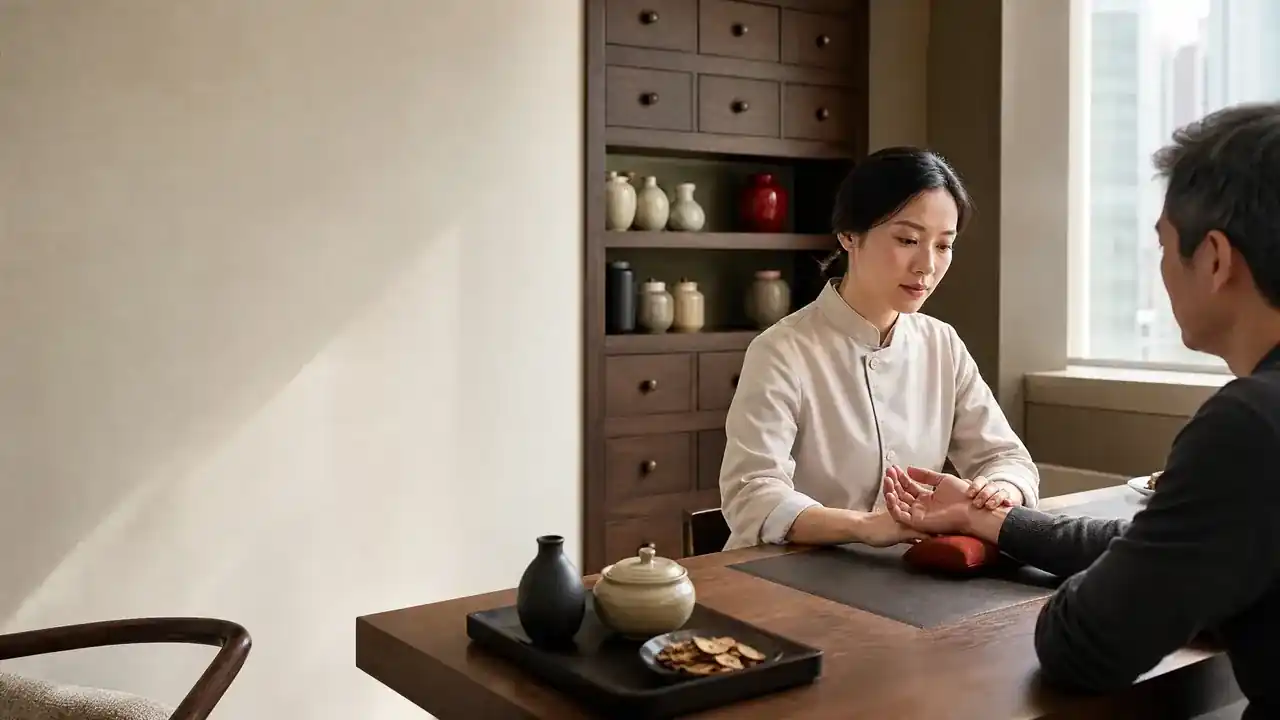
Harmonia TCM is dedicated to providing comprehensive and personalized TCM care plans for our patients. We understand that every patient's pelvic tilt condition, constitutional characteristics, and lifestyle habits are unique. Therefore, before formulating a care plan, our registered TCM practitioners will conduct a thorough consultation and assessment to ensure the plan accurately meets your practical needs.
Our approach emphasizes a 'holistic view' and 'pattern differentiation'. When addressing pelvic tilt and associated lower back pain, we focus not only on localized structural adjustments but also on the balance of Qi and blood throughout the entire body. By stimulating specific acupoints with acupuncture and relaxing deep muscles with Tui Na, we aim to create an environment conducive to self-healing, gradually guiding the pelvis back on track.
Please note that Harmonia TCM's only physical clinic is located in Kwun Tong. The information provided here is for reference purposes only, intended to enhance public understanding of pelvic tilt. Whether specific services are available, whether they are suitable for your specific condition, and the exact care arrangements must be confirmed by our registered TCM practitioners through an in-person assessment at our clinic. We look forward to providing you with professional services at our Kwun Tong clinic.
Frequently asked questions
Can a pelvic tilt be completely cured?
The degree of improvement for a pelvic tilt depends on its cause, severity, and the patient's compliance. Pelvic tilt caused by poor posture or muscle imbalance can often be significantly improved, or even restored to a near-normal state, through professional posture alignment, targeted exercises, and TCM care. However, if the tilt is structural, resulting from congenital skeletal anomalies or severe trauma, it may be difficult to completely 'cure'. In such cases, the goal of care shifts to relieving symptoms, preventing deterioration, and improving quality of life. It is important to maintain reasonable expectations and consistently practice daily care.
How long does it take to see results from posture alignment?
Posture alignment is a process of re-establishing muscle memory and neural control, and the time required varies from person to person. Generally, for mild pelvic tilt, with professional guidance and consistent daily practice, you may notice initial improvements, such as reduced lower back pain or relieved muscle tightness, within a few weeks to a few months. However, achieving stable structural balance usually requires several months or more of sustained effort. This relies not only on supportive TCM care but also heavily on the patient's commitment to maintaining correct posture in daily life.
Does a pelvic tilt always cause lower back pain?
Not necessarily. Many people may have a mild pelvic tilt without experiencing any obvious pain or discomfort. The human body has a certain capacity for compensation; when a slight deviation occurs in the pelvis, surrounding muscles and joints may automatically adjust to maintain overall balance. However, when the degree of tilt worsens, or when the compensatory mechanisms are overloaded, it can easily lead to muscle strain and joint compression, resulting in lower back pain, hip pain, or even knee pain. Therefore, even if there is no pain currently, addressing and improving a pelvic tilt early is an important measure to prevent future pain.
Can TCM acupuncture help with pelvic tilt?
TCM acupuncture plays a positive supportive role in improving pelvic tilt. By stimulating specific acupoints, acupuncture can help relax muscles that are overly tight due to the tilt (such as hip flexors and lower back erector spinae), while promoting local Qi and blood circulation to relieve pain and inflammation. Additionally, acupuncture helps regulate the nervous system and improve muscle tone. However, acupuncture primarily serves a supportive and soothing function; to fundamentally correct a pelvic tilt, it must be combined with active posture alignment and muscle strengthening exercises.
What are some ways to prevent pelvic tilt in daily life?
The key to preventing pelvic tilt lies in cultivating good lifestyle habits. First, avoid maintaining the same posture for prolonged periods, especially sitting; it is recommended to stand up, move around, and stretch every hour. Second, maintain correct sitting and standing postures, avoiding crossing your legs, sitting cross-legged, or consistently resting your weight on one leg. Furthermore, choose shoes and mattresses with good support, and reduce the time spent wearing high heels. Finally, maintain a regular exercise routine, particularly focusing on strengthening the core and gluteal muscles, which helps enhance pelvic stability.
Where is the Harmonia TCM clinic located?
Harmonia TCM's only physical clinic is currently located in the Kwun Tong district of Hong Kong. All our professional TCM assessments, acupuncture, Tui Na, and other related care services are conducted within our Kwun Tong clinic. The various topic pages on this website (including this page's information on pelvic tilt) are primarily for health education and reference purposes. If you wish to receive further assessment or care, you are welcome to make an appointment to visit our Kwun Tong clinic, where a registered TCM practitioner will provide you with face-to-face professional services.
Related topics
Sources
Book a Professional TCM Assessment
Harmonia TCM's only physical clinic is located in Kwun Tong. The content on this topic page is intended as general guidance. Actual availability of services, suitability for your condition, and specific arrangements must be confirmed by a registered TCM practitioner after an in-person assessment. Please contact us to learn more.