Pain & Assessment
Wrist & Elbow Tendinopathy
Wrist and elbow tendinopathy often results from repetitive movements or overuse, affecting daily activities. TCM provides a holistic assessment to understand the nature of the pain and your constitution, offering tailored support.
Quick answer: Wrist elbow tendinopathy (such as tennis elbow or wrist pain) is often caused by repetitive strain or overuse. Traditional Chinese Medicine assesses local circulation and your overall constitution, utilizing methods like acupuncture or herbal medicine to soothe discomfort and support natural recovery. Consult a registered TCM practitioner for a personalized assessment.
CLEAR PRICES
Interested in a treatment? You are always welcome to ask.
We clearly list our current single, trial and package prices so you can explore at your own pace. You are always welcome to message us on WhatsApp about any service, timing or arrangement.
| Category and service | Content / terms | Public price (HK$) | Booking note | Enquire |
|---|---|---|---|---|
| Hair & scalp | Scalp health and hair-loss support | AI scalp analysis, deep follicle cleansing and oil-control support | Trial offerPackageTrial 380; 6 sessions 3,480; 12 sessions 5,760; 20 sessions 8,600; 30 sessions 11,400 | Average per session for 6/12/20/30: 580/480/430/380 | Ask on WhatsApp |
| Hair & scalp | Hair acupuncture with herbal medicine | Scalp acupuncture with 3 days of decoction-free herbal medicine | Single visitPackageSingle 580; 6 sessions 3,180; 12 sessions 5,760; 20 sessions 8,600; 30 sessions 11,400 | Average per session for 6/12/20/30: 530/480/430/380 | Ask on WhatsApp |
| Hair & scalp | Integrated hair support programme | Acupuncture, herbal medicine and follicle activation; packages include shampoo and serum | Single visitPackageSingle 1,260; 8 sessions 8,640; 16 sessions 15,680; 20 sessions 18,600; 30 sessions 26,400 | Average per session for 8/16/20/30: 1,080/980/930/880 | Ask on WhatsApp |
| Weight management | Full-body acupoint embedding | Full-body acupoint embedding; packages include proportionate days of herbal support | Single visitPackageSingle 980; 10 sessions 7,800; 20 sessions 14,600; 30 sessions 20,400 | Average per session for 10/20/30: 780/730/680 | Ask on WhatsApp |
| Facial acupuncture | Brightening V-face (Essential) | Facial acupuncture, meridian support and swelling management | Trial offerPackageTrial 480; 10 sessions 5,200; 20 sessions 9,600; 30 sessions 13,500 | Average per session for 10/20/30: 520/480/450 | Ask on WhatsApp |
| Facial acupuncture | Firming and refining (Advanced) | Enhanced facial acupuncture for firmness and fine-line concerns with a moisturising mask serum | Trial offerPackageTrial 780; 10 sessions 9,000; 20 sessions 16,600; 30 sessions 23,400 | Average per session for 10/20/30: 900/830/780 | Ask on WhatsApp |
| Pain care | Extracorporeal shockwave therapy | Deep inflammation support and fascial relaxation | Prince Edward: 250 per area; Kwun Tong: 250 for 1 area, 450 for 2, 600 for 3 | Clinic-specific pricing; confirm location before booking | Ask on WhatsApp |
| Pain care | Manual therapy | TCM bone-injury assessment, manual alignment and tui na techniques | Single visitSingle 580 | Suitability is confirmed after assessment | Ask on WhatsApp |
| Pain care | Acupuncture with manual therapy | Acupuncture with manual structural support | Single visitSingle 680 | Suitability is confirmed after assessment | Ask on WhatsApp |
| TCM regulation | Acupuncture with herbal medicine | TCM consultation, whole-body acupuncture and 3 days of decoction-free herbal medicine granules | Single visitSingle 580 | Confirm clinician availability and service arrangement when booking | Ask on WhatsApp |
Understanding Wrist and Elbow Tendinopathy
This guide explains common considerations, the purpose of assessment, options that may be discussed, and key safety points. Individual advice depends on your circumstances.
Wrist and elbow tendinopathy is a general term that encompasses various conditions affecting the tendons and soft tissues around the elbow and wrist joints. Common examples include what is colloquially known as 'tennis elbow' (lateral epicondylitis), 'golfer's elbow' (medial epicondylitis), and various types of wrist pain. These issues are typically associated with overuse, repetitive motions, or improper posture during exertion, leading to micro-tears and inflammatory responses in the tendons.
In daily life, whether you are an office worker spending long hours using a computer keyboard and mouse, or someone who frequently engages in lifting heavy objects or playing sports, you may face the distress of wrist and elbow tendinopathy. Initially, patients might only feel mild discomfort during specific movements. However, if left unaddressed, the pain can gradually intensify, sometimes manifesting as a dull ache even during rest, significantly impacting work efficiency and quality of life.
From the perspective of Traditional Chinese Medicine (TCM), this type of localized soft tissue pain is often related to 'sinew injury' or 'Bi syndrome' (blockage syndrome). TCM believes that chronic strain leads to poor circulation of Qi and blood in the local area, embodying the principle that 'where there is no free flow, there is pain.' Furthermore, an individual's constitutional status, such as a deficiency in Qi and blood or a weakness in the liver and kidneys, can deprive the sinews and bones of necessary nourishment, making them more susceptible to external pathogenic factors (like wind, cold, and dampness) and exacerbating the pain symptoms.
TCM Assessment for Wrist and Elbow Pain
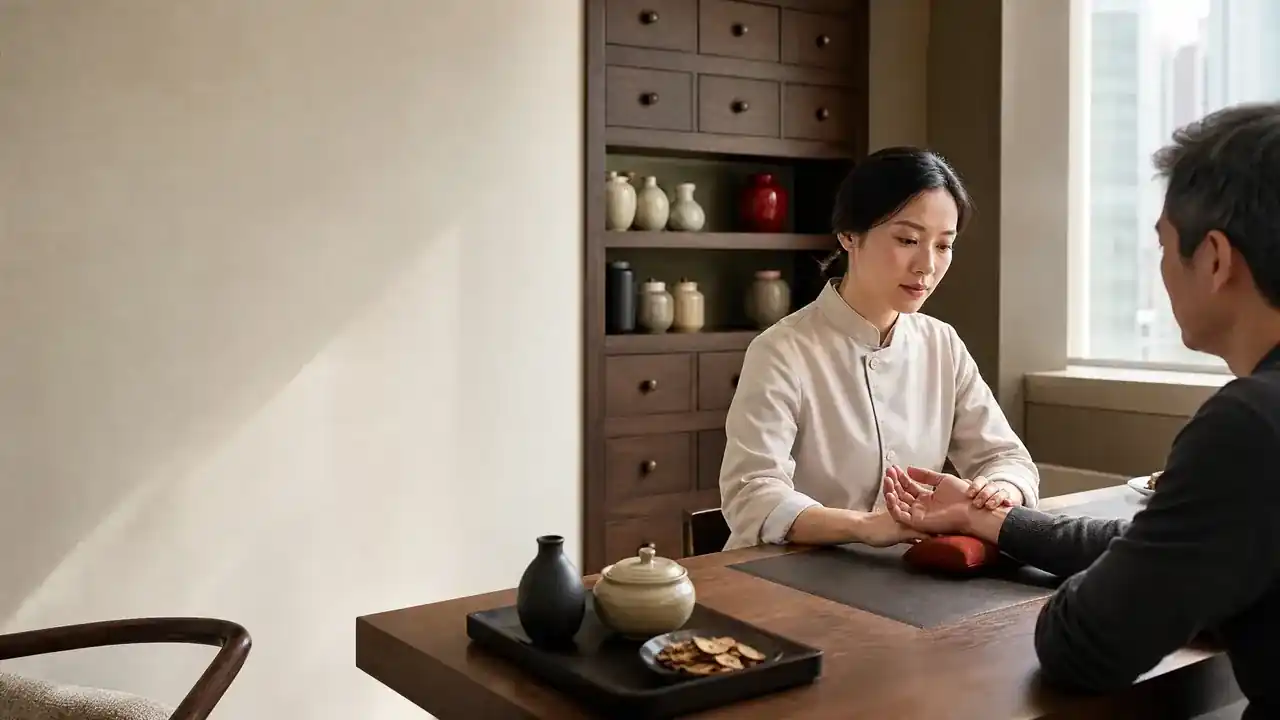
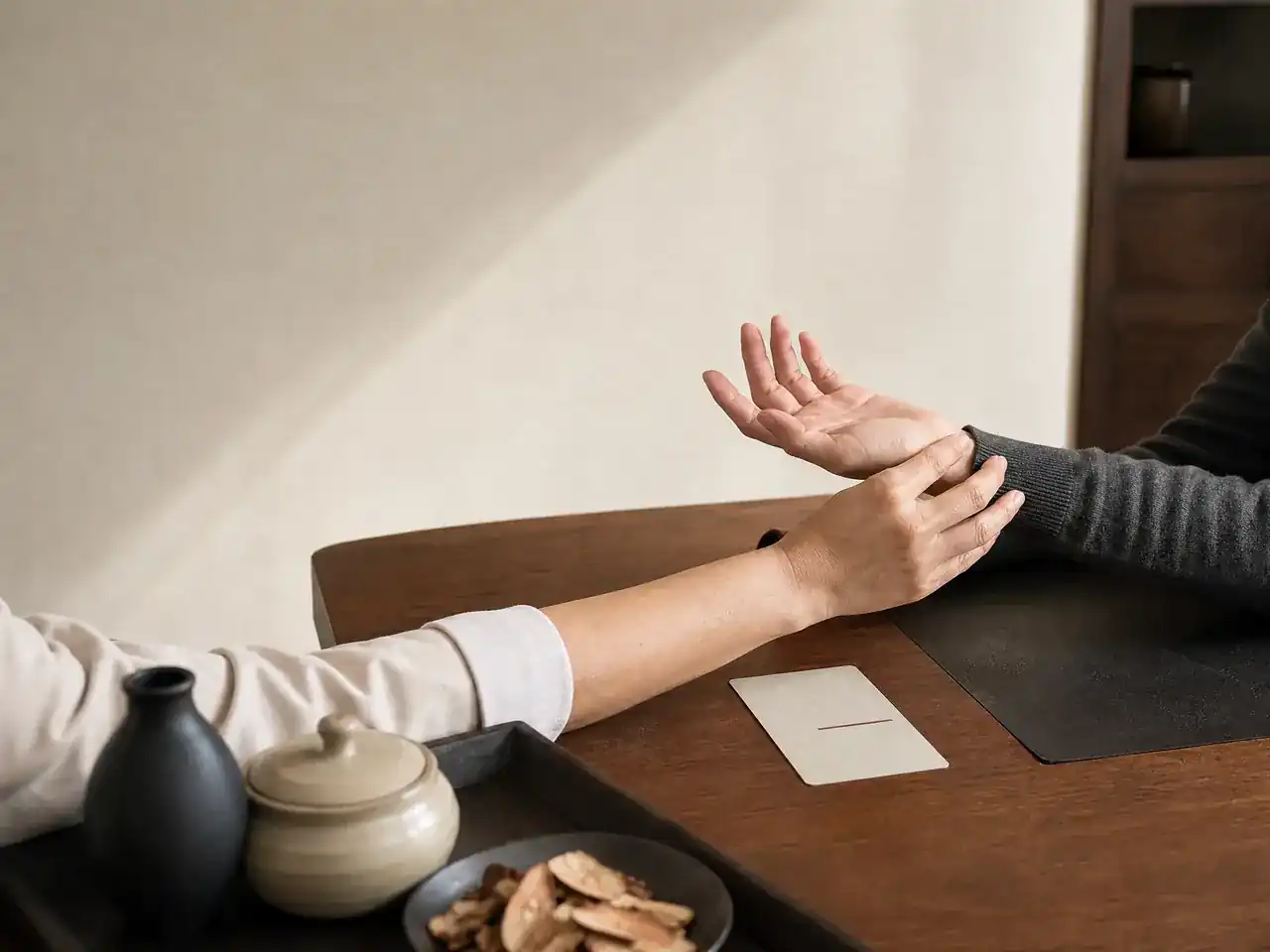
When assessing wrist and elbow tendinopathy, TCM emphasizes a 'holistic approach' and 'pattern differentiation.' A registered TCM practitioner will not only focus on the localized area of pain but will also seek to understand the patient's overall health condition comprehensively. The assessment process typically involves the four diagnostic methods: observation, auscultation and olfaction, inquiry, and palpation, to gather detailed clinical information.
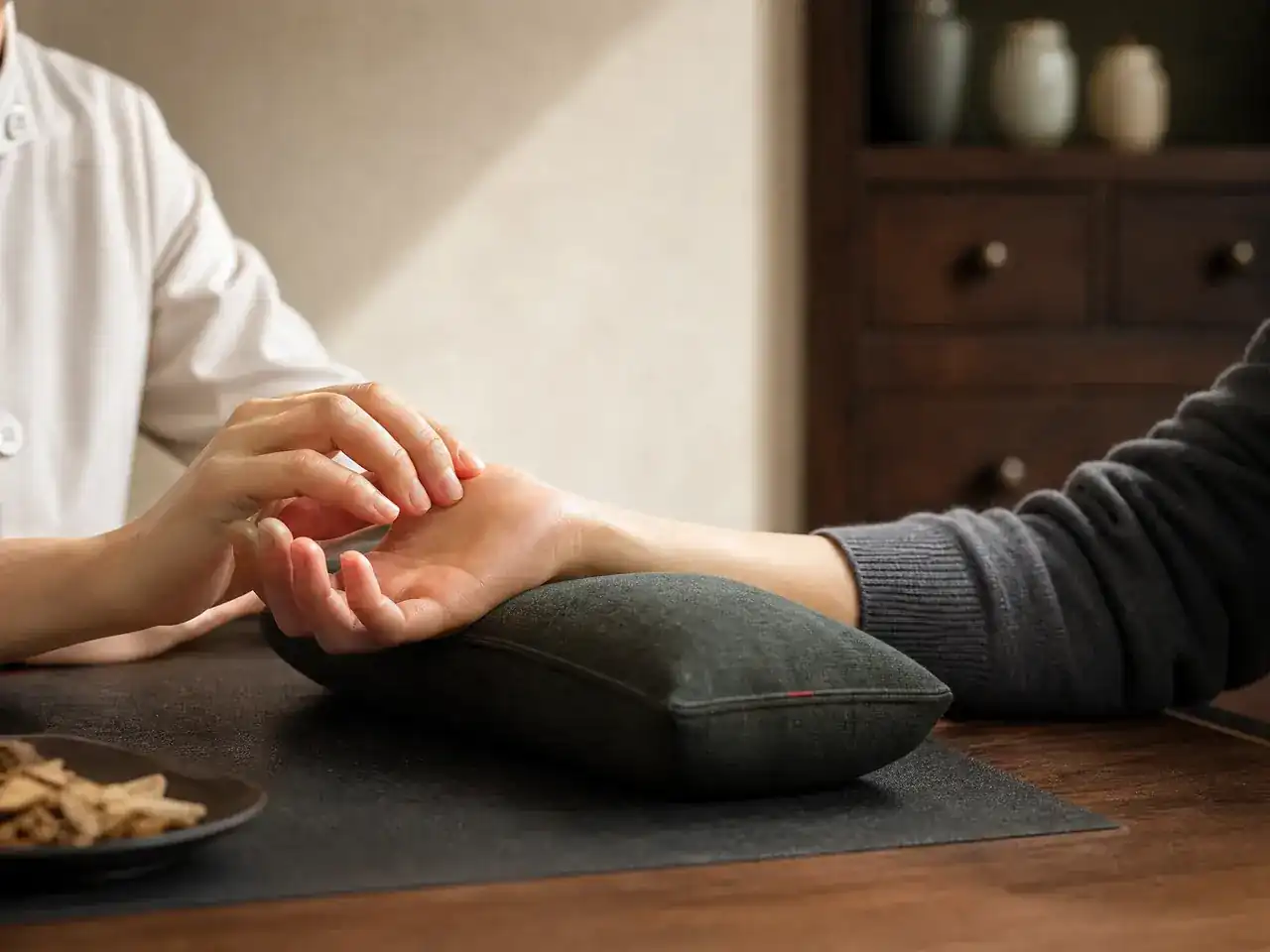
The practitioner will carefully inquire about the nature of the pain (e.g., sharp, aching, distending), the pattern of its occurrence, factors that aggravate or alleviate it, and whether there are accompanying symptoms (such as joint stiffness, localized heat, or aversion to cold). Concurrently, the practitioner will observe any external changes in the area and use palpation to identify the specific locations of tenderness and the degree of muscle tension.
Beyond the localized assessment, the practitioner will also analyze the patient's internal organ and Qi-blood status by examining their pulse and tongue. This comprehensive evaluation helps the practitioner determine the root cause of the pain, thereby formulating a targeted, personalized support plan rather than merely addressing a single symptom.
Common Types and Characteristics of Wrist and Elbow Pain
To better understand and manage wrist and elbow tendinopathy, it is essential to recognize the characteristics of different types of pain. Although they all occur near the joints of the hand and arm, the specific affected areas and triggering actions vary.
The following table outlines several common types of wrist and elbow pain and their primary characteristics to help you gain an initial understanding of your condition. Please note that this is intended as general guidance, and an accurate assessment must be conducted by a healthcare professional.
| Type | Common Name | Primary Affected Area | Typical Triggering Action | Pain Characteristics |
|---|---|---|---|---|
| Lateral Epicondylitis | Tennis Elbow | Outer side of the elbow | Gripping forcefully, extending the wrist backward | Aching pain on the outer elbow, may radiate to the forearm |
| Medial Epicondylitis | Golfer's Elbow | Inner side of the elbow | Flexing the wrist inward, pronating the forearm | Pain on the inner elbow, grip strength may weaken |
| De Quervain's Tenosynovitis | Mother's Wrist | Thumb side of the wrist | Forceful thumb use, ulnar deviation of the wrist | Pain and swelling at the base of the thumb and side of the wrist |
| Carpal Tunnel Syndrome | Mouse Hand | Palmar side of the wrist | Prolonged typing, excessive wrist flexion/extension | Numbness and tingling in the fingers (especially thumb, index, middle) |
TCM Support and Conditioning Methods
For wrist and elbow tendinopathy, TCM offers a variety of non-invasive support methods. These methods aim to unblock the meridians and harmonize Qi and blood, thereby alleviating local discomfort and promoting the natural recovery of soft tissues. The specific plan will depend on the practitioner's assessment results.
Acupuncture is one of the commonly used methods. By inserting needles into specific acupoints (such as Quchi, Shousanli, Waiguan, etc.), it can stimulate local Qi and blood circulation, achieving the effect of relaxing sinews and activating collaterals. For some patients, the practitioner may also combine moxibustion or cupping to warm the meridians, dispel cold, or remove local dampness.
In addition, herbal medicine conditioning plays an important role in improving the constitution. For patients with Qi and blood deficiency or liver and kidney weakness, the practitioner may prescribe herbs that nourish the liver and kidneys and strengthen the sinews and bones. For cases with local blood stasis, formulas that invigorate blood and resolve stasis may be used. Combining internal herbal medicine with external treatments helps achieve a more comprehensive conditioning effect.
Daily Care and Prevention Advice
Besides seeking professional medical support, daily care and preventive measures are equally important for managing wrist and elbow tendinopathy. Proper self-care can reduce the frequency of pain episodes and prevent the condition from worsening.
Firstly, try to avoid prolonged repetitive movements. If your work requires frequent use of the wrists and elbows, it is recommended to take regular breaks and perform simple stretching exercises to relax tense muscles and tendons. When engaging in activities like lifting heavy objects, pay attention to correct posture and avoid relying excessively on wrist strength.
Secondly, keep the local area warm. TCM believes that cold pathogens can easily cause Qi and blood stagnation, exacerbating pain. In cold or strongly air-conditioned environments, you can wear long-sleeved clothing or use protective gear to keep the joints warm. If the pain is in the acute phase (with local redness, swelling, and heat), avoid hot compresses and consider moderate ice application; in the chronic phase, warm compresses can be used to promote blood circulation.
Service Arrangements at Harmonia TCM
Harmonia TCM is dedicated to providing professional and attentive TCM services to our patients. We understand the impact that wrist and elbow tendinopathy can have on daily life, so our registered TCM practitioners will patiently listen to your needs and conduct a detailed assessment.
This information outlines common considerations and assessment directions. If you would like to discuss what may suit you or how an appointment can be arranged, please contact us. Harmonia TCM's only physical clinic is located in Kwun Tong. This information is intended as general guidance and does not imply the existence of branches in other areas. If you have any questions about our services or wish to learn more about personalized conditioning, please feel free to contact us.
Frequently asked questions
Can TCM completely cure wrist and elbow tendinopathy?
TCM aims to soothe discomfort and promote recovery by regulating Qi, blood, and constitution, but we cannot guarantee a 'complete cure' or 'zero risk.' Everyone's recovery varies depending on their constitution, lifestyle, and the severity of the condition. The practitioner will provide professional assessment and support based on your specific situation.
Is acupuncture for wrist and elbow pain very painful?
The needles used in acupuncture are very fine, and most people only feel a slight mosquito-bite sensation upon insertion. Once the needle is in place, you may experience a sensation of soreness, numbness, distension, or heaviness known as 'Deqi,' which is a normal response. If you have concerns about acupuncture, you can communicate with the practitioner at any time.
Should I use a hot or cold compress for my wrist pain?
This depends on the stage of the pain. In the acute phase (usually within 48 hours after injury), if there is local redness, swelling, and heat, ice application is generally recommended to reduce inflammation. In the chronic phase, when the redness and swelling have subsided, warm compresses can help promote local blood circulation. Please consult a healthcare professional for specific advice.
Besides acupuncture, what other methods does TCM use for tennis elbow?
Besides acupuncture, a TCM practitioner may recommend internal herbal medicine, external herbal patches, cupping, or Tui Na (massage) based on your constitution and condition. These methods can be used individually or in combination to achieve a more comprehensive conditioning effect.
Do I need to stop all sports to let my elbow rest?
When the pain is severe, appropriate rest is necessary, and movements that aggravate the pain should be avoided. However, completely stopping all activity can lead to joint stiffness and muscle atrophy. A practitioner or physiotherapist will advise you to perform moderate stretching and strengthening exercises within a tolerable range.
Does Harmonia TCM have branches outside of Kwun Tong?
Harmonia TCM's only physical clinic is currently located in Kwun Tong. the information provided here is intended as general guidance and does not imply that we have branches in other areas. For appointments or inquiries, please contact our Kwun Tong clinic.
Related topics
Sources
Learn More About TCM Assessment Services
If you are troubled by wrist and elbow tendinopathy, welcome to contact Harmonia TCM. Our registered TCM practitioners will conduct a detailed assessment and provide professional advice. Please note that actual service arrangements must be confirmed by the clinic.