Pain & Assessment
Bunion Treatment
A bunion, known medically as hallux valgus, is a bony prominence that forms at the base of the big toe joint. It can cause persistent discomfort, limited footwear options, and difficulty walking. At Harmonia TCM in Kwun Tong, a registered Chinese medicine practitioner can assess your condition and discuss whether TCM conservative care may be a suitable part of your ongoing support plan.
Quick answer: Bunion treatment at Harmonia TCM begins with a thorough consultation to assess the degree of joint deviation, local inflammation, and your overall constitution. A registered Chinese medicine practitioner may discuss approaches including acupuncture, topical application, or lifestyle guidance as part of a personalised TCM conservative care plan. This information is intended as general guidance. Actual availability and suitability require confirmation from the clinic.
View pricesContact Us to Enquire
CLEAR PRICES
Interested in a treatment? You are always welcome to ask.
We clearly list our current single, trial and package prices so you can explore at your own pace. You are always welcome to message us on WhatsApp about any service, timing or arrangement.
| Category and service | Content / terms | Public price (HK$) | Booking note | Enquire |
|---|---|---|---|---|
| Hair & scalp | Scalp health and hair-loss support | AI scalp analysis, deep follicle cleansing and oil-control support | Trial offerPackageTrial 380; 6 sessions 3,480; 12 sessions 5,760; 20 sessions 8,600; 30 sessions 11,400 | Average per session for 6/12/20/30: 580/480/430/380 | Ask on WhatsApp |
| Hair & scalp | Hair acupuncture with herbal medicine | Scalp acupuncture with 3 days of decoction-free herbal medicine | Single visitPackageSingle 580; 6 sessions 3,180; 12 sessions 5,760; 20 sessions 8,600; 30 sessions 11,400 | Average per session for 6/12/20/30: 530/480/430/380 | Ask on WhatsApp |
| Hair & scalp | Integrated hair support programme | Acupuncture, herbal medicine and follicle activation; packages include shampoo and serum | Single visitPackageSingle 1,260; 8 sessions 8,640; 16 sessions 15,680; 20 sessions 18,600; 30 sessions 26,400 | Average per session for 8/16/20/30: 1,080/980/930/880 | Ask on WhatsApp |
| Weight management | Full-body acupoint embedding | Full-body acupoint embedding; packages include proportionate days of herbal support | Single visitPackageSingle 980; 10 sessions 7,800; 20 sessions 14,600; 30 sessions 20,400 | Average per session for 10/20/30: 780/730/680 | Ask on WhatsApp |
| Facial acupuncture | Brightening V-face (Essential) | Facial acupuncture, meridian support and swelling management | Trial offerPackageTrial 480; 10 sessions 5,200; 20 sessions 9,600; 30 sessions 13,500 | Average per session for 10/20/30: 520/480/450 | Ask on WhatsApp |
| Facial acupuncture | Firming and refining (Advanced) | Enhanced facial acupuncture for firmness and fine-line concerns with a moisturising mask serum | Trial offerPackageTrial 780; 10 sessions 9,000; 20 sessions 16,600; 30 sessions 23,400 | Average per session for 10/20/30: 900/830/780 | Ask on WhatsApp |
| Pain care | Extracorporeal shockwave therapy | Deep inflammation support and fascial relaxation | Prince Edward: 250 per area; Kwun Tong: 250 for 1 area, 450 for 2, 600 for 3 | Clinic-specific pricing; confirm location before booking | Ask on WhatsApp |
| Pain care | Manual therapy | TCM bone-injury assessment, manual alignment and tui na techniques | Single visitSingle 580 | Suitability is confirmed after assessment | Ask on WhatsApp |
| Pain care | Acupuncture with manual therapy | Acupuncture with manual structural support | Single visitSingle 680 | Suitability is confirmed after assessment | Ask on WhatsApp |
| TCM regulation | Acupuncture with herbal medicine | TCM consultation, whole-body acupuncture and 3 days of decoction-free herbal medicine granules | Single visitSingle 580 | Confirm clinician availability and service arrangement when booking | Ask on WhatsApp |
Understanding Bunion Treatment in a Chinese Medicine Context
A bunion develops when the big toe gradually pushes toward the second toe, causing the joint at the base of the big toe to protrude outward. Over time, the overlying skin and soft tissue may become inflamed, swollen, or tender. In Chinese medicine, this presentation may be interpreted through the lens of qi and blood stagnation at the local channel, combined with underlying constitutional factors such as kidney and liver deficiency, or dampness and cold lodging in the lower limbs.
Bunion treatment from a Chinese medicine perspective does not aim to correct the structural deviation of the bone, which is a matter for orthopaedic assessment. Instead, a registered Chinese medicine practitioner may focus on reducing local discomfort, supporting circulation to the affected area, and addressing the constitutional patterns that may contribute to the condition's progression or symptom severity.
It is important to understand that Chinese medicine is a complementary approach. Individuals with significant structural deformity, acute infection, or rapidly worsening symptoms should seek conventional medical assessment as a priority. TCM care may be considered alongside, and not necessarily as a replacement for, other forms of evaluation or management.
How Chinese Medicine May Assess a Bunion
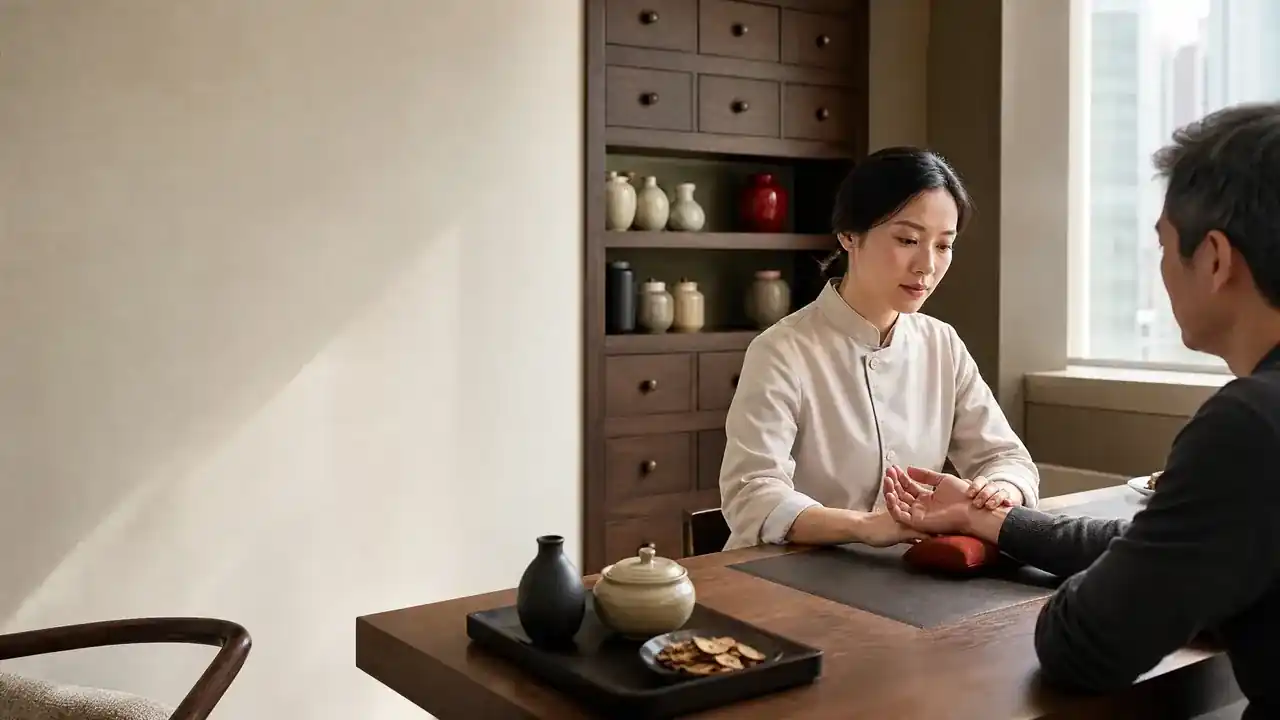
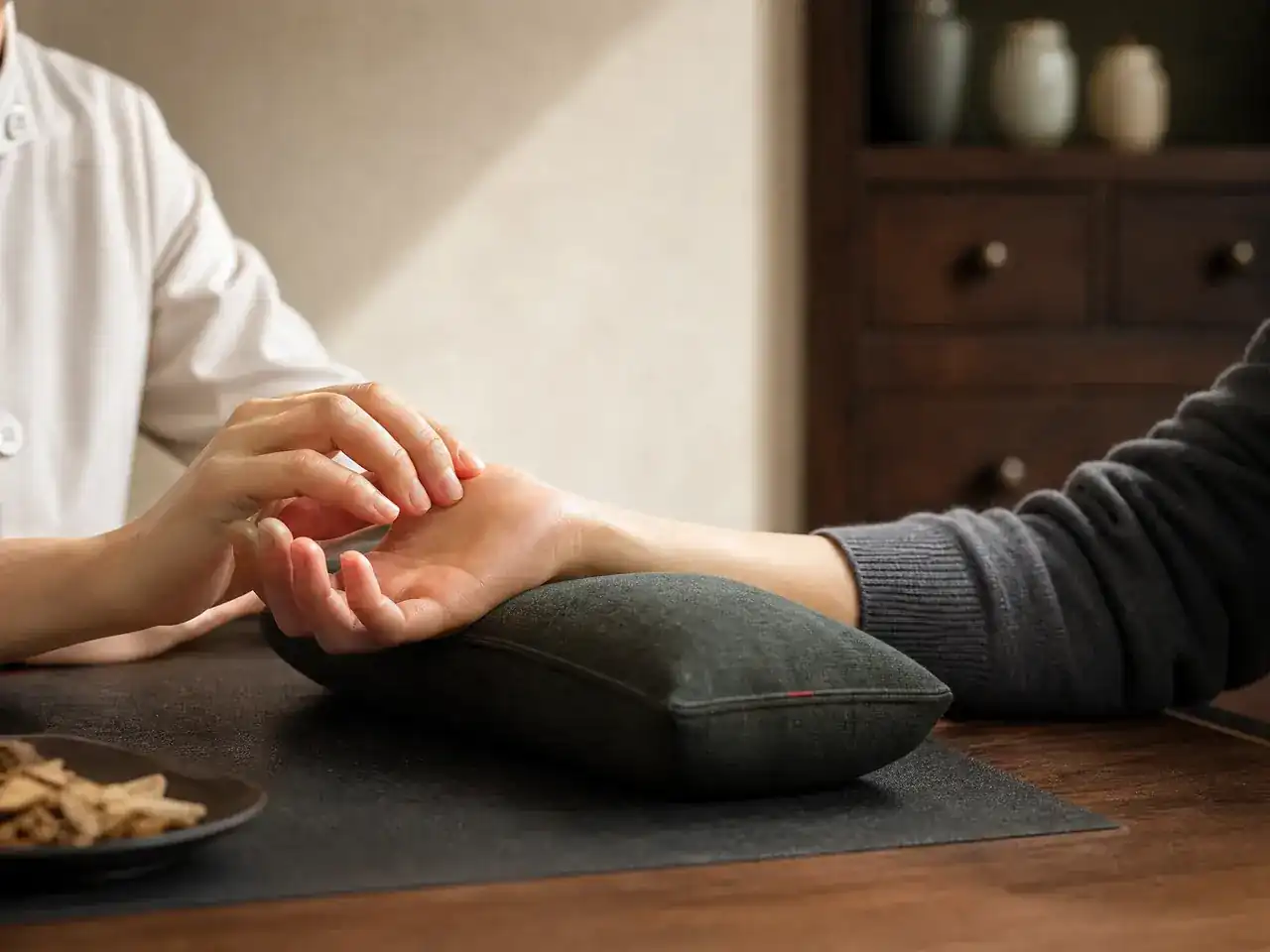
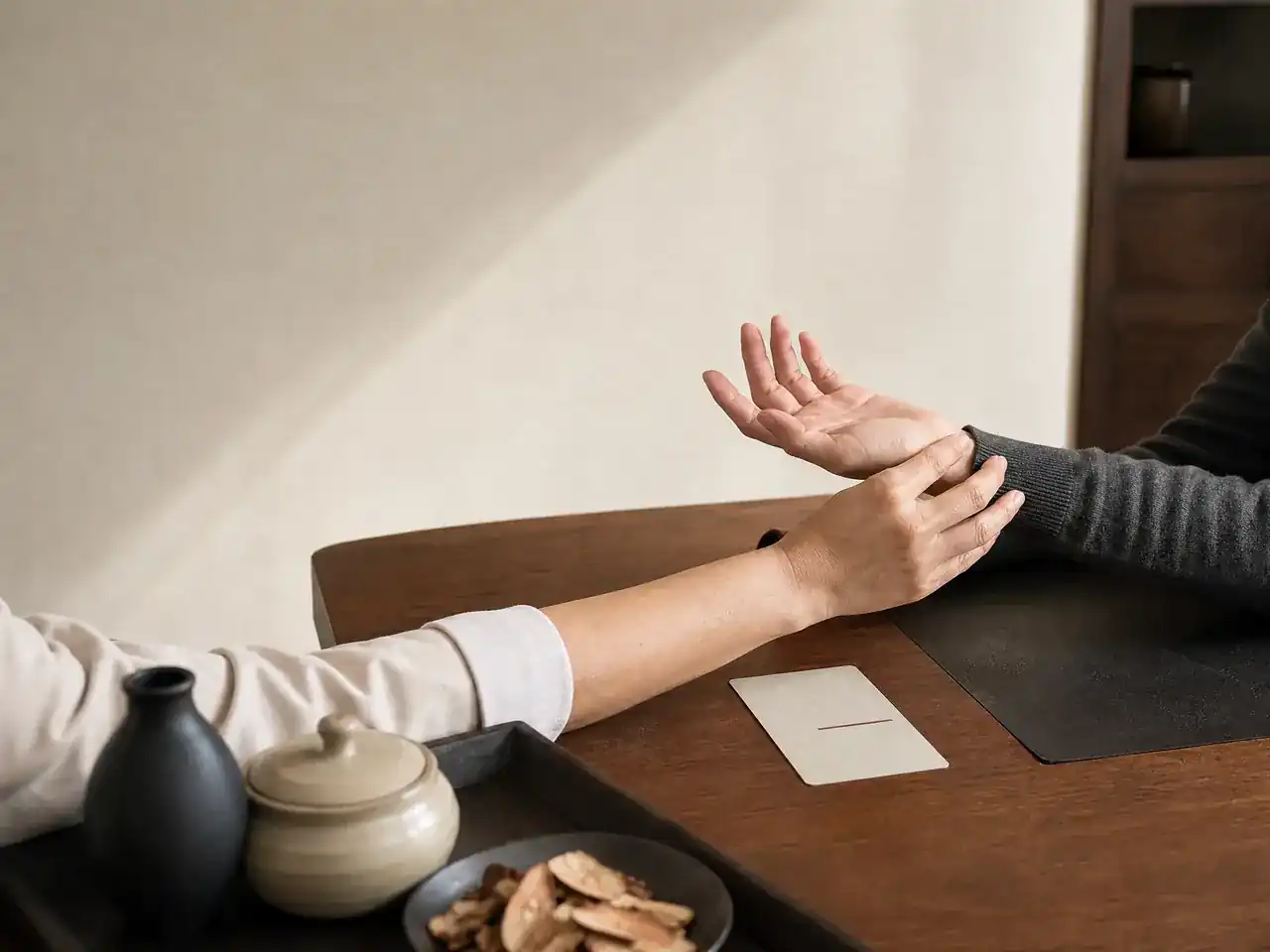
During an initial consultation at Harmonia TCM, the practitioner will conduct a full Chinese medicine assessment, which includes examining the appearance of the affected joint, observing the colour and texture of the surrounding skin, and asking about the nature of the discomfort — whether it is sharp, aching, burning, or worse with cold or pressure. They will also assess your tongue and pulse to understand your broader constitutional pattern.
The practitioner will enquire about your footwear habits, standing and walking duration, any prior injury to the foot or ankle, and whether similar joint changes are present elsewhere. This helps to form a more complete picture of how local and systemic factors may be interacting.
Based on this assessment, the practitioner will explain what they observed, the Chinese medicine interpretation of your pattern, and whether — and in what form — TCM support may be appropriate for your situation. If there are any concerns that warrant conventional medical review, the practitioner will advise accordingly.
The following table summarises how Chinese medicine pattern differentiation may relate to common bunion presentations. This is for educational reference only and is not a diagnostic framework for self-assessment.
| Common Presentation Feature | Possible TCM Pattern Consideration |
|---|---|
| Persistent dull ache, worse with prolonged standing | Qi and blood stagnation in the local channel |
| Joint area feels warm or appears red and swollen | Damp-heat accumulation at the channel |
| Discomfort worsens in cold weather or with cold contact | Cold-damp obstruction affecting lower limb channels |
| Long-standing deformity with dry, stiff joint | Liver and kidney deficiency with malnourishment of sinews |
| Recurrent swelling that eases with rest | Spleen deficiency with dampness accumulation |
| General fatigue alongside foot discomfort | Constitutional deficiency pattern requiring broader assessment |
What TCM Conservative Care May Involve
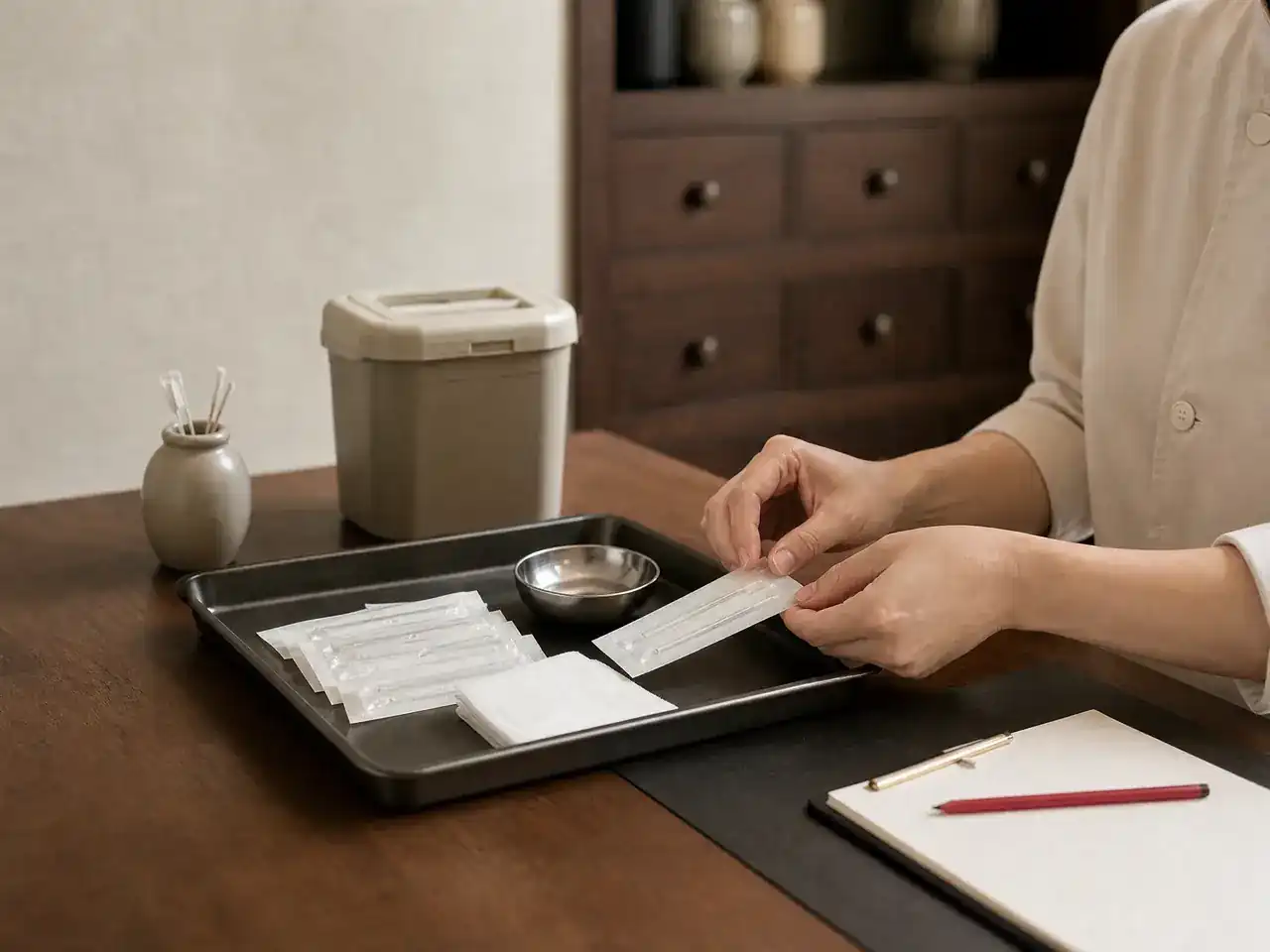
TCM conservative care for bunion-related discomfort may include acupuncture, which involves the insertion of fine sterile needles at points along relevant channels to support local circulation and reduce the sensation of pain. The practitioner may select points on the foot, lower leg, and related areas based on the identified pattern.
Topical herbal applications or warm compresses using Chinese medicinal herbs may also be discussed, with the aim of supporting blood circulation and reducing local swelling. In some cases, tui na (Chinese therapeutic massage) may be used to work on the surrounding soft tissue and supporting musculature.
Local management through lifestyle and footwear guidance is often a component of the consultation. The practitioner may suggest modifications to reduce mechanical stress on the affected joint, though specific recommendations would depend on your individual circumstances and should be discussed directly with the practitioner.
Chinese herbal medicine, taken internally, may also be considered if there is a broader constitutional pattern identified during the assessment. This would be prescribed individually and is subject to a separate discussion of suitability, interactions, and any contraindications relevant to your health history.
Conditions That May Co-exist or Be Confused with a Bunion
Not all pain or swelling at the base of the big toe is caused by a bunion. Gout, which involves uric acid crystal deposits in the joint, can produce sudden, severe pain that may resemble an inflamed bunion. Osteoarthritis of the first metatarsophalangeal joint can also cause progressive pain and stiffness in a similar location. Bursitis, sesamoiditis, and certain tendon problems may also present with discomfort in this area.
A thorough assessment — whether from a Chinese medicine practitioner or a conventional medical professional — is important to understand what is actually contributing to your symptoms. If you have not had a prior diagnosis, your Chinese medicine practitioner may recommend that you also seek a conventional medical assessment to rule out conditions that require specific treatment, such as infection, fracture, or gout.
This page uses the term bunion in its general sense, referring to hallux valgus with associated discomfort and inflammation. Harmonia TCM does not claim to treat structural deformity and the information here is intended to help you understand what a TCM consultation may explore.
What to Expect from Your Visit at Harmonia TCM
Your first visit will typically involve a longer consultation to allow the practitioner to gather a complete health history and conduct a Chinese medicine assessment. You are encouraged to bring any relevant medical reports or imaging results if you have them, as this can help the practitioner understand the structural context of your condition.
Following the consultation, the practitioner will explain their findings and discuss potential approaches that may be suitable for your presentation. They will also explain what each approach involves, what to be aware of, and how frequently sessions might be considered. No treatment will proceed without your understanding and agreement.
Subsequent visits are generally shorter and allow the practitioner to review your response and adjust the care approach as needed. The practitioner will discuss realistic expectations with you, avoiding any claim of guaranteed outcomes. Progress is reviewed on an ongoing basis.
Who May Consider TCM Support for Bunion Discomfort
Individuals who are experiencing mild to moderate discomfort associated with a known bunion and who wish to explore complementary support may find a Chinese medicine consultation helpful. This includes those who have already had orthopaedic evaluation and wish to address ongoing symptoms through a different approach, or those who are not yet candidates for surgery and are looking for non-invasive options to manage day-to-day discomfort.
Older adults who are managing multiple health conditions may find the constitution-focused nature of Chinese medicine assessment relevant, as it considers the broader health context rather than focusing solely on the localised joint. Similarly, individuals who are interested in understanding their body's patterns and making adjustments to their lifestyle or constitution may find value in the consultation process.
However, TCM support is not appropriate as a sole or primary response to severe deformity, suspected infection, sudden acute swelling with fever, or rapidly worsening pain. In such circumstances, prompt conventional medical evaluation should take priority.
A Note on Expectations and Service Availability
This page has been prepared as part of Harmonia TCM's service information and is for general reference only. The information presented here reflects a general understanding of how Chinese medicine may approach bunion-related concerns. Actual service availability, the suitability of specific approaches for your individual condition, and all associated arrangements must be confirmed directly with the clinic and a registered Chinese medicine practitioner.
Harmonia TCM is located in Kwun Tong. All practitioners are registered with the Chinese Medicine Council of Hong Kong. We do not claim that any particular outcome will result from consultation or treatment, and we do not compare our services with those of other providers. Our aim is to offer clear, honest information so that you can make an informed decision about your care.
Frequently asked questions
Can Chinese medicine fix a bunion permanently?
No. A bunion involves a structural deviation of the first metatarsophalangeal joint, which Chinese medicine does not claim to correct. TCM conservative care focuses on addressing discomfort, local inflammation, and the constitutional patterns that may influence how the condition presents. For significant structural deformity, an orthopaedic assessment remains the appropriate avenue. A registered Chinese medicine practitioner can discuss what support may be realistic for your individual situation.
Is acupuncture painful when applied near the big toe joint?
Acupuncture needles are very fine and are generally well tolerated. Sensation varies between individuals and between acupuncture points. Some people notice a mild ache, warmth, or tingling at the point of insertion, which is considered a normal response. The practitioner will communicate with you throughout the session and adjust their approach if you experience discomfort. Any concerns should be raised with the practitioner before treatment begins.
How many sessions might be needed?
This depends on a number of individual factors, including the severity of your symptoms, your overall constitution, and how your body responds to each session. A practitioner cannot provide a guaranteed timeline without first assessing your condition. After the initial consultation, the practitioner will be able to give you a more specific indication of what to expect and how frequently sessions might be appropriate.
Should I see an orthopaedic doctor before coming to Harmonia TCM?
It is not a requirement, but if you have not had a formal diagnosis, seeing a conventional medical professional first can be helpful. Having imaging results or a confirmed diagnosis of hallux valgus allows the Chinese medicine practitioner to better contextualise your presentation. If the practitioner has any concerns during the consultation that suggest conventional review is needed, they will advise you accordingly.
Are there any herbal medicines I should avoid if I have a bunion?
Herbal prescriptions are individualised and depend on your full health picture, not just your foot condition. Certain herbs may interact with medications or be unsuitable in the presence of specific health conditions. It is essential that you disclose all medications, supplements, and existing health conditions to the practitioner before any herbal medicine is prescribed. Self-medicating with herbal products without professional guidance is not recommended.
Is this service available at Harmonia TCM in Kwun Tong?
This page has been prepared as part of Harmonia TCM's service information. Actual availability, suitability, and all care arrangements must be confirmed directly with the clinic. Please contact us to discuss your situation and confirm whether an appointment is appropriate for your needs. All services are subject to assessment by a registered Chinese medicine practitioner.
Related topics
Sources
Discuss Your Bunion Concerns with a Registered Practitioner
If you are living with ongoing discomfort related to a bunion and would like to explore whether Chinese medicine assessment may be suitable for you, we welcome you to contact Harmonia TCM in Kwun Tong. Please note that this service is subject to confirmation. Our team will be happy to answer your initial questions and help you understand whether an appointment is appropriate.