TCM Care
Postpartum Depression TCM support
Postpartum depression and mood disturbance can place a heavy burden on new mothers. Harmonia TCM provides dedicated TCM support, where our registered practitioners conduct professional assessments to understand your constitution and specific conditions, exploring suitable TCM care plans to help you gradually restore balance.
Quick answer: TCM support for postpartum depression focuses on constitutional assessment and personalized care. At Harmonia TCM, our registered practitioners will carefully evaluate your mood disturbance and physical symptoms to provide appropriate TCM support. If you experience severe emotional fluctuations or urgent symptoms, please seek conventional medical assistance immediately.
View pricesContact Clinic for Inquiries
CLEAR PRICES
Interested in a treatment? You are always welcome to ask.
We clearly list our current single, trial and package prices so you can explore at your own pace. You are always welcome to message us on WhatsApp about any service, timing or arrangement.
| Category and service | Content / terms | Public price (HK$) | Booking note | Enquire |
|---|---|---|---|---|
| Hair & scalp | Scalp health and hair-loss support | AI scalp analysis, deep follicle cleansing and oil-control support | Trial offerPackageTrial 380; 6 sessions 3,480; 12 sessions 5,760; 20 sessions 8,600; 30 sessions 11,400 | Average per session for 6/12/20/30: 580/480/430/380 | Ask on WhatsApp |
| Hair & scalp | Hair acupuncture with herbal medicine | Scalp acupuncture with 3 days of decoction-free herbal medicine | Single visitPackageSingle 580; 6 sessions 3,180; 12 sessions 5,760; 20 sessions 8,600; 30 sessions 11,400 | Average per session for 6/12/20/30: 530/480/430/380 | Ask on WhatsApp |
| Hair & scalp | Integrated hair support programme | Acupuncture, herbal medicine and follicle activation; packages include shampoo and serum | Single visitPackageSingle 1,260; 8 sessions 8,640; 16 sessions 15,680; 20 sessions 18,600; 30 sessions 26,400 | Average per session for 8/16/20/30: 1,080/980/930/880 | Ask on WhatsApp |
| Weight management | Full-body acupoint embedding | Full-body acupoint embedding; packages include proportionate days of herbal support | Single visitPackageSingle 980; 10 sessions 7,800; 20 sessions 14,600; 30 sessions 20,400 | Average per session for 10/20/30: 780/730/680 | Ask on WhatsApp |
| Facial acupuncture | Brightening V-face (Essential) | Facial acupuncture, meridian support and swelling management | Trial offerPackageTrial 480; 10 sessions 5,200; 20 sessions 9,600; 30 sessions 13,500 | Average per session for 10/20/30: 520/480/450 | Ask on WhatsApp |
| Facial acupuncture | Firming and refining (Advanced) | Enhanced facial acupuncture for firmness and fine-line concerns with a moisturising mask serum | Trial offerPackageTrial 780; 10 sessions 9,000; 20 sessions 16,600; 30 sessions 23,400 | Average per session for 10/20/30: 900/830/780 | Ask on WhatsApp |
| Pain care | Extracorporeal shockwave therapy | Deep inflammation support and fascial relaxation | Prince Edward: 250 per area; Kwun Tong: 250 for 1 area, 450 for 2, 600 for 3 | Clinic-specific pricing; confirm location before booking | Ask on WhatsApp |
| Pain care | Manual therapy | TCM bone-injury assessment, manual alignment and tui na techniques | Single visitSingle 580 | Suitability is confirmed after assessment | Ask on WhatsApp |
| Pain care | Acupuncture with manual therapy | Acupuncture with manual structural support | Single visitSingle 680 | Suitability is confirmed after assessment | Ask on WhatsApp |
| TCM regulation | Acupuncture with herbal medicine | TCM consultation, whole-body acupuncture and 3 days of decoction-free herbal medicine granules | Single visitSingle 580 | Confirm clinician availability and service arrangement when booking | Ask on WhatsApp |
Understanding Postpartum Depression and the Role of TCM Support
Postpartum depression, often accompanied by significant mood disturbance, is a challenge many women face after childbirth. This condition involves not only emotional fluctuations but may also present with physical symptoms such as fatigue, insomnia, and loss of appetite. TCM support plays a complementary role in this process, aiming to identify the root causes of physical and mental imbalance through a holistic constitutional assessment.
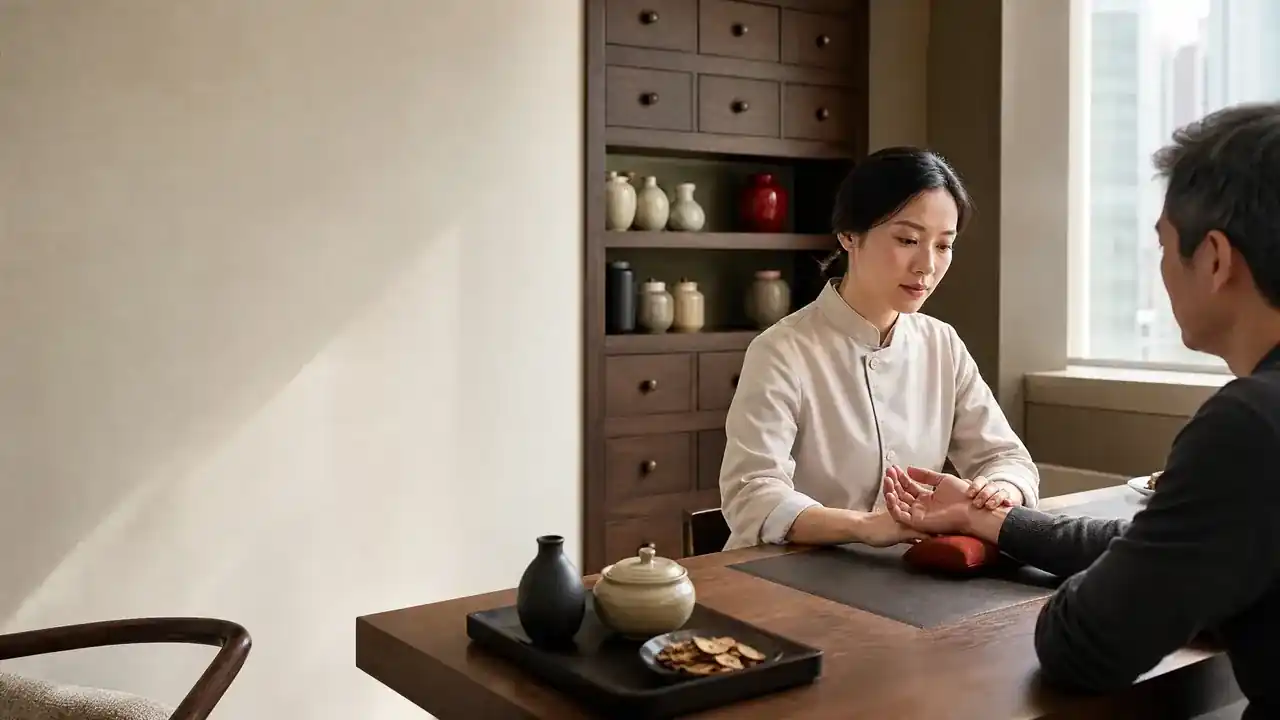
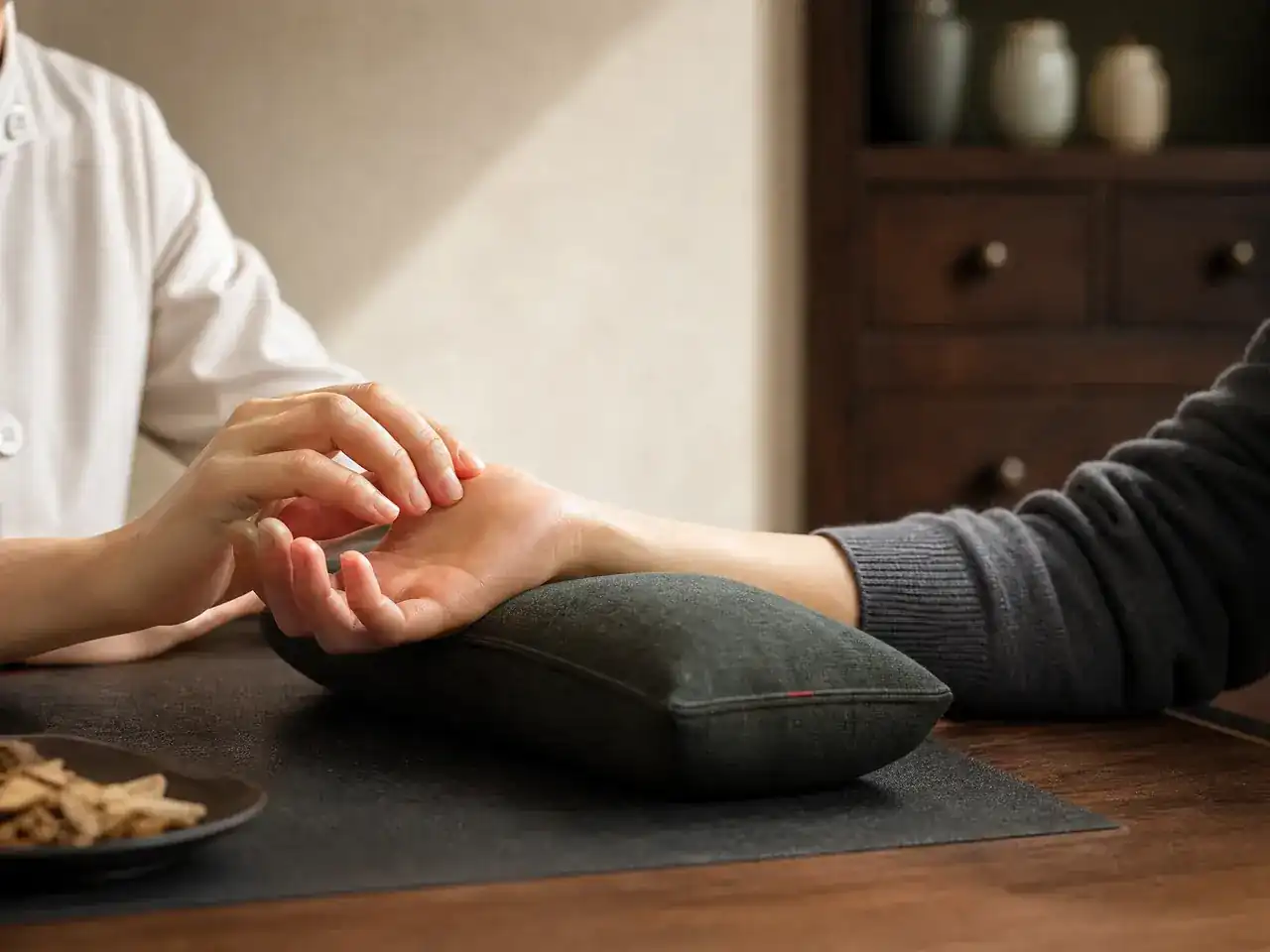
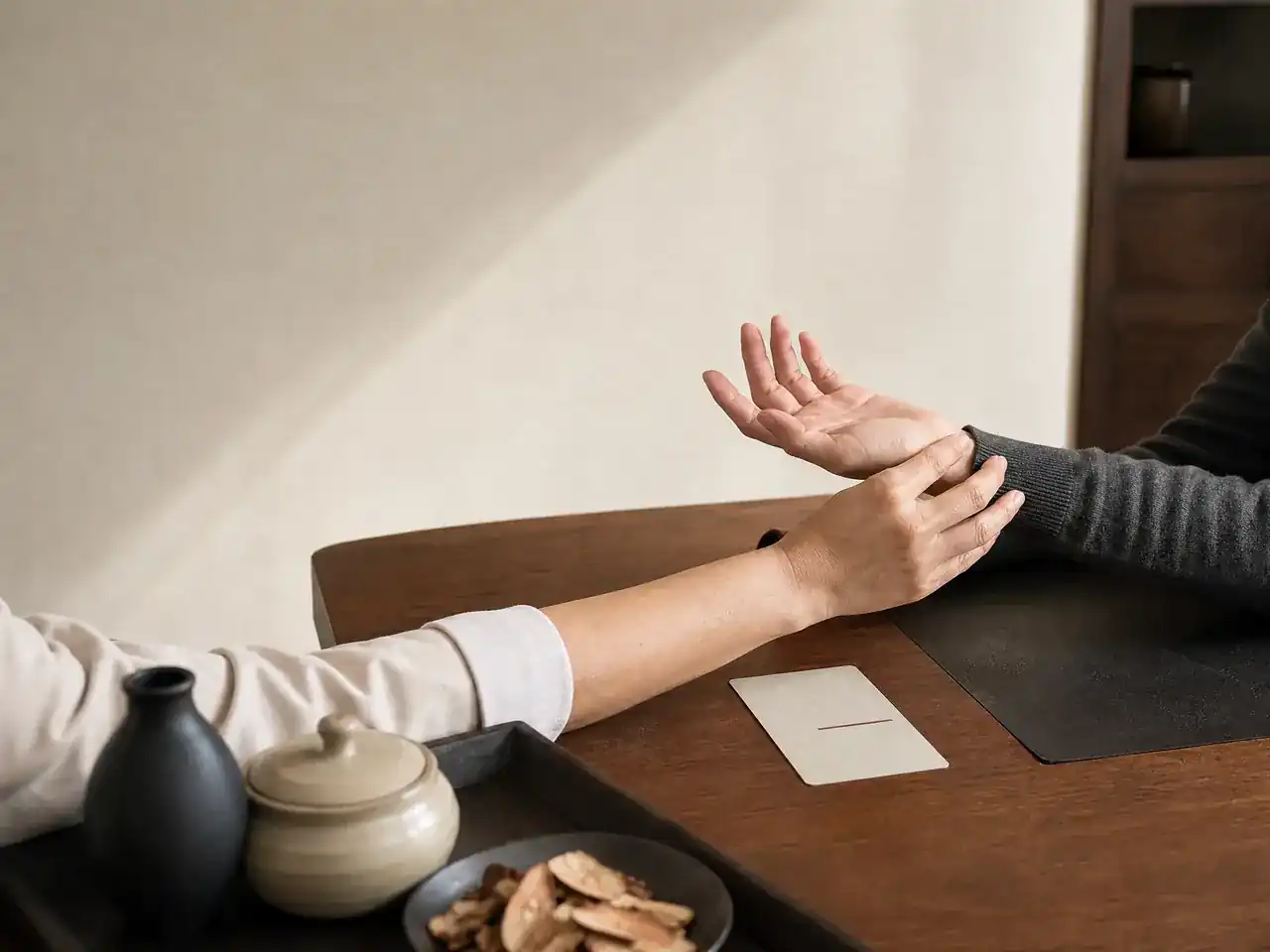
Registered Chinese medicine practitioners at Harmonia TCM utilize traditional diagnostic methods—observation, auscultation and olfaction, inquiry, and pulse-taking—to thoroughly understand the mother's specific condition. In TCM theory, the depletion of Qi and blood after childbirth can affect organ functions, subsequently triggering mood disturbance. Therefore, the focus of TCM support is on harmonizing Qi and blood and balancing Yin and Yang, rather than solely suppressing emotional symptoms.
How TCM Assesses Postpartum Mood Disturbance
When assessing postpartum mood disturbance, a TCM practitioner comprehensively considers the mother's physiological and psychological state. This includes understanding the delivery process, postpartum recovery, sleep quality, and daily dietary habits. Through this information, the practitioner can more accurately determine the mother's constitutional type, such as whether there is a deficiency of both Qi and blood or stagnation of Liver Qi.
This personalized assessment helps in formulating a targeted TCM support plan. The practitioner will communicate fully with the mother, explaining the assessment results and the suggested direction of care. We emphasize that TCM support is a gradual process requiring the mother's cooperation and patience; it is not a quick fix that yields immediate results.
Common Postpartum Constitutions and TCM Care Directions
Every mother's constitution and experience are unique, so the direction of TCM care will vary accordingly. Generally, common constitutional imbalances after childbirth include Qi and blood deficiency, Liver Qi stagnation, and deficiency of both the Heart and Spleen. Depending on the specific constitution, the practitioner will recommend appropriate care methods, which may include herbal prescriptions, acupuncture, or adjustments to daily routine and diet.
For instance, for a mother with Qi and blood deficiency, the focus of care might be on tonifying Qi and nourishing blood; whereas for someone with Liver Qi stagnation, the emphasis may be on soothing the Liver and relieving depression. These TCM support plans aim to assist the body in returning to its natural state of balance, thereby indirectly improving postpartum mood disturbance. Please note that these care methods must be prescribed by a registered practitioner based on actual conditions; do not self-administer herbal medicines.
Coordinating TCM Support with Conventional Medical Care
TCM support for postpartum depression is typically provided as part of comprehensive care. We encourage mothers to maintain communication with their conventional healthcare team while receiving TCM care. If a mother is undergoing Western medical treatment or taking psychiatric medications, she should proactively inform the TCM practitioner to ensure safety and coordination between different therapies.
In some cases, postpartum mood disturbance may require immediate psychological counseling or psychiatric intervention. If, during the assessment, the practitioner identifies severe depressive symptoms or self-harm tendencies, they will strongly advise the mother to seek immediate assistance from a specialist. TCM support cannot replace necessary conventional medical emergencies or specialist treatments.
Comparing TCM Assessment and Conventional Medical Care for Postpartum Depression
Understanding the different focuses of TCM support and conventional medical care in managing postpartum depression helps mothers make informed health decisions. The table below outlines the main differences in assessment and intervention approaches between the two.
| Comparison Aspect | TCM Support | Conventional Medical Care (Western Medicine/Psychology) |
|---|---|---|
| Assessment Focus | Overall constitution, balance of Qi, blood, Yin, and Yang, organ functions | Severity of emotional symptoms, psychological state, brain chemical balance |
| Diagnostic Methods | Four diagnostic methods (observation, auscultation/olfaction, inquiry, pulse-taking) | Clinical questionnaire assessments, psychiatric diagnostic criteria (e.g., DSM-5) |
| Intervention Approaches | Herbal care, acupuncture, emotional guidance, dietary advice | Psychotherapy (e.g., Cognitive Behavioral Therapy), antidepressants |
| Goals and Expectations | Harmonizing constitution, improving overall physical and mental state; requires longer time | Alleviating specific emotional symptoms, preventing deterioration; time to effect depends on therapy |
| Applicable Situations | Mild to moderate mood disturbance, desire to improve overall constitution | Moderate to severe depression, requiring immediate crisis intervention or medication control |
Service Arrangements and Limitations at Kwun Tong Clinic
Harmonia TCM's only physical clinic is located in Kwun Tong, providing professional TCM assessment and care services for mothers in need. We understand that traveling may be inconvenient for postpartum women, so the information provided here can also serve as a reference for clinic visits or home visit coverage. Please note that we do not have other branches; all physical consultations are conducted at the Kwun Tong clinic.
For mothers who are unable to visit the clinic in person, we may offer specific care arrangements. However, the actual availability, suitability, and associated risks must be finally confirmed by a registered Chinese medicine practitioner and the clinic. We are committed to providing safe and reliable TCM support and will discuss all details with you thoroughly before confirming any services.
Frequently asked questions
How does TCM support help with postpartum depression?
TCM support primarily works by assessing the mother's overall constitution to find the root cause of Qi and blood imbalance. A registered practitioner will use methods like herbal medicine or acupuncture to harmonize organ functions based on individual conditions, aiming to improve the overall physiological state and thereby assisting in alleviating postpartum mood disturbance. This is a gradual care process.
How long does it take to receive TCM care for postpartum depression?
The duration of care varies from person to person, depending on the mother's constitutional condition and the severity of the mood disturbance. TCM support emphasizes harmonizing the body from the root, which typically requires weeks to months of continuous follow-up. The practitioner will provide an initial expected timeline after the assessment and make adjustments based on progress.
Can I take herbal medicine to improve postpartum mood disturbance while breastfeeding?
Under the professional guidance of a registered practitioner, breastfeeding women can take specific herbal medicines. The practitioner will carefully select herbs that are safe for the infant. However, you must clearly inform the practitioner that you are breastfeeding during the consultation, and never purchase or take any unprescribed herbal medicine on your own.
Does Harmonia TCM have branches outside Kwun Tong providing TCM support?
Harmonia TCM's only physical clinic is located in Kwun Tong, and we have not established any other branches. The information provided here can serve as a reference for clinic visits or home visit coverage, but all physical consultations and primary services are conducted at the Kwun Tong clinic. Specific arrangements need to be confirmed by the clinic.
Can I still receive TCM support if I am taking antidepressants?
Yes, but safety and coordination must be ensured. Please provide a list of all medications you are taking to the practitioner during your first consultation. The practitioner will assess potential interactions between Chinese and Western medicines and may suggest staggering the times you take them. We encourage you to maintain communication with your attending Western medical doctor at the same time.
When should I pause TCM care and seek emergency services?
If you experience severe red flag symptoms, such as thoughts of harming yourself or your baby, hallucinations, persistent severe insomnia, or a complete inability to cope with daily life, you should immediately pause TCM care and go to the emergency room or seek immediate assistance from a psychiatrist. TCM support cannot replace emergency medical crisis intervention.
Related topics
Sources
Seek Professional TCM Assessment
If you are experiencing postpartum mood disturbance, Harmonia TCM's registered practitioners can provide you with a detailed constitutional assessment and a TCM support plan. Please contact our Kwun Tong clinic to learn more about service details and arrangements.