Pain & Assessment
Frozen Shoulder Treatment
Frozen shoulder often brings persistent shoulder pain and restricted movement, significantly impacting daily life. At Harmonia TCM, we provide detailed TCM assessments to understand your constitution and condition, offering appropriate care recommendations to help soothe discomfort and gradually restore shoulder function.
Quick answer: Frozen shoulder is a condition causing pain and stiffness in the shoulder joint. In TCM, it is often related to poor circulation of Qi and blood. Harmonia TCM provides personalized assessment and support, utilizing methods like acupuncture and herbal medicine to address shoulder pain and restricted movement, aiming to improve local circulation and relieve discomfort.
View pricesContact Us for Details
CLEAR PRICES
Interested in a treatment? You are always welcome to ask.
We clearly list our current single, trial and package prices so you can explore at your own pace. You are always welcome to message us on WhatsApp about any service, timing or arrangement.
| Category and service | Content / terms | Public price (HK$) | Booking note | Enquire |
|---|---|---|---|---|
| Hair & scalp | Scalp health and hair-loss support | AI scalp analysis, deep follicle cleansing and oil-control support | Trial offerPackageTrial 380; 6 sessions 3,480; 12 sessions 5,760; 20 sessions 8,600; 30 sessions 11,400 | Average per session for 6/12/20/30: 580/480/430/380 | Ask on WhatsApp |
| Hair & scalp | Hair acupuncture with herbal medicine | Scalp acupuncture with 3 days of decoction-free herbal medicine | Single visitPackageSingle 580; 6 sessions 3,180; 12 sessions 5,760; 20 sessions 8,600; 30 sessions 11,400 | Average per session for 6/12/20/30: 530/480/430/380 | Ask on WhatsApp |
| Hair & scalp | Integrated hair support programme | Acupuncture, herbal medicine and follicle activation; packages include shampoo and serum | Single visitPackageSingle 1,260; 8 sessions 8,640; 16 sessions 15,680; 20 sessions 18,600; 30 sessions 26,400 | Average per session for 8/16/20/30: 1,080/980/930/880 | Ask on WhatsApp |
| Weight management | Full-body acupoint embedding | Full-body acupoint embedding; packages include proportionate days of herbal support | Single visitPackageSingle 980; 10 sessions 7,800; 20 sessions 14,600; 30 sessions 20,400 | Average per session for 10/20/30: 780/730/680 | Ask on WhatsApp |
| Facial acupuncture | Brightening V-face (Essential) | Facial acupuncture, meridian support and swelling management | Trial offerPackageTrial 480; 10 sessions 5,200; 20 sessions 9,600; 30 sessions 13,500 | Average per session for 10/20/30: 520/480/450 | Ask on WhatsApp |
| Facial acupuncture | Firming and refining (Advanced) | Enhanced facial acupuncture for firmness and fine-line concerns with a moisturising mask serum | Trial offerPackageTrial 780; 10 sessions 9,000; 20 sessions 16,600; 30 sessions 23,400 | Average per session for 10/20/30: 900/830/780 | Ask on WhatsApp |
| Pain care | Extracorporeal shockwave therapy | Deep inflammation support and fascial relaxation | Prince Edward: 250 per area; Kwun Tong: 250 for 1 area, 450 for 2, 600 for 3 | Clinic-specific pricing; confirm location before booking | Ask on WhatsApp |
| Pain care | Manual therapy | TCM bone-injury assessment, manual alignment and tui na techniques | Single visitSingle 580 | Suitability is confirmed after assessment | Ask on WhatsApp |
| Pain care | Acupuncture with manual therapy | Acupuncture with manual structural support | Single visitSingle 680 | Suitability is confirmed after assessment | Ask on WhatsApp |
| TCM regulation | Acupuncture with herbal medicine | TCM consultation, whole-body acupuncture and 3 days of decoction-free herbal medicine granules | Single visitSingle 580 | Confirm clinician availability and service arrangement when booking | Ask on WhatsApp |



Understanding Frozen Shoulder and the TCM Perspective
Frozen shoulder, medically known as adhesive capsulitis, is characterized by inflammation of the tissues surrounding the shoulder joint, leading to shoulder pain and restricted movement. Individuals often experience stiffness and worsening pain at night, which can severely affect sleep and daily activities. This condition typically progresses through three stages: freezing, frozen, and thawing, each with distinct symptoms and durations.
From a Traditional Chinese Medicine (TCM) perspective, frozen shoulder is sometimes referred to as 'Fifty-Year-Old Shoulder' or 'Leaking Shoulder Wind'. TCM suggests that as we age, Qi and blood may naturally weaken. Combined with the invasion of external pathogenic factors like wind, cold, and dampness, this can lead to blockages in the shoulder's meridians. When circulation is impeded, pain arises. Therefore, a TCM assessment considers not only the localized shoulder pain but also the individual's overall constitution and systemic balance.
Common Symptoms and Impacts of Frozen Shoulder
The initial symptoms of frozen shoulder usually involve a dull ache that gradually intensifies, accompanied by a progressive reduction in the shoulder's range of motion. You might find it increasingly difficult to perform everyday tasks such as combing your hair, getting dressed, or reaching for objects. This restricted movement not only causes physical inconvenience but the chronic pain can also lead to emotional distress and stress.
During the frozen stage, while the pain might stabilize or slightly decrease, the stiffness in the shoulder joint reaches its peak, severely limiting arm movement. Understanding the progression of these symptoms is crucial for seeking timely professional assessment and support. The practitioners at Harmonia TCM will carefully observe your movement and function to develop an appropriate care plan.
TCM Assessment and Personalized Care Plans
At Harmonia TCM, we value the unique condition of every individual. Our registered Chinese medicine practitioners conduct a comprehensive assessment using the four diagnostic methods: observation, auscultation and olfaction, inquiry, and pulse taking. This detailed approach helps us understand the nature of your shoulder pain, the extent of restricted movement, and your overall health status, allowing us to identify the root of the issue and provide targeted recommendations.
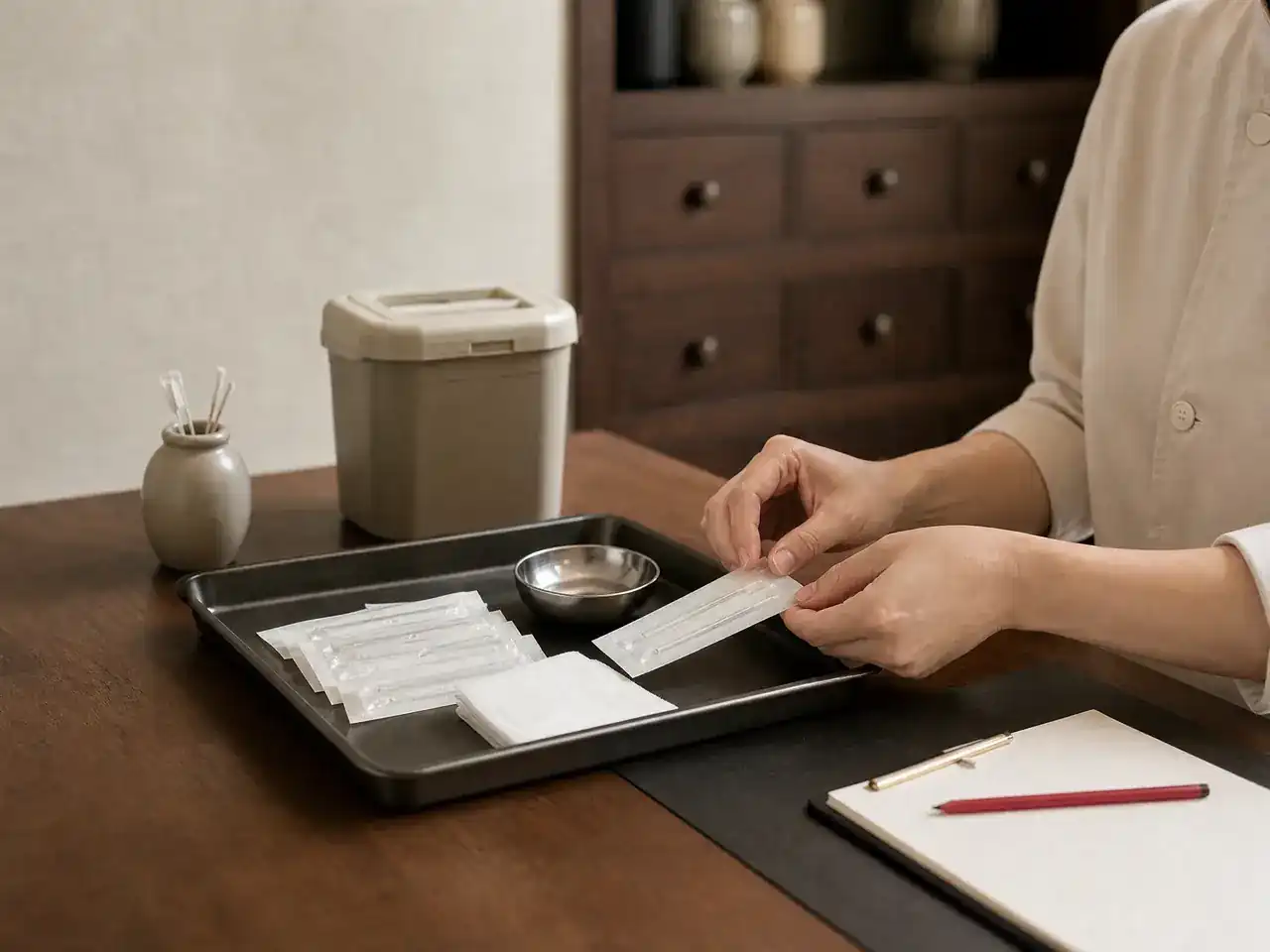
Based on the assessment findings, our practitioners may suggest a combination of methods such as acupuncture, Tui Na (Chinese therapeutic massage), or herbal medicine. Acupuncture aims to unblock meridians and improve local Qi and blood circulation, while Tui Na can help relax tense muscles and fascia. The goal of these approaches is to soothe discomfort and gradually improve the mobility of the shoulder.
Stages of Frozen Shoulder and TCM Strategies
The progression of frozen shoulder can be divided into different stages, and TCM strategies are adjusted accordingly. The following table outlines the characteristics of each stage and the corresponding TCM considerations, helping you better understand the overall process.
| Stage | Key Characteristics | TCM Considerations | Expected Goals |
|---|---|---|---|
| Freezing Stage | Gradually worsening shoulder pain, especially at night, with mild restricted movement beginning. | Focus on soothing pain and dispelling cold and dampness, possibly utilizing acupuncture and gentle techniques. | Alleviate acute pain and improve sleep quality. |
| Frozen Stage | Pain may stabilize, but shoulder stiffness is prominent, with severely restricted movement. | Emphasize unblocking meridians and promoting blood circulation, combining Tui Na with targeted exercise advice. | Improve local circulation and prevent further joint stiffness. |
| Thawing Stage | Pain gradually subsides, and the shoulder's range of motion slowly begins to recover. | Focus on nourishing Qi and blood, and supporting tendons and bones to consolidate previous progress. | Promote functional recovery and enhance overall mobility. |
Daily Care and Preventive Recommendations
In addition to receiving professional assessment and support, daily self-care is equally important in managing frozen shoulder. Keeping the shoulder warm and avoiding prolonged exposure to cold or damp environments can help reduce the invasion of pathogenic wind, cold, and dampness. Furthermore, moderate shoulder stretching exercises can help maintain joint flexibility, but movements that require excessive force or cause severe pain should be avoided.
The practitioners at Harmonia TCM will provide personalized daily care recommendations based on your specific situation. This may include demonstrations of specific stretching exercises or advice on lifestyle adjustments. Through a combination of professional support and self-care, we hope to assist you in more effectively managing the challenges of shoulder pain and restricted movement.
Service Arrangements and Commitments at Harmonia TCM
Harmonia TCM's only physical clinic is located in Kwun Tong, where we are dedicated to providing professional TCM services to residents in the district and surrounding areas. This information outlines common considerations and assessment directions. If you would like to discuss what may suit you or how an appointment can be arranged, please contact us. We value communication with you to ensure you fully understand all arrangements.
If you have any questions about frozen shoulder or our services, please feel free to contact us. We will arrange an initial consultation to assess your needs and discuss appropriate next steps. Please note that we do not guarantee specific outcomes, and all plans are based on professional assessment and your individual condition.
Frequently asked questions
How long does it usually take to recover from a frozen shoulder?
Recovery time for frozen shoulder varies from person to person and typically takes months to years. TCM assessment and support aim to soothe shoulder pain and improve restricted movement, helping you navigate each stage more comfortably, but a specific recovery timeframe cannot be guaranteed.
Can acupuncture help soothe shoulder pain and restricted movement?
Acupuncture is a common TCM method aimed at unblocking meridians and improving local Qi and blood circulation. Many find it helpful in soothing the pain and stiffness associated with frozen shoulder, but actual effectiveness depends on individual constitution and condition, and suitability must be assessed by a practitioner.
Should I move more or rest more during the frozen stage of frozen shoulder?
During the frozen stage, moderate movement helps prevent further joint stiffness, but actions causing severe pain should be avoided. Practitioners at Harmonia TCM will provide appropriate advice on activity and rest based on your specific situation to achieve the best balance.
Does Harmonia TCM offer home visit assessments or treatments?
Harmonia TCM's only physical clinic is located in Kwun Tong. Arrangements for home visits are currently pending confirmation. Actual availability and arrangements must be confirmed by the clinic and a registered practitioner based on specific circumstances. Please contact us for the latest information.
What role does herbal medicine play in managing frozen shoulder?
Herbal medicine is primarily used to regulate the constitution, nourish Qi and blood, or dispel cold and dampness to complement the overall care plan. Based on your assessment, the practitioner may prescribe suitable herbs to help improve shoulder discomfort and overall health.
If my shoulder pain is very severe, should I see a TCM practitioner or a Western doctor first?
If your shoulder pain is extremely severe, accompanied by redness, heat, fever, or severe numbness and weakness in the arm, it is recommended that you seek conventional Western emergency or specialist assessment first to rule out fractures, infections, or other serious issues. Once your condition is stable, you may consider TCM for supplementary assessment and support.
Related topics
Sources
Seek Professional Assessment for Frozen Shoulder
Shoulder pain and restricted movement shouldn't be a long-term burden on your daily life. Contact Harmonia TCM to have our registered practitioners conduct a detailed assessment and explore suitable care options. Please note that actual service arrangements require confirmation by the clinic.