Pain & Assessment
Carpal Tunnel Syndrome
Carpal tunnel syndrome is commonly experienced by individuals who perform repetitive hand movements over long periods, primarily manifesting as numbness and tingling in the wrist, palm, and fingers. Traditional Chinese Medicine (TCM) views this as being related to the disrupted flow of Qi and blood in the meridians. Through detailed consultation and assessment, we aim to help you understand your condition and explore suitable care directions.
Quick answer: Carpal tunnel syndrome is caused by the compression of the median nerve at the wrist, with common symptoms including wrist pain, finger numbness, and weakness. TCM provides personalized assessments targeting nerve entrapment by observing your constitution and meridian status, aiming to soothe discomfort and improve your quality of life.
View pricesContact Us for Inquiries
CLEAR PRICES
Interested in a treatment? You are always welcome to ask.
We clearly list our current single, trial and package prices so you can explore at your own pace. You are always welcome to message us on WhatsApp about any service, timing or arrangement.
| Category and service | Content / terms | Public price (HK$) | Booking note | Enquire |
|---|---|---|---|---|
| Hair & scalp | Scalp health and hair-loss support | AI scalp analysis, deep follicle cleansing and oil-control support | Trial offerPackageTrial 380; 6 sessions 3,480; 12 sessions 5,760; 20 sessions 8,600; 30 sessions 11,400 | Average per session for 6/12/20/30: 580/480/430/380 | Ask on WhatsApp |
| Hair & scalp | Hair acupuncture with herbal medicine | Scalp acupuncture with 3 days of decoction-free herbal medicine | Single visitPackageSingle 580; 6 sessions 3,180; 12 sessions 5,760; 20 sessions 8,600; 30 sessions 11,400 | Average per session for 6/12/20/30: 530/480/430/380 | Ask on WhatsApp |
| Hair & scalp | Integrated hair support programme | Acupuncture, herbal medicine and follicle activation; packages include shampoo and serum | Single visitPackageSingle 1,260; 8 sessions 8,640; 16 sessions 15,680; 20 sessions 18,600; 30 sessions 26,400 | Average per session for 8/16/20/30: 1,080/980/930/880 | Ask on WhatsApp |
| Weight management | Full-body acupoint embedding | Full-body acupoint embedding; packages include proportionate days of herbal support | Single visitPackageSingle 980; 10 sessions 7,800; 20 sessions 14,600; 30 sessions 20,400 | Average per session for 10/20/30: 780/730/680 | Ask on WhatsApp |
| Facial acupuncture | Brightening V-face (Essential) | Facial acupuncture, meridian support and swelling management | Trial offerPackageTrial 480; 10 sessions 5,200; 20 sessions 9,600; 30 sessions 13,500 | Average per session for 10/20/30: 520/480/450 | Ask on WhatsApp |
| Facial acupuncture | Firming and refining (Advanced) | Enhanced facial acupuncture for firmness and fine-line concerns with a moisturising mask serum | Trial offerPackageTrial 780; 10 sessions 9,000; 20 sessions 16,600; 30 sessions 23,400 | Average per session for 10/20/30: 900/830/780 | Ask on WhatsApp |
| Pain care | Extracorporeal shockwave therapy | Deep inflammation support and fascial relaxation | Prince Edward: 250 per area; Kwun Tong: 250 for 1 area, 450 for 2, 600 for 3 | Clinic-specific pricing; confirm location before booking | Ask on WhatsApp |
| Pain care | Manual therapy | TCM bone-injury assessment, manual alignment and tui na techniques | Single visitSingle 580 | Suitability is confirmed after assessment | Ask on WhatsApp |
| Pain care | Acupuncture with manual therapy | Acupuncture with manual structural support | Single visitSingle 680 | Suitability is confirmed after assessment | Ask on WhatsApp |
| TCM regulation | Acupuncture with herbal medicine | TCM consultation, whole-body acupuncture and 3 days of decoction-free herbal medicine granules | Single visitSingle 580 | Confirm clinician availability and service arrangement when booking | Ask on WhatsApp |
Understanding Carpal Tunnel Syndrome and Nerve Entrapment
Carpal tunnel syndrome is a prevalent neurological condition affecting the upper limbs, primarily caused by the compression of the median nerve within the wrist. The median nerve is responsible for controlling the sensory and motor functions of the thumb, index finger, middle finger, and part of the ring finger. When the tissues surrounding the wrist become inflamed or swollen, it can lead to nerve entrapment, subsequently triggering a series of uncomfortable symptoms.
In our daily lives, frequent use of computer keyboards and mice, or engaging in occupations that require repetitive bending of the wrists, can increase the risk of developing this condition. In the early stages, patients often experience intermittent numbness or tingling in their fingers, which is particularly noticeable during the night or early morning. If not addressed promptly, the symptoms may gradually worsen, potentially affecting hand grip strength and the ability to perform daily activities.
TCM categorizes these types of symptoms under the scope of "Bi syndrome" (impediment syndrome), believing that the root cause lies in the localized obstruction of Qi and blood circulation, leading to blocked meridians. Through a comprehensive TCM assessment, we aim to identify the underlying factors contributing to this poor circulation and formulate corresponding care recommendations based on your individual constitution.
Common Symptoms and the Impact of Wrist Pain
The symptoms of carpal tunnel syndrome typically emerge gradually. The most classic manifestations include wrist pain, numbness in the fingers, tingling, or a burning sensation, which can sometimes extend upwards into the forearm. Patients may find it increasingly difficult to perform fine motor tasks, such as buttoning clothes, holding a pen to write, or picking up small objects.
As the condition progresses, the muscles in the hand may experience weakness or even atrophy. Many patients report that the numbness experienced at night often wakes them from their sleep, severely impacting their sleep quality and daytime energy levels. Therefore, recognizing these early signals is crucial for preventing the condition from deteriorating further.
When assessing this type of wrist pain, TCM does not solely focus on the localized pain and numbness; it also conducts a comprehensive analysis by integrating the overall status of the body's Qi and blood. We believe that by adjusting the overall constitution, it can help improve localized microcirculation, thereby creating favorable conditions for soothing the discomfort.
TCM Perspectives and Assessment of Carpal Tunnel Syndrome
From the perspective of TCM, the occurrence of carpal tunnel syndrome is often related to the invasion of pathogenic wind, cold, and dampness, or Qi stagnation and blood stasis caused by chronic strain. When external pathogens lodge in the meridians, or when Qi and blood are depleted due to overuse, the meridians in the local wrist area lose their nourishment, leading to pain and numbness.
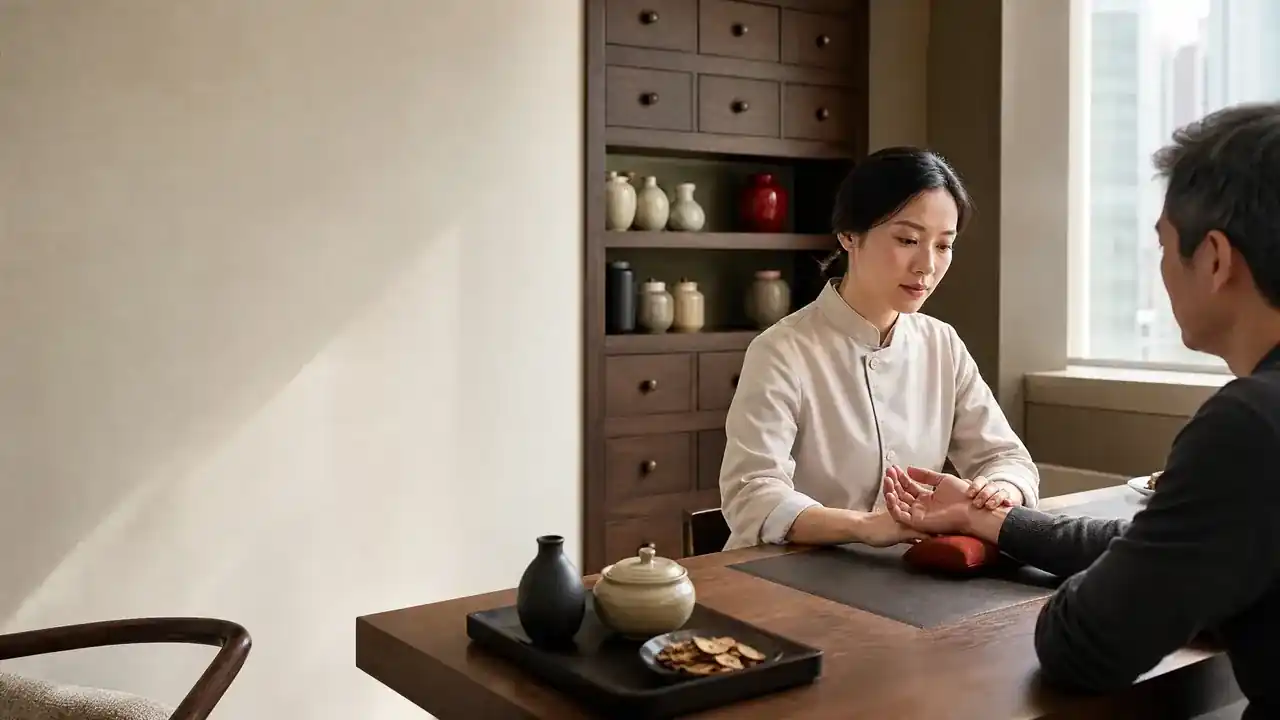
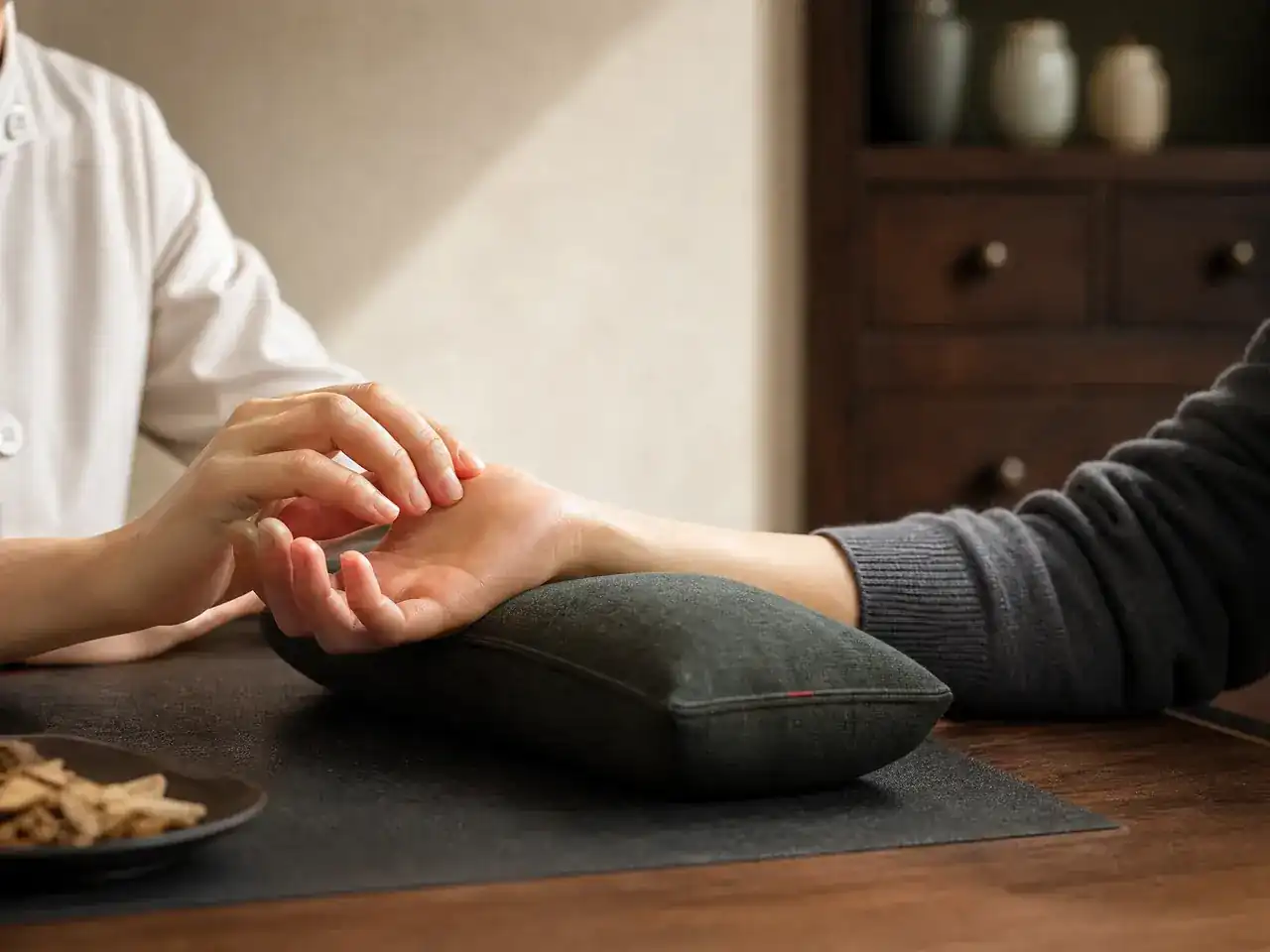
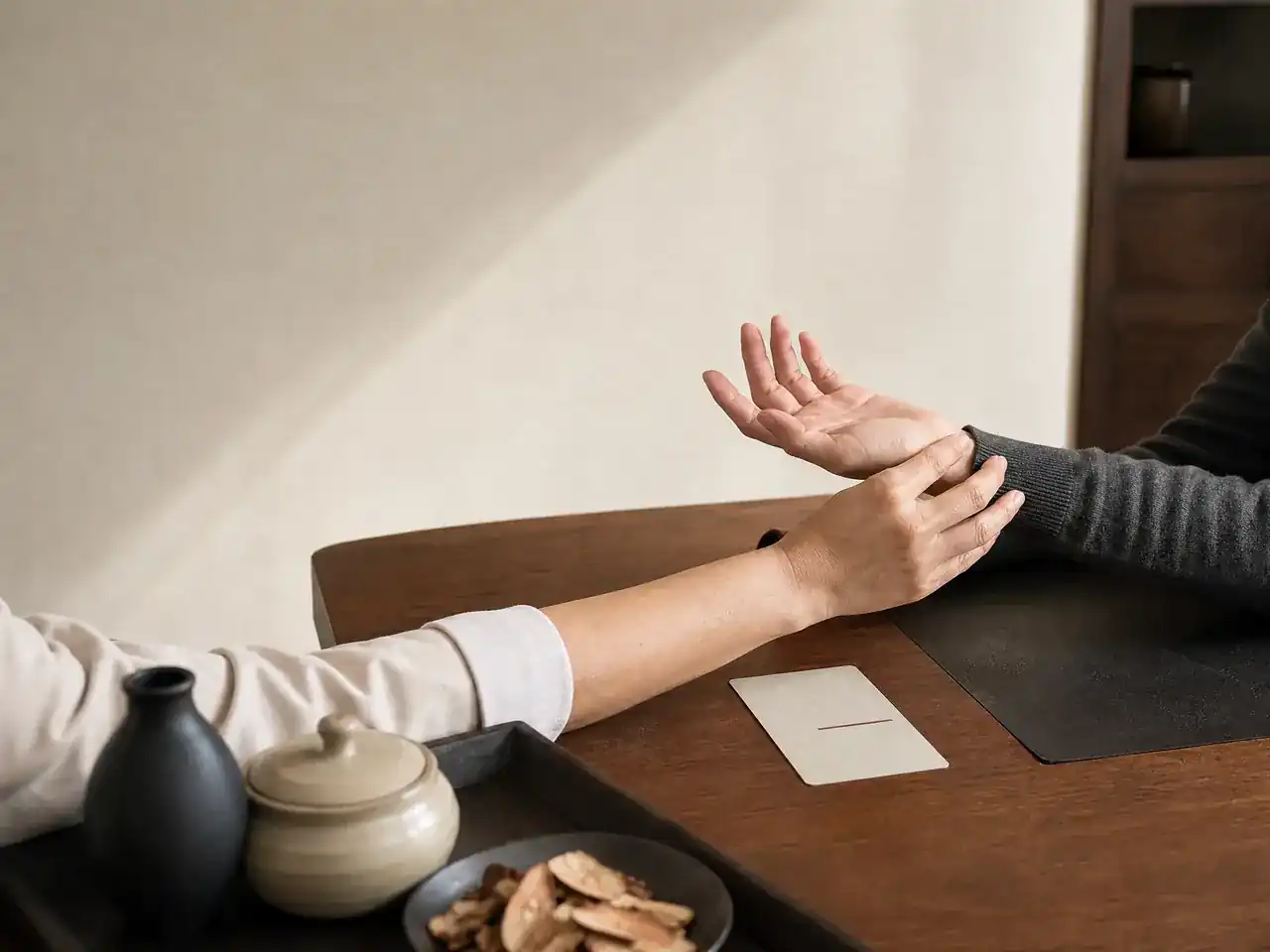
At Harmonia TCM, our registered Chinese medicine practitioners will utilize the four diagnostic methods—observation, auscultation and olfaction, inquiry, and pulse-taking—to gain a detailed understanding of the characteristics of your symptoms, lifestyle habits, and overall health status. We will pay special attention to the nature of the pain (such as sharp, dull, or distending pain), the timing of its onset, and whether there are any accompanying symptoms, such as an aversion to cold or fatigue.
This comprehensive assessment approach helps us accurately determine your constitutional type, such as whether it belongs to the pattern of Qi stagnation and blood stasis, cold-dampness obstructing the collaterals, or deficiency of both Qi and blood. Based on these assessment results, we will work with you to explore the most suitable care direction, hoping to condition your body from the root and restore balance.
Comparing TCM Care and Conventional Medical Approaches
When facing carpal tunnel syndrome, patients usually have multiple care options available. Conventional medical approaches may include wearing wrist splints, taking anti-inflammatory and pain-relieving medications, undergoing physical therapy, or, in severe cases, performing surgical interventions. These methods primarily focus on direct intervention targeting localized inflammation and nerve compression.
In contrast, TCM care places a stronger emphasis on the overall harmonization of Qi and blood and the unblocking of meridians. TCM may suggest modalities such as acupuncture, Tui Na (Chinese therapeutic massage), cupping, or the internal and external application of Chinese herbal medicine, aiming to improve localized blood circulation, reduce tissue edema, and promote the recovery of nerve function. Both approaches have their own characteristics and advantages, and patients can make choices based on their specific circumstances and needs.
To help you better understand the characteristics of different care modalities, we have compiled the following comparison table. Please note that this is intended as general guidance, and the actual care plan should be formulated by professional healthcare providers based on your specific condition.
| Comparison Aspect | TCM Care | Conventional Medicine |
|---|---|---|
| Primary Philosophy | Unblocking meridians, harmonizing Qi and blood, improving overall constitution | Reducing localized inflammation, relieving nerve compression |
| Common Methods | Acupuncture, Tui Na, herbal medicine, cupping | Wrist splints, medications, physical therapy, surgery |
| Focus Area | The connection between localized symptoms and overall Qi and blood status | Localized pathological changes and the degree of nerve damage |
| Suitable Scenarios | Those seeking to condition their constitution through non-invasive means | Those with severe symptoms or requiring rapid relief from acute pain |
| Potential Advantages | Relatively fewer side effects, focuses on overall balance | Highly targeted, offers clear interventions for severe compression |
Daily Care and Preventive Recommendations
In addition to seeking professional medical assessment, daily self-care is equally important for soothing the symptoms of carpal tunnel syndrome. Firstly, you should try to avoid maintaining the same hand posture for prolonged periods, especially movements that involve excessive bending or extending of the wrist. When working or engaging in repetitive hand activities, it is recommended to stop and rest at regular intervals and perform simple wrist stretching exercises.
Secondly, keeping your hands warm can also help promote blood circulation and reduce the stimulation of cold on the joints and nerves. In cold weather, consider wearing gloves or soaking your hands in warm water. Furthermore, paying attention to the setup of your work environment, such as adjusting the height of your keyboard and mouse to make them ergonomic, can also effectively reduce the burden on your wrists.
TCM also emphasizes the regularity of diet and daily routines. Maintaining a balanced diet and avoiding excessive consumption of raw, cold, or greasy foods can help maintain the healthy transformation and transportation functions of the spleen and stomach, thereby ensuring the source of Qi and blood production. Adequate sleep and moderate exercise can strengthen your constitution and enhance your body's self-healing capabilities.
Service Arrangements and Important Notices at Harmonia TCM
Harmonia TCM is dedicated to providing professional and considerate TCM services to the public. We deeply understand that every patient's condition is unique; therefore, before providing any recommendations or care, a detailed assessment by a registered Chinese medicine practitioner is mandatory. Please note that the information provided here is for educational and reference purposes only and does not constitute a specific medical diagnosis or a guarantee of treatment efficacy.
Currently, Harmonia TCM's only physical clinic is located in Kwun Tong. The service scope and visitation arrangements described here serve primarily as a reference for coverage and do not imply that we have branches in other districts. The actual availability of services, their suitability for your personal condition, as well as the associated risks and arrangements, must be finally confirmed by our practitioners and the clinic.
We encourage you to seek professional advice early when facing persistent wrist discomfort. Through in-depth communication with our Chinese medicine practitioners, we hope to provide you with clear guidance and assist you in making informed choices on your path to recovery.
Frequently asked questions
Can carpal tunnel syndrome be completely cured through TCM?
TCM care aims to soothe symptoms and improve quality of life by regulating Qi and blood and unblocking meridians, but we cannot guarantee a complete cure. The recovery progress of each patient varies depending on the severity of the condition and their individual constitution. For severe nerve entrapment, intervention from conventional medicine may be required in conjunction.
Is acupuncture helpful for soothing wrist pain?
Acupuncture is one of the commonly used methods in TCM. By stimulating specific acupoints, it is hoped to promote localized Qi and blood circulation, which may help reduce wrist pain and numbness. However, the actual effects vary from person to person, and it must be assessed by a registered Chinese medicine practitioner before proceeding.
Do I need to stop working to accommodate the care?
This depends on the nature of your work and the severity of your symptoms. If your work requires frequent use of your wrists, the practitioner may suggest that you appropriately reduce related activities or increase rest time. In some cases, wearing a splint or adjusting your working posture can already provide a certain level of assistance.
Besides wrist pain, what other symptoms are associated with carpal tunnel syndrome?
Besides wrist pain, common symptoms also include numbness, tingling, or a burning sensation in the thumb, index, and middle fingers, which typically worsen at night. Some patients may also experience weakness in the hand, making it difficult to perform fine motor tasks.
Does Harmonia TCM have branches outside of Kwun Tong?
Currently, Harmonia TCM's only physical clinic is located in Kwun Tong. The service scope mentioned here is intended as general guidance and does not imply that we have branches in other districts. All detailed assessments and care must be conducted at our Kwun Tong clinic.
If I am currently receiving Western medical treatment, can I still seek a TCM assessment?
Yes, you can. The integration of Chinese and Western medicine can provide more comprehensive support in many situations. Please detail your current Western medical treatment plan and medication usage to our practitioner during the consultation so that we can provide you with safe and appropriate recommendations.
Related topics
Sources
Understand Your Wrist Health Status
Persistent wrist discomfort can affect your daily life. Harmonia TCM's team of registered Chinese medicine practitioners is ready to provide you with professional assessments and recommendations. This information outlines common considerations and assessment directions. If you would like to discuss what may suit you or how an appointment can be arranged, please contact us.