Sleep Regulation
Insomnia and sleep regulation (TCM)
Quality sleep is fundamental to overall health and well-being. At Harmonia TCM, we provide professional assessments and personalized regulation plans for individuals struggling with insomnia and sleep issues from a Traditional Chinese Medicine perspective. We are dedicated to helping you restore balance and live in harmony. We understand that everyone's constitution and lifestyle are unique, which is why addressing sleep problems requires a holistic approach to identify the underlying causes.
Quick answer: From a TCM perspective, insomnia is often related to disharmony in organ functions and an imbalance of Qi and blood. A registered TCM practitioner at Harmonia TCM will assess your specific constitution and sleep issues through the four diagnostic methods. They will then formulate a suitable sleep regulation plan, such as herbal medicine or acupuncture, aiming to improve sleep quality. Please note that actual arrangements require confirmation by the practitioner.
View pricesCheck Latest Arrangements
CLEAR PRICES
Interested in a treatment? You are always welcome to ask.
We clearly list our current single, trial and package prices so you can explore at your own pace. You are always welcome to message us on WhatsApp about any service, timing or arrangement.
| Category and service | Content / terms | Public price (HK$) | Booking note | Enquire |
|---|---|---|---|---|
| Hair & scalp | Scalp health and hair-loss support | AI scalp analysis, deep follicle cleansing and oil-control support | Trial offerPackageTrial 380; 6 sessions 3,480; 12 sessions 5,760; 20 sessions 8,600; 30 sessions 11,400 | Average per session for 6/12/20/30: 580/480/430/380 | Ask on WhatsApp |
| Hair & scalp | Hair acupuncture with herbal medicine | Scalp acupuncture with 3 days of decoction-free herbal medicine | Single visitPackageSingle 580; 6 sessions 3,180; 12 sessions 5,760; 20 sessions 8,600; 30 sessions 11,400 | Average per session for 6/12/20/30: 530/480/430/380 | Ask on WhatsApp |
| Hair & scalp | Integrated hair support programme | Acupuncture, herbal medicine and follicle activation; packages include shampoo and serum | Single visitPackageSingle 1,260; 8 sessions 8,640; 16 sessions 15,680; 20 sessions 18,600; 30 sessions 26,400 | Average per session for 8/16/20/30: 1,080/980/930/880 | Ask on WhatsApp |
| Weight management | Full-body acupoint embedding | Full-body acupoint embedding; packages include proportionate days of herbal support | Single visitPackageSingle 980; 10 sessions 7,800; 20 sessions 14,600; 30 sessions 20,400 | Average per session for 10/20/30: 780/730/680 | Ask on WhatsApp |
| Facial acupuncture | Brightening V-face (Essential) | Facial acupuncture, meridian support and swelling management | Trial offerPackageTrial 480; 10 sessions 5,200; 20 sessions 9,600; 30 sessions 13,500 | Average per session for 10/20/30: 520/480/450 | Ask on WhatsApp |
| Facial acupuncture | Firming and refining (Advanced) | Enhanced facial acupuncture for firmness and fine-line concerns with a moisturising mask serum | Trial offerPackageTrial 780; 10 sessions 9,000; 20 sessions 16,600; 30 sessions 23,400 | Average per session for 10/20/30: 900/830/780 | Ask on WhatsApp |
| Pain care | Extracorporeal shockwave therapy | Deep inflammation support and fascial relaxation | Prince Edward: 250 per area; Kwun Tong: 250 for 1 area, 450 for 2, 600 for 3 | Clinic-specific pricing; confirm location before booking | Ask on WhatsApp |
| Pain care | Manual therapy | TCM bone-injury assessment, manual alignment and tui na techniques | Single visitSingle 580 | Suitability is confirmed after assessment | Ask on WhatsApp |
| Pain care | Acupuncture with manual therapy | Acupuncture with manual structural support | Single visitSingle 680 | Suitability is confirmed after assessment | Ask on WhatsApp |
| TCM regulation | Acupuncture with herbal medicine | TCM consultation, whole-body acupuncture and 3 days of decoction-free herbal medicine granules | Single visitSingle 580 | Confirm clinician availability and service arrangement when booking | Ask on WhatsApp |


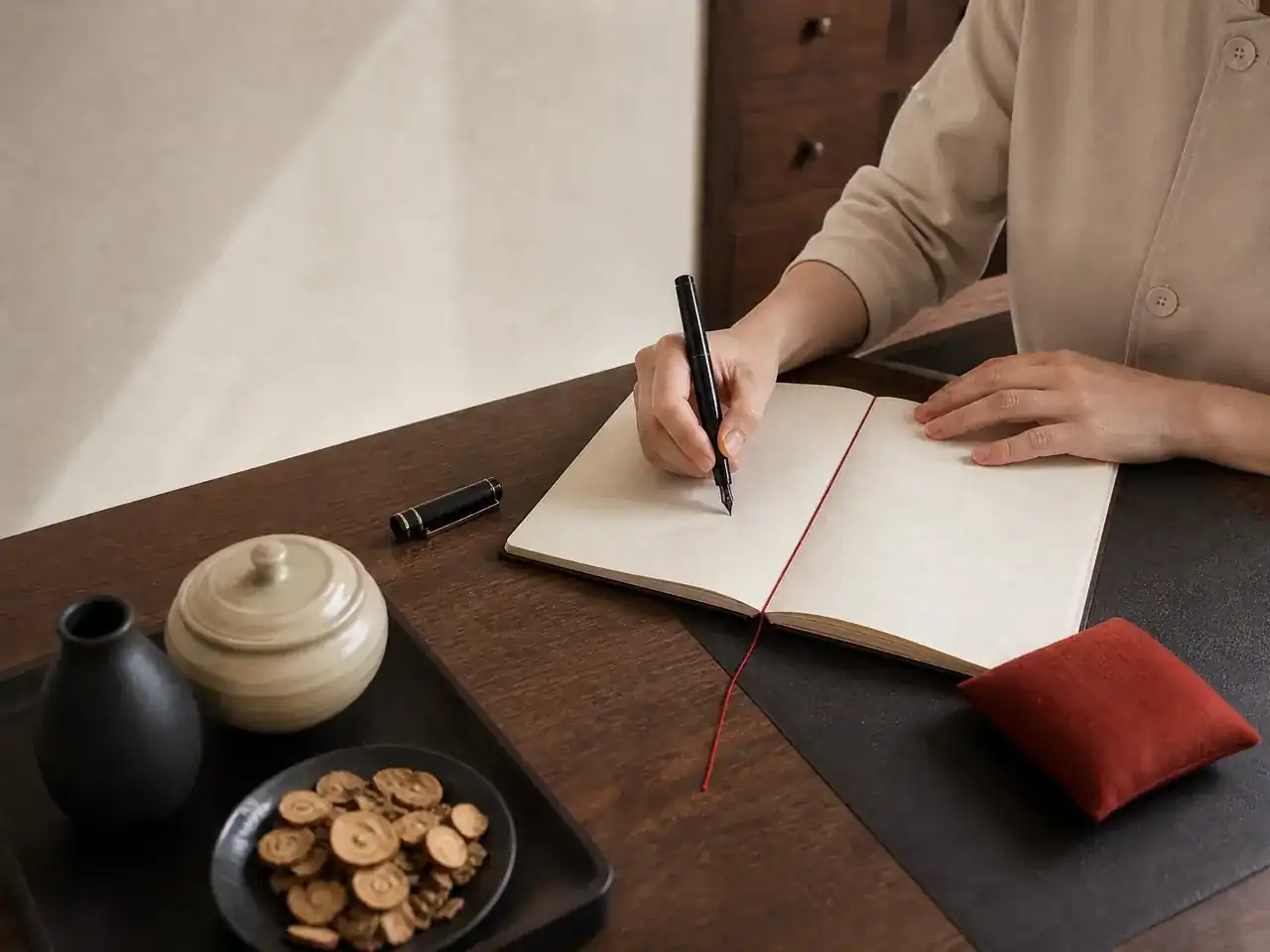
Understanding Insomnia from a TCM Perspective
Insomnia is a common health challenge faced by many in modern urban environments. From the perspective of Traditional Chinese Medicine (TCM), sleep is not merely a process of physical rest, but a crucial manifestation of the alternation of Yin and Yang, as well as the circulation of Qi and blood. When the body's Yin and Yang are imbalanced, or the flow of Qi and blood is obstructed, sleep issues are likely to arise. In ancient TCM texts, insomnia is often referred to as 'Bu Mei' (sleeplessness), and its causes are considered diverse, involving the functional states of multiple internal organs.
TCM believes that the Heart governs the mind, the Liver governs the smooth flow of Qi, the Spleen governs transformation and transportation, and the Kidney stores essence. If the functions of these organs become abnormal, sleep quality can be affected. For instance, chronic mental tension may lead to stagnation of Liver Qi, which can transform into fire and disturb the Heart and mind. Irregular eating habits may damage the Spleen and Stomach, leading to the internal generation of phlegm-heat, which interferes with sleep. Therefore, when addressing insomnia, TCM does not rely solely on sedation but emphasizes a holistic concept, seeking to identify and manage the root disharmony through pattern differentiation.
The philosophy of Harmonia TCM is to 'Restore Balance, Live in Harmony'. We believe that by gaining a deep understanding of each client's specific situation, including lifestyle habits, emotional state, and physical symptoms, we can more accurately assess the potential causes of insomnia. This personalized assessment process forms the foundation for developing an effective sleep regulation plan.
Common Sleep Issues and Constitutional Connections
Sleep issues manifest in various forms, commonly including difficulty falling asleep, light sleep with frequent awakenings, vivid dreaming, early awakening, and feeling unrefreshed upon waking. Within the theoretical framework of TCM, these different manifestations often reflect distinct constitutional characteristics and organ states. For example, individuals who have difficulty falling asleep accompanied by restlessness and a dry mouth may have a constitution characterized by Yin deficiency with hyperactive fire. Conversely, those who experience frequent awakenings with vivid dreams, accompanied by palpitations and forgetfulness, may be experiencing a deficiency of both the Heart and Spleen.
In addition to the above, some individuals may experience sleep issues due to high work pressure and emotional volatility; such cases are often related to Liver Qi stagnation transforming into fire. Furthermore, individuals with irregular eating habits or those who frequently consume rich, greasy foods may experience 'restlessness in bed due to disharmony of the Stomach'. Understanding these connections between constitution and sleep issues helps TCM practitioners conduct more precise assessments.
It is worth noting that a person's constitution is not static; it changes with factors such as age, living environment, dietary habits, and emotional state. Therefore, when undergoing sleep regulation, it is essential to dynamically observe changes in the constitution and adjust the regulation plan accordingly. The registered TCM practitioners at Harmonia TCM will ensure that the regulation plan remains tailored to your actual needs through regular follow-ups.
How TCM Assesses Insomnia
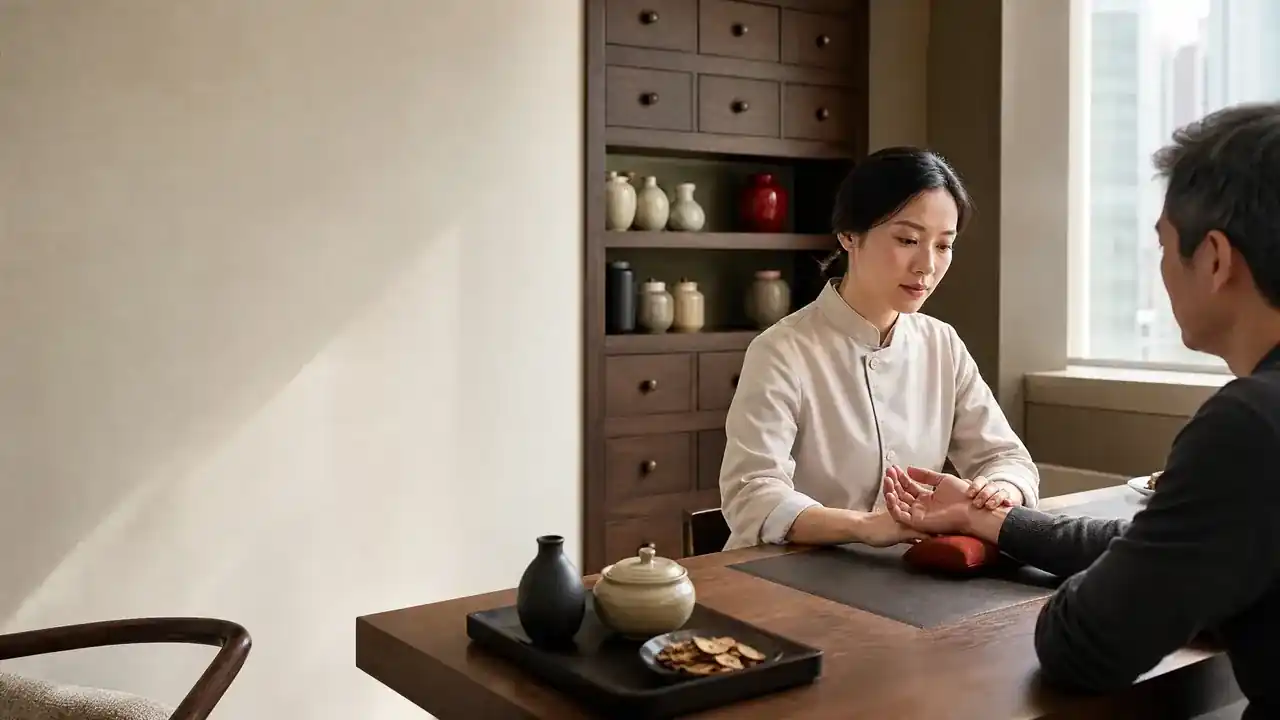
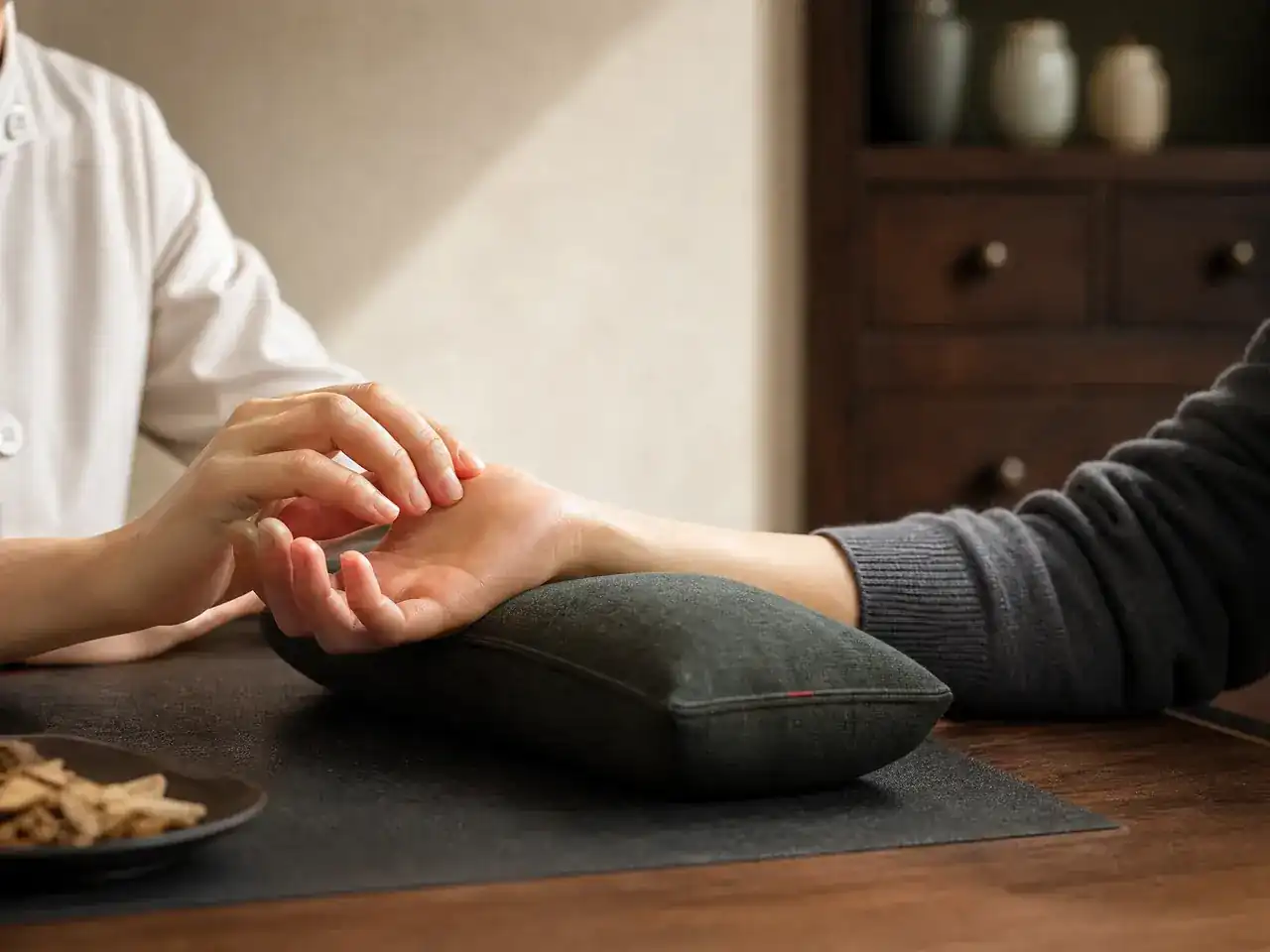
The TCM assessment of insomnia is a comprehensive and meticulous process that primarily relies on the 'Four Diagnostic Methods': observation, auscultation and olfaction, inquiry, and palpation. The practitioner will first observe the client's complexion, demeanor, and tongue characteristics (observation), listen to their voice and breathing (auscultation), inquire in detail about their sleep patterns, lifestyle habits, dietary preferences, and emotional state (inquiry), and finally, take their pulse (palpation) to understand the circulation of Qi and blood.
During the inquiry phase, the practitioner will pay special attention to the specific manifestations of insomnia, such as whether it is difficult to fall asleep or easy to wake up, whether there is a specific time of onset, and whether it is accompanied by other symptoms like headaches, dizziness, palpitations, or abdominal bloating. These details are crucial for determining the location and nature of the disharmony in the organs. Simultaneously, the practitioner will assess the client's psychological state, as emotional factors often play a significant role in the occurrence and development of insomnia.
By synthesizing the information gathered from the four diagnostic methods, the TCM practitioner will conduct a pattern differentiation analysis to determine the specific pattern of insomnia, such as blazing Heart fire, Liver fire, internal disturbance of phlegm-heat, deficiency of Heart and Spleen, or Qi deficiency of Heart and Gallbladder. Once the pattern is identified, the practitioner can formulate a targeted sleep regulation plan for the client. This assessment method, based on individual differences, embodies the TCM characteristic of 'treating the same disease with different methods'.
Common TCM Methods for Sleep Regulation
TCM possesses extensive experience and diverse methods in sleep regulation. The most common approaches include the internal administration of herbal medicine and acupuncture therapy. Herbal regulation primarily involves prescribing suitable herbal formulas based on the results of pattern differentiation to harmonize organ functions, balance Yin and Yang, and calm the mind. For example, for a client with a deficiency of both the Heart and Spleen, the practitioner may select a formula that tonifies the Heart and Spleen; for someone with Liver fire, herbs that soothe the Liver and clear fire may be chosen.
Acupuncture is another commonly used method for sleep regulation. By inserting needles into specific acupoints, it can unblock meridians and harmonize Qi and blood, thereby achieving the effect of calming the Heart and mind. Commonly used acupoints include Shenmen, Sanyinjiao, Baihui, and Yintang. Acupuncture treatment usually requires a registered TCM practitioner to determine the selection of acupoints and the course of treatment based on the client's specific condition. In addition to traditional needling, methods such as moxibustion or cupping may sometimes be combined to enhance the regulatory effect.
Beyond herbal medicine and acupuncture, TCM also strongly emphasizes lifestyle adjustments. The practitioner may advise the client to improve dietary habits, avoiding overeating or consuming stimulating beverages before bedtime. They will also guide the client in engaging in appropriate exercise and relaxation practices, such as Tai Chi, Baduanjin, or meditation, to help relieve stress and calm the mind. These non-pharmacological methods play an equally important role in holistic sleep regulation.
Insomnia Characteristics and Regulation Directions for Different Constitutions
To provide a more intuitive understanding of how TCM addresses insomnia based on different constitutions, we have compiled the following table. Please note that this is for general reference only; an individual's actual situation may be more complex, and multiple patterns may even coexist. Therefore, accurate assessment and plan formulation must be conducted by a registered TCM practitioner.
By understanding your own constitutional characteristics, you can better cooperate with the practitioner's regulation plan and make corresponding adjustments in your daily life. Harmonia TCM is committed to providing you with professional guidance to help you practice TCM wellness wisdom in your daily life.
| Common Pattern | Primary Sleep Manifestations | Accompanying Symptoms | TCM Regulation Direction |
|---|---|---|---|
| Blazing Heart Fire | Difficulty falling asleep, restlessness | Dry mouth, red face, yellow urine | Clear Heart fire, calm the mind |
| Liver Fire | Vivid dreams, frequent awakenings, or sleepless nights | Irritability, chest fullness, bitter taste in mouth | Soothe Liver, clear fire, calm the mind |
| Phlegm-Heat Disturbance | Restless sleep, frequent startling awake | Chest tightness, excessive phlegm, poor appetite | Clear heat, resolve phlegm, harmonize Stomach |
| Heart and Spleen Deficiency | Vivid dreams, difficulty returning to sleep after waking | Palpitations, forgetfulness, fatigue, pale complexion | Tonify Heart and Spleen, nourish blood, calm the mind |
| Heart and Gallbladder Qi Deficiency | Light sleep, easily startled awake | Timidity, palpitations, easily frightened, shortness of breath | Tonify Qi, settle fright, calm the mind |
Daily Sleep Care and Management
In addition to receiving professional TCM regulation, establishing good lifestyle habits is equally crucial for improving sleep issues. TCM advocates 'following nature', suggesting that people's daily routines should align with the natural circadian rhythms. Try to go to bed and wake up early, avoid staying up late, and allow the body sufficient time for self-repair. Avoid strenuous exercise or excessive mental exertion before bedtime; instead, relax the body and mind through activities like reading, listening to soft music, or soaking your feet.
Regarding diet, maintain a balanced intake and avoid overconsuming spicy, greasy, or raw and cold foods, which can damage the Spleen and Stomach and affect sleep. Dinner should be light and not eaten too late. Furthermore, limit the intake of caffeine and alcohol, especially in the afternoon and evening. TCM suggests that appropriately consuming teas with calming effects, such as lily and lotus seed tea or sour jujube seed tea, may help improve sleep, but specific choices should be made in consultation with a TCM practitioner.
Emotional management is also a vital part of sleep care. The fast pace and high stress of modern life can easily lead to emotional fluctuations. Learning appropriate stress reduction methods, such as deep breathing, meditation, or confiding in family and friends, helps maintain a cheerful mood, thereby improving sleep quality. Harmonia TCM encourages clients to practice these care suggestions in their daily lives, complementing professional TCM regulation to jointly promote physical and mental well-being.
Seeking Professional TCM Support
When facing persistent insomnia or sleep issues, seeking professional medical support is a wise choice. The registered TCM practitioners at Harmonia TCM possess extensive clinical experience and can provide you with a comprehensive and professional TCM assessment. We understand that everyone's sleep issues have unique backgrounds and causes, which is why we insist on providing personalized consultation and regulation plans.
At Harmonia TCM, we care not only about your sleep symptoms but also about your overall health status. We hope that through the wisdom of TCM, we can assist you in restoring balance to your constitution, thereby improving sleep quality and enhancing your quality of life. If you are troubled by insomnia, please feel free to contact us to learn more about TCM sleep regulation.
Please remember that TCM regulation is a gradual process that requires time and patience. During the regulation period, maintain good communication with your TCM practitioner and promptly report any physical changes so that the practitioner can adjust the plan in a timely manner. We look forward to providing you with appropriate support and companionship on your health journey.
Frequently asked questions
How long does it take for TCM sleep regulation to show results?
The effectiveness of TCM sleep regulation varies from person to person, depending on individual constitution, the severity of insomnia, and its duration. Generally, mild or recent sleep issues may show improvement within a few weeks, while chronic or severe insomnia may require several months or longer of continuous regulation. TCM emphasizes treating the root cause, aiming for long-term improvement by restoring constitutional balance, which requires patience and cooperation.
Is acupuncture helpful for improving sleep issues?
Acupuncture is one of the commonly used TCM methods for sleep regulation. By stimulating specific acupoints, acupuncture helps unblock meridians, harmonize Qi and blood, and calm the mind. Many clients report improved sleep quality after receiving acupuncture. However, whether acupuncture is suitable for you, as well as the specific acupoints and course of treatment, must be determined by a registered TCM practitioner after assessing your specific condition.
Can I take sleeping pills and TCM herbal medicine at the same time?
Taking Western medications (such as sleeping pills) and TCM herbal medicine simultaneously may cause drug interactions, affecting efficacy or increasing the risk of side effects. Therefore, if you are taking any Western medications, please inform the registered TCM practitioner truthfully during the consultation. The practitioner will assess whether it is appropriate to use herbal medicine concurrently and guide you on how to safely schedule your medication times (usually recommending at least a two-hour gap between Western and Chinese medicines).
What lifestyle habits affect the efficacy of TCM sleep regulation?
Poor lifestyle habits can significantly affect the efficacy of sleep regulation. For example, frequently staying up late, irregular routines, excessive use of electronic devices before bed, overeating, or consuming caffeinated and alcoholic beverages can all interfere with sleep. Additionally, being under chronic high stress without proper relaxation can hinder constitutional recovery. Cooperating with the practitioner's guidance to improve these habits is key to enhancing the regulation's effectiveness.
Can chronic insomnia lead to other health problems?
Chronic insomnia not only causes daytime fatigue, lack of concentration, and decreased work efficiency but can also negatively impact overall health. It may increase the risk of cardiovascular diseases, metabolic syndrome, weakened immunity, and mood disorders (such as depression and anxiety). Therefore, addressing sleep issues early is crucial for maintaining overall health.
What does Harmonia TCM's sleep regulation plan include?
Harmonia TCM's sleep regulation plan is highly personalized. After a comprehensive TCM assessment, the registered practitioner will formulate a comprehensive regulation plan based on your specific constitution and pattern. This may include prescribing personalized herbal medicine, arranging acupuncture treatments, and providing targeted dietary and lifestyle guidance. We are committed to assisting you in restoring constitutional balance and improving sleep through a multi-pronged approach.
Related topics
Sources
Book a TCM Sleep Assessment
Understand your constitution and find a suitable sleep regulation plan. This information outlines common considerations and assessment directions. If you would like to discuss what may suit you or how an appointment can be arranged, please contact us. Harmonia TCM's only physical clinic is located in Kwun Tong; the information here is intended as general guidance and does not imply other branches or immediate booking availability.