TCM Care
Gout (TCM)
The redness, swelling, heat, and pain associated with gout attacks, along with the impact of recurrent episodes on joints, often cause significant distress for patients. Harmonia TCM utilizes Traditional Chinese Medicine principles to assess and support patients through different stages of gout. Our approach aims to assist in acute relief during flare-ups and to regulate the body's constitution during remission for long-term control.
Quick answer: TCM for gout involves personalized strategies based on syndrome differentiation. During acute attacks, the focus is on clearing heat, resolving dampness, and unblocking meridians for acute relief. In the remission phase, the emphasis shifts to strengthening the spleen and kidneys to support long-term control and reduce recurrence. Harmonia TCM's clinic is in Kwun Tong, where we provide professional assessments.
CLEAR PRICES
Interested in a treatment? You are always welcome to ask.
We clearly list our current single, trial and package prices so you can explore at your own pace. You are always welcome to message us on WhatsApp about any service, timing or arrangement.
| Category and service | Content / terms | Public price (HK$) | Booking note | Enquire |
|---|---|---|---|---|
| Hair & scalp | Scalp health and hair-loss support | AI scalp analysis, deep follicle cleansing and oil-control support | Trial offerPackageTrial 380; 6 sessions 3,480; 12 sessions 5,760; 20 sessions 8,600; 30 sessions 11,400 | Average per session for 6/12/20/30: 580/480/430/380 | Ask on WhatsApp |
| Hair & scalp | Hair acupuncture with herbal medicine | Scalp acupuncture with 3 days of decoction-free herbal medicine | Single visitPackageSingle 580; 6 sessions 3,180; 12 sessions 5,760; 20 sessions 8,600; 30 sessions 11,400 | Average per session for 6/12/20/30: 530/480/430/380 | Ask on WhatsApp |
| Hair & scalp | Integrated hair support programme | Acupuncture, herbal medicine and follicle activation; packages include shampoo and serum | Single visitPackageSingle 1,260; 8 sessions 8,640; 16 sessions 15,680; 20 sessions 18,600; 30 sessions 26,400 | Average per session for 8/16/20/30: 1,080/980/930/880 | Ask on WhatsApp |
| Weight management | Full-body acupoint embedding | Full-body acupoint embedding; packages include proportionate days of herbal support | Single visitPackageSingle 980; 10 sessions 7,800; 20 sessions 14,600; 30 sessions 20,400 | Average per session for 10/20/30: 780/730/680 | Ask on WhatsApp |
| Facial acupuncture | Brightening V-face (Essential) | Facial acupuncture, meridian support and swelling management | Trial offerPackageTrial 480; 10 sessions 5,200; 20 sessions 9,600; 30 sessions 13,500 | Average per session for 10/20/30: 520/480/450 | Ask on WhatsApp |
| Facial acupuncture | Firming and refining (Advanced) | Enhanced facial acupuncture for firmness and fine-line concerns with a moisturising mask serum | Trial offerPackageTrial 780; 10 sessions 9,000; 20 sessions 16,600; 30 sessions 23,400 | Average per session for 10/20/30: 900/830/780 | Ask on WhatsApp |
| Pain care | Extracorporeal shockwave therapy | Deep inflammation support and fascial relaxation | Prince Edward: 250 per area; Kwun Tong: 250 for 1 area, 450 for 2, 600 for 3 | Clinic-specific pricing; confirm location before booking | Ask on WhatsApp |
| Pain care | Manual therapy | TCM bone-injury assessment, manual alignment and tui na techniques | Single visitSingle 580 | Suitability is confirmed after assessment | Ask on WhatsApp |
| Pain care | Acupuncture with manual therapy | Acupuncture with manual structural support | Single visitSingle 680 | Suitability is confirmed after assessment | Ask on WhatsApp |
| TCM regulation | Acupuncture with herbal medicine | TCM consultation, whole-body acupuncture and 3 days of decoction-free herbal medicine granules | Single visitSingle 580 | Confirm clinician availability and service arrangement when booking | Ask on WhatsApp |
Understanding Gout from a TCM Perspective
In Traditional Chinese Medicine, gout is often categorized under conditions related to painful obstruction syndromes (Bi syndrome). The underlying mechanisms are generally attributed to a combination of innate constitutional weaknesses, improper dietary habits, and the invasion of external pathogenic factors such as wind, cold, dampness, and heat. When the spleen and stomach fail to transport and transform nutrients effectively, internal dampness and heat accumulate. These pathogenic factors can settle in the joints and meridians, obstructing the flow of Qi and blood, which subsequently leads to the characteristic redness, swelling, heat, and pain of gout. The core of TCM for gout lies in a holistic approach, focusing not only on the localized joint symptoms but also on restoring the overall balance of the body's internal organs.
The progression of gout is typically divided into the acute flare-up phase and the remission phase. The acute phase is often characterized by the accumulation of damp-heat, presenting as localized joint redness, burning sensations, and severe pain that is sensitive to touch. Conversely, the remission phase frequently involves underlying deficiencies in the spleen and kidneys, sometimes accompanied by the retention of phlegm and blood stasis, which may lead to joint stiffness or deformity. Therefore, TCM practitioners adopt different strategies depending on the specific stage of the condition, aiming to address both the symptoms and the root causes.
TCM Strategies for Acute Relief
When a patient experiences an acute gout attack, the severe joint pain is often viewed in TCM as the downward flow of damp-heat and the stagnation of blood. During this stage, the primary goal of TCM for gout is to address the acute symptoms. Practitioners typically employ methods to clear heat, resolve dampness, invigorate blood circulation, and unblock the meridians to reduce swelling and alleviate pain. By carefully analyzing the patient's pulse and tongue presentation, the TCM practitioner will select appropriate herbal formulations designed to mitigate the redness, heat, and pain, thereby striving for acute relief.
In addition to internal herbal medicine, acupuncture is frequently utilized as a supportive modality during the acute phase. By stimulating specific acupoints, acupuncture can help promote the flow of Qi and blood through the meridians, further assisting in the alleviation of localized pain. However, the management of the acute phase requires careful professional evaluation. Patients are strongly advised against self-prescribing or consuming unverified herbal remedies. If the pain is extremely severe or accompanied by systemic symptoms such as a high fever, it is crucial to seek immediate assessment and care from conventional medical services.
Constitutional Support and Long-Term Control
During the remission phase of gout, although the acute redness, swelling, and pain in the joints may have subsided, the underlying pathological foundations—such as spleen and kidney deficiencies or the internal retention of dampness—often remain. At this juncture, TCM for gout shifts its focus towards addressing the root cause. The emphasis is placed on regulating the functions of the internal organs and improving the patient's overall constitution to achieve long-term control. TCM practitioners generally utilize herbal prescriptions aimed at strengthening the spleen, tonifying the kidneys, and resolving phlegm and stasis, which helps enhance the body's resilience and promotes the elimination of metabolic waste.
Achieving long-term control relies not only on herbal interventions but also significantly on the patient's daily lifestyle and dietary habits. TCM emphasizes the close relationship between food and medicine. Patients in the remission phase are typically advised to maintain a light and balanced diet, avoiding excessive consumption of rich, greasy, or spicy foods. Incorporating moderate exercise to promote the smooth circulation of Qi and blood is also recommended. Through a comprehensive and sustained approach, TCM aims to help reduce the frequency of recurrent gout attacks and improve the patient's overall quality of life.
Common TCM Syndromes in Gout
TCM places a strong emphasis on syndrome differentiation, recognizing that the presentation of gout and the constitutional characteristics can vary significantly among individuals. Consequently, the recommended support plans are highly personalized. Common syndromes include the accumulation of damp-heat, the obstruction by cold-dampness, the intermingling of phlegm and blood stasis, and the dual deficiency of the spleen and kidneys. The damp-heat syndrome is most prevalent during the acute phase, presenting with red, swollen, hot, and painful joints. The cold-dampness syndrome is characterized by cold pain in the joints that worsens with exposure to cold. The phlegm and stasis syndrome is often seen in patients with a longer history of the condition, potentially involving the formation of tophi around the joints. The spleen and kidney deficiency syndrome typically presents with a dull ache in the joints, accompanied by fatigue and weakness in the lower back and knees.
TCM practitioners will flexibly adjust their prescriptions based on these different syndromes. For instance, for a patient presenting with damp-heat, herbs that clear heat and promote diuresis will be heavily utilized. For those with spleen and kidney deficiencies, herbs that tonify and strengthen these organs will be prioritized. This personalized approach ensures that the strategies employed are precisely tailored to the individual's specific condition, thereby enhancing the appropriateness and potential effectiveness of the care provided.
Integrating TCM with Conventional Medicine
In the management of gout, TCM and conventional medicine can often play complementary roles. Conventional medicine has well-established protocols for anti-inflammatory pain relief during acute attacks and for the long-term pharmacological control of uric acid levels. Meanwhile, TCM for gout offers unique perspectives in improving the patient's overall constitution, alleviating accompanying symptoms, and supporting the body's natural balance to help reduce recurrences. It is important that patients receiving TCM support do not arbitrarily discontinue their prescribed conventional medications, as doing so may lead to fluctuations in their condition.
Harmonia TCM advises all patients seeking TCM support to proactively provide their practitioner with comprehensive medical records. This should include recent blood test results (such as uric acid levels) and a complete list of current medications. Transparent communication enables the TCM practitioner to conduct a thorough assessment and formulate a safe, appropriate plan, ensuring that the integration of TCM and conventional care proceeds smoothly and without adverse interactions.
Comparison of TCM Strategies by Stage
To help patients better understand the focus of TCM for gout at different stages, we have compiled the following comparison table. This illustrates how TCM employs specific strategies to assist in managing the condition, whether during an acute flare-up or a stable remission period.
| Stage | Primary Presentation | TCM Pathology | Core Principle | Expected Goal |
|---|---|---|---|---|
| Acute Flare-up | Sudden joint redness, heat, swelling, and severe pain | Downward flow of damp-heat, Qi and blood stagnation | Clear heat, resolve dampness, invigorate blood | Acute relief, alleviate pain |
| Early Remission | Joint symptoms subside, occasional dull ache | Spleen weakness, internal retention of dampness | Strengthen spleen, regulate Qi mechanism | Stabilize condition, prevent recurrence |
| Late Remission | Joint stiffness, possible presence of tophi | Phlegm and stasis, liver and kidney deficiency | Resolve phlegm, tonify liver and kidneys | Long-term control, improve function |
| Maintenance | No obvious symptoms, fluctuating uric acid | Constitutional imbalance, insufficient vital Qi | Harmonize Yin and Yang, support vital Qi | Enhance constitution, maintain balance |
Professional Assessment at Harmonia TCM
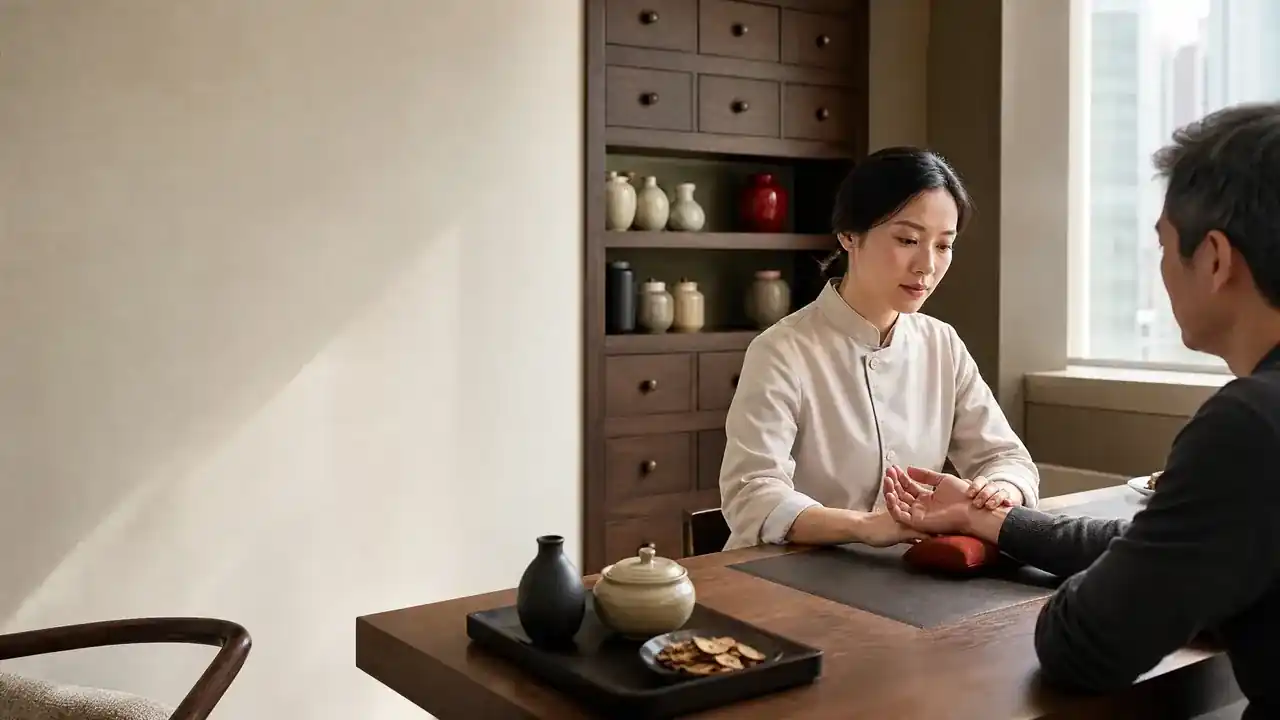
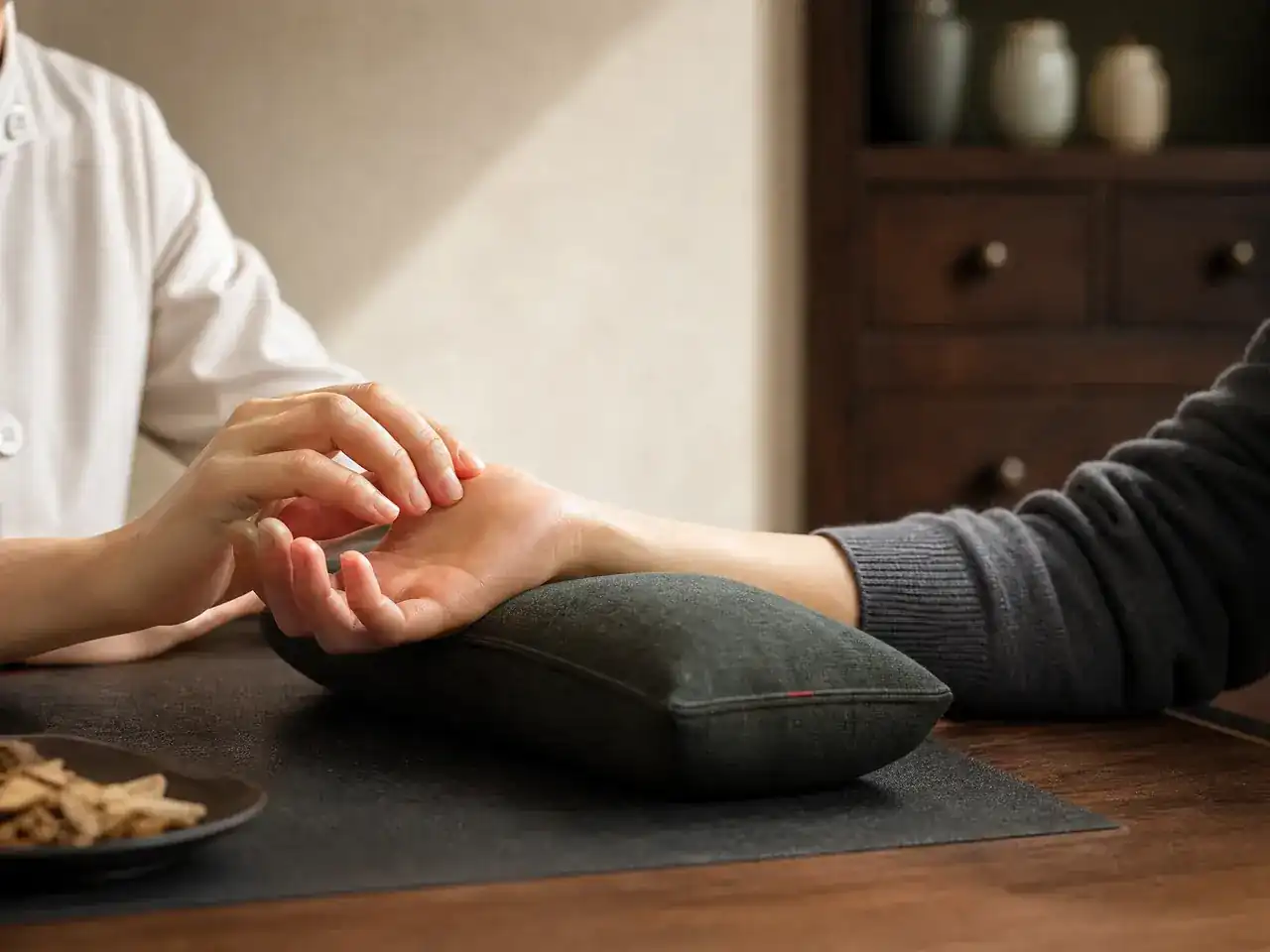
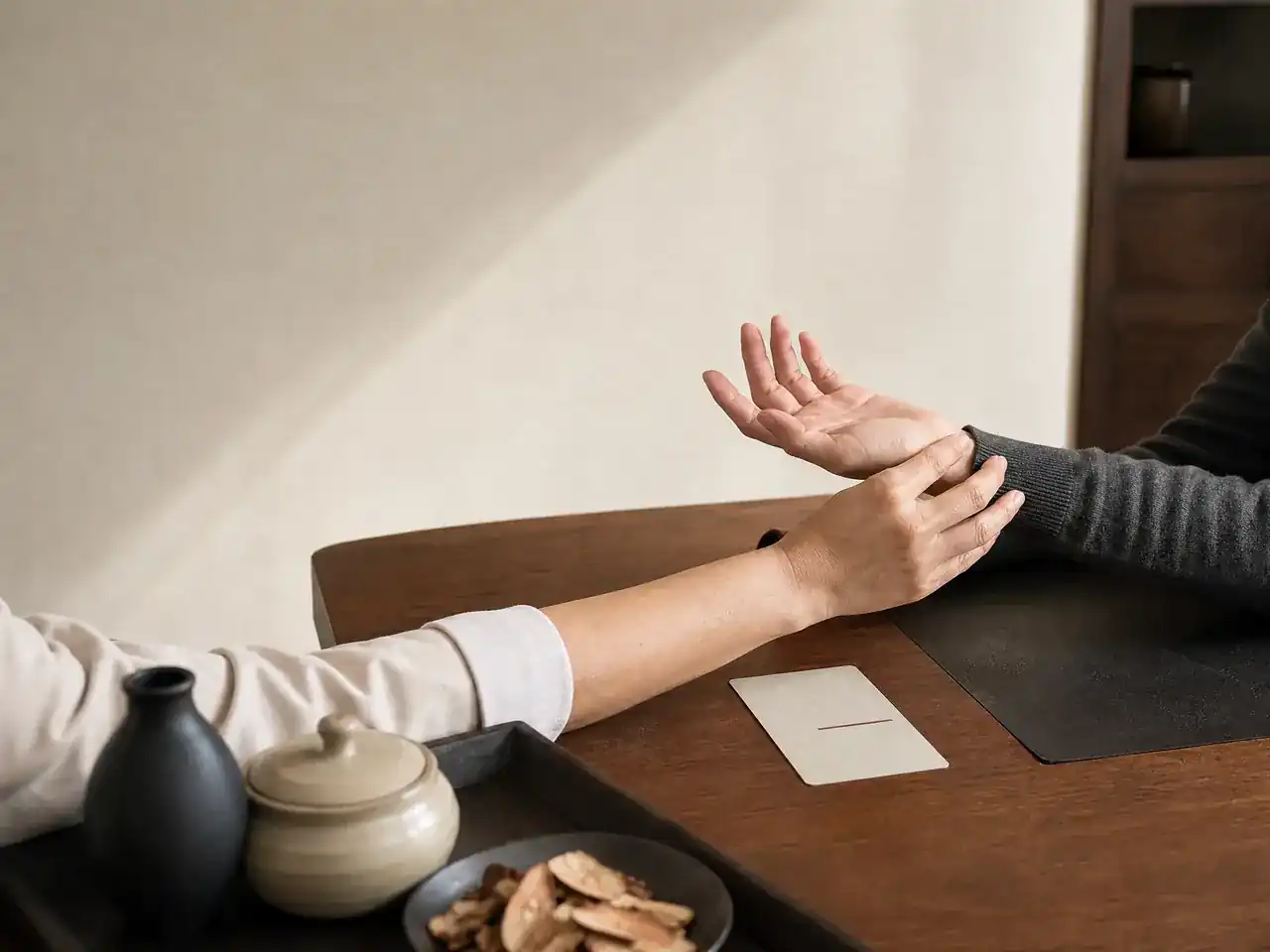
Harmonia TCM is dedicated to providing professional and safe TCM services. Our registered Chinese medicine practitioners conduct comprehensive assessments using the four diagnostic methods: observation, auscultation and olfaction, inquiry, and pulse-taking. By thoroughly understanding your medical history, lifestyle, and constitutional traits, we develop a personalized plan for your gout management. We recognize that every patient's needs are unique, and we carefully consider your specific circumstances and expectations when formulating our recommendations.
Please note that Harmonia TCM's clinic is in Kwun Tong. The services and information described here are for reference purposes. The actual availability of services, their suitability for your individual condition, as well as specific risks and arrangements, must be confirmed by our registered practitioners and the clinic. We look forward to providing you with appropriate assessment and support at our Kwun Tong location.
Frequently asked questions
How long does it take for TCM for gout to show results?
The timeframe for observing results varies from person to person, depending on the individual's constitution, the stage of the condition, and their response to the modalities. During the acute phase, some patients may experience acute relief within a few days with appropriate prescriptions. For long-term control and constitutional support during the remission phase, consistent follow-up over several weeks to months is typically required.
Do I need to follow a strict diet while receiving TCM care for gout?
Yes, dietary management is a crucial component of gout care. TCM practitioners generally advise patients to avoid high-purine foods (such as organ meats and certain seafood), reduce alcohol consumption, and maintain a light, balanced diet. Specific dietary recommendations will be tailored to your individual constitution and TCM syndrome.
Can TCM completely cure gout?
TCM aims to improve the body's constitution, alleviate symptoms, and reduce the frequency of recurrences to achieve long-term control. We cannot guarantee a complete cure or zero risk. Effective management of gout requires the patient's long-term commitment to dietary adjustments, lifestyle changes, and ongoing medical follow-up.
Can I take conventional medicine and Chinese herbal medicine at the same time for gout?
Integrating TCM and conventional medicine is common in gout management, but it must be done under professional guidance. It is essential to provide both your TCM practitioner and your Western medical doctor with a complete list of your medications to avoid potential interactions. Generally, it is recommended to separate the intake of Chinese and Western medicines by at least two hours.
Does Harmonia TCM have branches in other districts?
Harmonia TCM's clinic is in Kwun Tong. The information provided here is for reference, and all actual assessments, consultations, and services must be conducted at our Kwun Tong clinic. We do not imply the existence of branches in other locations.
If I am experiencing an acute gout attack, can I come directly to the clinic for acupuncture?
Managing an acute attack requires careful evaluation. We recommend that you contact us first to describe your specific symptoms. Our practitioner will assess whether your condition is suitable for immediate acupuncture or other modalities, or if you should seek assistance from conventional medical services first.
Related topics
Sources
Seek Professional TCM Assessment for Gout
If you are troubled by gout or wish to improve your constitution through TCM for long-term control, please contact Harmonia TCM. Our registered practitioners will provide a detailed assessment and personalized recommendations at our Kwun Tong clinic. Please note that actual service arrangements must be confirmed by the clinic.