TCM Care
Mental health and emotional care (TCM)
In today's fast-paced world, mental health and emotional well-being are vital to overall health. Harmonia TCM provides holistic assessments and support for individuals seeking stress-related care, helping you navigate towards a balanced state of mind and body.
Quick answer: TCM views mental health as closely linked to the body's internal organ functions and energy flow. Through personalized assessments, TCM offers support for emotional regulation and stress-related care, aiming to help restore the body's natural balance.
View pricesLearn About Assessments
CLEAR PRICES
Interested in a treatment? You are always welcome to ask.
We clearly list our current single, trial and package prices so you can explore at your own pace. You are always welcome to message us on WhatsApp about any service, timing or arrangement.
| Category and service | Content / terms | Public price (HK$) | Booking note | Enquire |
|---|---|---|---|---|
| Hair & scalp | Scalp health and hair-loss support | AI scalp analysis, deep follicle cleansing and oil-control support | Trial offerPackageTrial 380; 6 sessions 3,480; 12 sessions 5,760; 20 sessions 8,600; 30 sessions 11,400 | Average per session for 6/12/20/30: 580/480/430/380 | Ask on WhatsApp |
| Hair & scalp | Hair acupuncture with herbal medicine | Scalp acupuncture with 3 days of decoction-free herbal medicine | Single visitPackageSingle 580; 6 sessions 3,180; 12 sessions 5,760; 20 sessions 8,600; 30 sessions 11,400 | Average per session for 6/12/20/30: 530/480/430/380 | Ask on WhatsApp |
| Hair & scalp | Integrated hair support programme | Acupuncture, herbal medicine and follicle activation; packages include shampoo and serum | Single visitPackageSingle 1,260; 8 sessions 8,640; 16 sessions 15,680; 20 sessions 18,600; 30 sessions 26,400 | Average per session for 8/16/20/30: 1,080/980/930/880 | Ask on WhatsApp |
| Weight management | Full-body acupoint embedding | Full-body acupoint embedding; packages include proportionate days of herbal support | Single visitPackageSingle 980; 10 sessions 7,800; 20 sessions 14,600; 30 sessions 20,400 | Average per session for 10/20/30: 780/730/680 | Ask on WhatsApp |
| Facial acupuncture | Brightening V-face (Essential) | Facial acupuncture, meridian support and swelling management | Trial offerPackageTrial 480; 10 sessions 5,200; 20 sessions 9,600; 30 sessions 13,500 | Average per session for 10/20/30: 520/480/450 | Ask on WhatsApp |
| Facial acupuncture | Firming and refining (Advanced) | Enhanced facial acupuncture for firmness and fine-line concerns with a moisturising mask serum | Trial offerPackageTrial 780; 10 sessions 9,000; 20 sessions 16,600; 30 sessions 23,400 | Average per session for 10/20/30: 900/830/780 | Ask on WhatsApp |
| Pain care | Extracorporeal shockwave therapy | Deep inflammation support and fascial relaxation | Prince Edward: 250 per area; Kwun Tong: 250 for 1 area, 450 for 2, 600 for 3 | Clinic-specific pricing; confirm location before booking | Ask on WhatsApp |
| Pain care | Manual therapy | TCM bone-injury assessment, manual alignment and tui na techniques | Single visitSingle 580 | Suitability is confirmed after assessment | Ask on WhatsApp |
| Pain care | Acupuncture with manual therapy | Acupuncture with manual structural support | Single visitSingle 680 | Suitability is confirmed after assessment | Ask on WhatsApp |
| TCM regulation | Acupuncture with herbal medicine | TCM consultation, whole-body acupuncture and 3 days of decoction-free herbal medicine granules | Single visitSingle 580 | Confirm clinician availability and service arrangement when booking | Ask on WhatsApp |

Understanding Mental Health in TCM
In Traditional Chinese Medicine theory, mental health is intimately connected to the function of the internal organs and the flow of Qi (vital energy) and blood. TCM believes that the Heart houses the mind, while the Liver governs the smooth flow of emotions, and the Spleen manages digestion and thought processes. The state of these organs can significantly influence our emotional and mental well-being. When faced with prolonged stress or changes in life rhythm, it may lead to stagnation of Qi or an imbalance in energy, which in turn affects mental health.
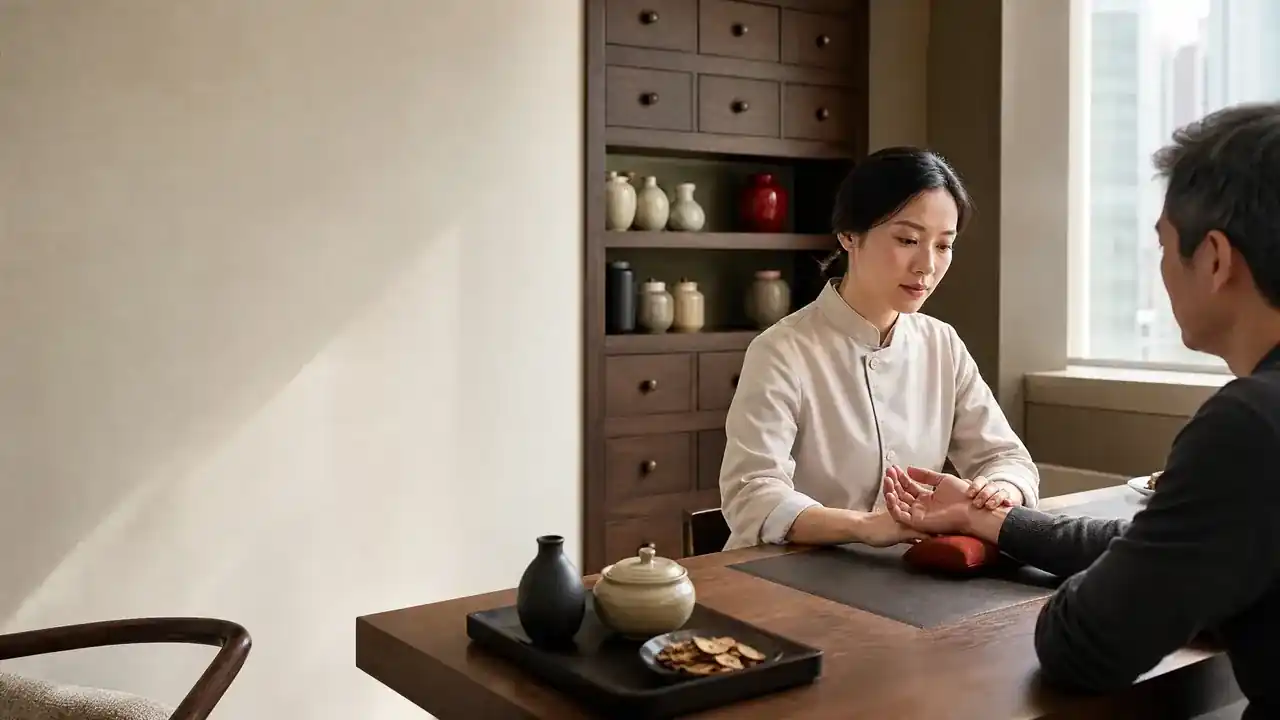
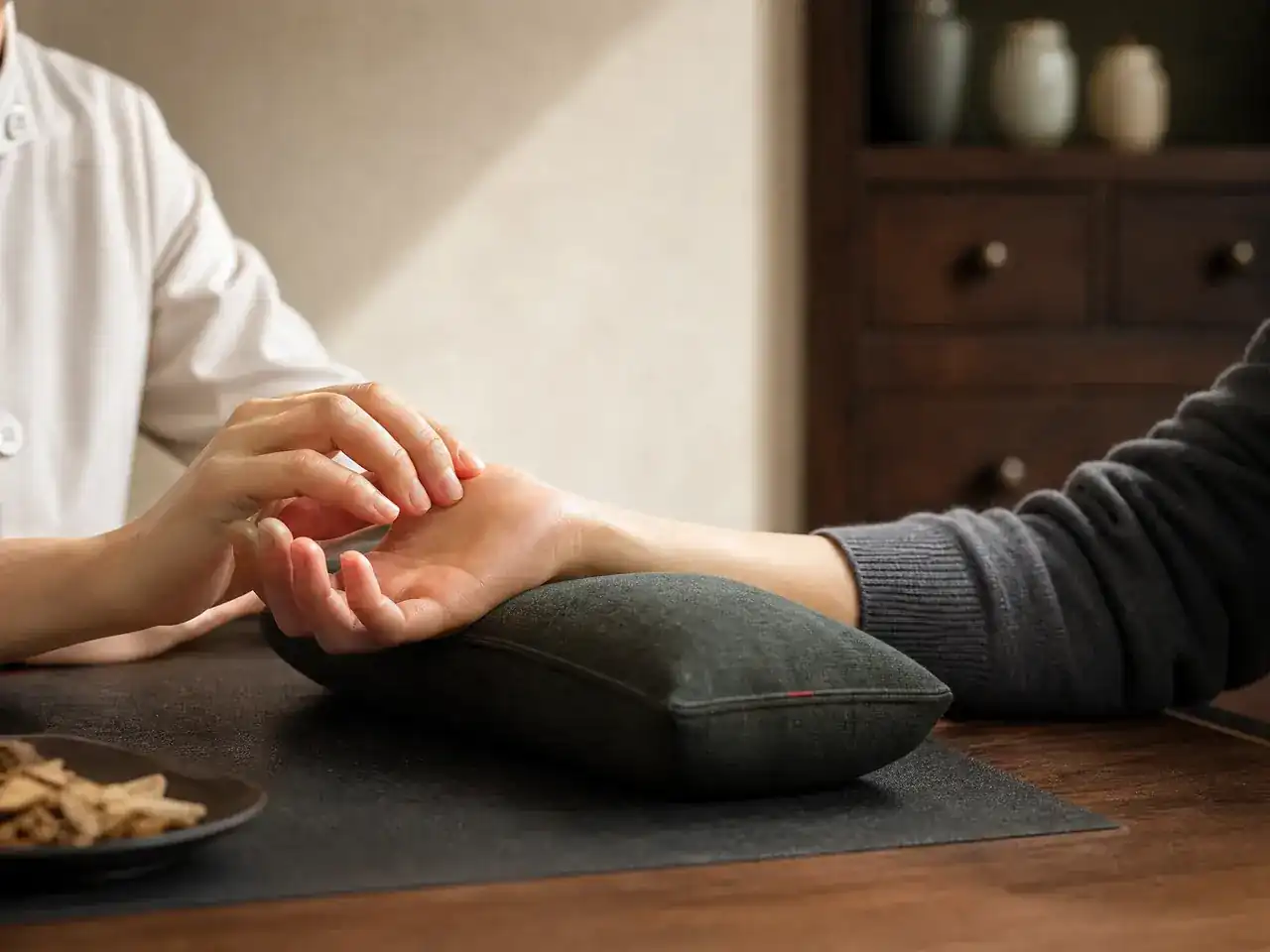
Therefore, when approaching emotional regulation, TCM does not merely focus on isolated symptoms. Instead, it takes a holistic perspective, evaluating the individual's constitution and the state of their internal organs. Through the four diagnostic methods—observation, auscultation and olfaction, inquiry, and pulse-taking—a TCM practitioner can understand the body's imbalances and formulate a tailored care plan, aiming to achieve a harmonious state of mind and body.
The Impact of Stress-Related Issues
In modern life, issues requiring stress-related care are incredibly common. Chronic stress not only affects emotions but can also lead to various physical discomforts, such as fatigue, poor digestion, or muscle tension. From a TCM perspective, these are warning signs from the body, indicating that the internal balance has been disrupted.
Sleep disturbances, often associated with stress, are frequently linked to a restless mind or an imbalance of Yin and Yang. TCM care aims to improve sleep quality by adjusting the body's constitution, thereby indirectly supporting mental health. Through personalized assessments, practitioners suggest appropriate methods to help the body regain its self-regulating capabilities.
Common TCM Approaches to Emotional Regulation
TCM offers diverse approaches to emotional regulation, primarily including herbal medicine, acupuncture, and lifestyle advice. Regarding herbal medicine, practitioners prescribe specific formulas based on an individual's constitutional characteristics. These formulas may aim to soothe the Liver, calm the mind, or strengthen the Spleen and Qi. The goal is to adjust organ functions and improve the flow of Qi and blood.
Acupuncture involves stimulating specific points on the body to regulate the meridians. Many individuals report feeling relaxed after acupuncture sessions, which can be beneficial for alleviating stress and related sleep issues. Furthermore, practitioners provide dietary and routine recommendations, encouraging the establishment of healthy habits to complement the overall care process.
Integrating TCM with Conventional Care
When focusing on mental health, TCM can serve as a complementary approach to conventional medical care. For individuals facing severe emotional distress or psychiatric conditions, seeking professional help from Western medicine doctors or psychological counselors is paramount. TCM can then provide constitutional support on this foundation, helping to improve overall health.
Harmonia TCM emphasizes that TCM care cannot replace conventional medical diagnoses and treatments. When undergoing a TCM assessment, it is crucial to honestly inform the practitioner about your current health status and any ongoing treatments. This allows the practitioner to provide safe and appropriate advice, ensuring coordination between different healthcare modalities.
Factors Considered in TCM Assessments
Every individual's constitution and sources of stress are unique, so TCM assessments must consider a comprehensive range of factors. Practitioners will inquire in detail about personal lifestyle habits, dietary preferences, sleep patterns, and emotional fluctuations to gain a complete understanding of the body's state.
When formulating a care plan, practitioners consider the individual's receptiveness and life rhythm, providing practical and feasible recommendations. This might involve intensive short-term care or long-term constitutional maintenance. Through continuous communication and adjustment, TCM aims to provide enduring support for mental health.
Common Constitutions and Emotional Expressions
TCM categorizes human constitutions into various types. Different constitutions may exhibit distinct emotional expressions and physical reactions when facing stress. Understanding your constitutional characteristics can aid in better emotional regulation and daily maintenance.
The table below outlines some common constitutional types and their potential emotional expressions. This is intended as general guidance; an actual constitutional assessment must be conducted by a registered TCM practitioner.
| Constitutional Type | Common Emotional Expressions | Potential Physical Signs | TCM Care Direction |
|---|---|---|---|
| Liver Qi Stagnation | Irritability, low mood, frequent sighing | Chest fullness, poor digestion, irregular menstruation | Soothe the Liver, regulate Qi |
| Heart and Spleen Deficiency | Overthinking, easily startled, mental fatigue | Palpitations, poor sleep, loss of appetite | Nourish Heart and Spleen, calm the mind |
| Yin Deficiency with Fire | Restlessness, quick temper, difficulty calming down | Warm palms/soles, night sweats, dry mouth | Nourish Yin, clear heat, calm the mind |
| Phlegm Misting the Mind | Sluggishness, slow reactions, emotional apathy | Chest oppression, excess phlegm | Clear phlegm, open the orifices |
Frequently asked questions
How can TCM help improve mental health?
TCM evaluates an individual's constitution and organ state, utilizing methods like herbal medicine and acupuncture for care. This helps improve energy flow and alleviate physical discomforts related to stress, thereby providing holistic support for mental health.
How long does it take to see results from emotional regulation care?
The duration varies depending on the individual's constitution, the severity of the issues, and their response to the care. TCM care is typically a gradual process. The practitioner will provide an initial expectation after the assessment and adjust based on progress.
Can I receive TCM care if I am seeing a psychiatrist?
Yes. TCM can serve as a complementary approach to conventional care. However, you must honestly inform the TCM practitioner about your ongoing treatments and medications so they can assess suitability and ensure safety and coordination between therapies.
Is acupuncture helpful for stress-related care?
Many people feel relaxed after acupuncture, which may help alleviate stress and improve sleep quality. However, the effects vary by individual. A registered TCM practitioner will assess whether acupuncture is suitable for your specific condition.
Will a TCM practitioner prescribe sleeping pills or antidepressants?
No. Registered TCM practitioners only prescribe Chinese herbal medicine. The mechanism of herbal medicine differs from Western medication, focusing on adjusting the constitution to improve symptoms. If you need Western medication, consult a Western medical doctor or psychiatrist.
Where does Harmonia TCM provide mental health assessments?
Harmonia TCM's only physical clinic is located in Kwun Tong. All TCM assessments and care services are conducted there. This information is intended as general guidance; actual service arrangements must be confirmed by the clinic.
Related topics
Sources
Prioritize Your Mental Health
If you wish to explore emotional regulation and stress-related care from a TCM perspective, please contact Harmonia TCM's clinic in Kwun Tong to book an assessment with a registered practitioner.