TCM Care
TCM services (Kwun Tong)
Harmonia TCM offers professional Chinese medicine services, focusing on constitution support and pain-related care. Through detailed consultations and assessments, we provide appropriate health advice to help you restore balance in your daily life.
Quick answer: TCM services primarily evaluate individual constitution and health status through four diagnostic methods: observation, auscultation and olfaction, inquiry, and pulse-taking. Harmonia TCM provides consultations, pain-related care, and constitution-focused support in Kwun Tong, aiming to help people restore balance. Please note that the information below provides general health education and does not constitute a diagnosis or personal treatment advice.
CLEAR PRICES
Interested in a treatment? You are always welcome to ask.
We clearly list our current single, trial and package prices so you can explore at your own pace. You are always welcome to message us on WhatsApp about any service, timing or arrangement.
| Category and service | Content / terms | Public price (HK$) | Booking note | Enquire |
|---|---|---|---|---|
| Hair & scalp | Scalp health and hair-loss support | AI scalp analysis, deep follicle cleansing and oil-control support | Trial offerPackageTrial 380; 6 sessions 3,480; 12 sessions 5,760; 20 sessions 8,600; 30 sessions 11,400 | Average per session for 6/12/20/30: 580/480/430/380 | Ask on WhatsApp |
| Hair & scalp | Hair acupuncture with herbal medicine | Scalp acupuncture with 3 days of decoction-free herbal medicine | Single visitPackageSingle 580; 6 sessions 3,180; 12 sessions 5,760; 20 sessions 8,600; 30 sessions 11,400 | Average per session for 6/12/20/30: 530/480/430/380 | Ask on WhatsApp |
| Hair & scalp | Integrated hair support programme | Acupuncture, herbal medicine and follicle activation; packages include shampoo and serum | Single visitPackageSingle 1,260; 8 sessions 8,640; 16 sessions 15,680; 20 sessions 18,600; 30 sessions 26,400 | Average per session for 8/16/20/30: 1,080/980/930/880 | Ask on WhatsApp |
| Weight management | Full-body acupoint embedding | Full-body acupoint embedding; packages include proportionate days of herbal support | Single visitPackageSingle 980; 10 sessions 7,800; 20 sessions 14,600; 30 sessions 20,400 | Average per session for 10/20/30: 780/730/680 | Ask on WhatsApp |
| Facial acupuncture | Brightening V-face (Essential) | Facial acupuncture, meridian support and swelling management | Trial offerPackageTrial 480; 10 sessions 5,200; 20 sessions 9,600; 30 sessions 13,500 | Average per session for 10/20/30: 520/480/450 | Ask on WhatsApp |
| Facial acupuncture | Firming and refining (Advanced) | Enhanced facial acupuncture for firmness and fine-line concerns with a moisturising mask serum | Trial offerPackageTrial 780; 10 sessions 9,000; 20 sessions 16,600; 30 sessions 23,400 | Average per session for 10/20/30: 900/830/780 | Ask on WhatsApp |
| Pain care | Extracorporeal shockwave therapy | Deep inflammation support and fascial relaxation | Prince Edward: 250 per area; Kwun Tong: 250 for 1 area, 450 for 2, 600 for 3 | Clinic-specific pricing; confirm location before booking | Ask on WhatsApp |
| Pain care | Manual therapy | TCM bone-injury assessment, manual alignment and tui na techniques | Single visitSingle 580 | Suitability is confirmed after assessment | Ask on WhatsApp |
| Pain care | Acupuncture with manual therapy | Acupuncture with manual structural support | Single visitSingle 680 | Suitability is confirmed after assessment | Ask on WhatsApp |
| TCM regulation | Acupuncture with herbal medicine | TCM consultation, whole-body acupuncture and 3 days of decoction-free herbal medicine granules | Single visitSingle 580 | Confirm clinician availability and service arrangement when booking | Ask on WhatsApp |

Core Philosophy and Assessment Methods of TCM Services
Traditional Chinese Medicine (TCM) is a traditional medical system with a long history, and its core philosophy lies in a holistic view and pattern differentiation. TCM considers the human body as an organic whole, where various organs and systems are interconnected and influence each other. When the internal balance of yin, yang, qi, and blood is disrupted, various discomforts or health issues may arise. Therefore, the focus of TCM services is to assess the individual's overall condition, identify the root cause of the imbalance, and assist the body in restoring its balanced state through appropriate support methods.
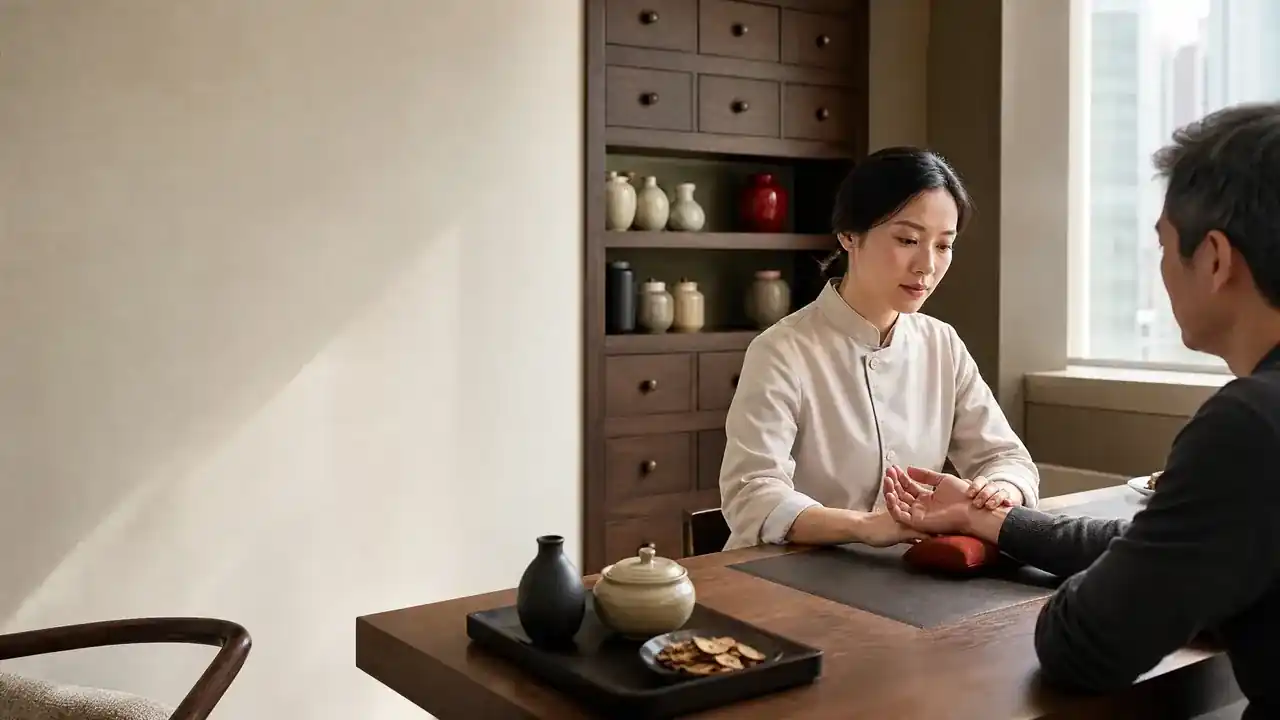
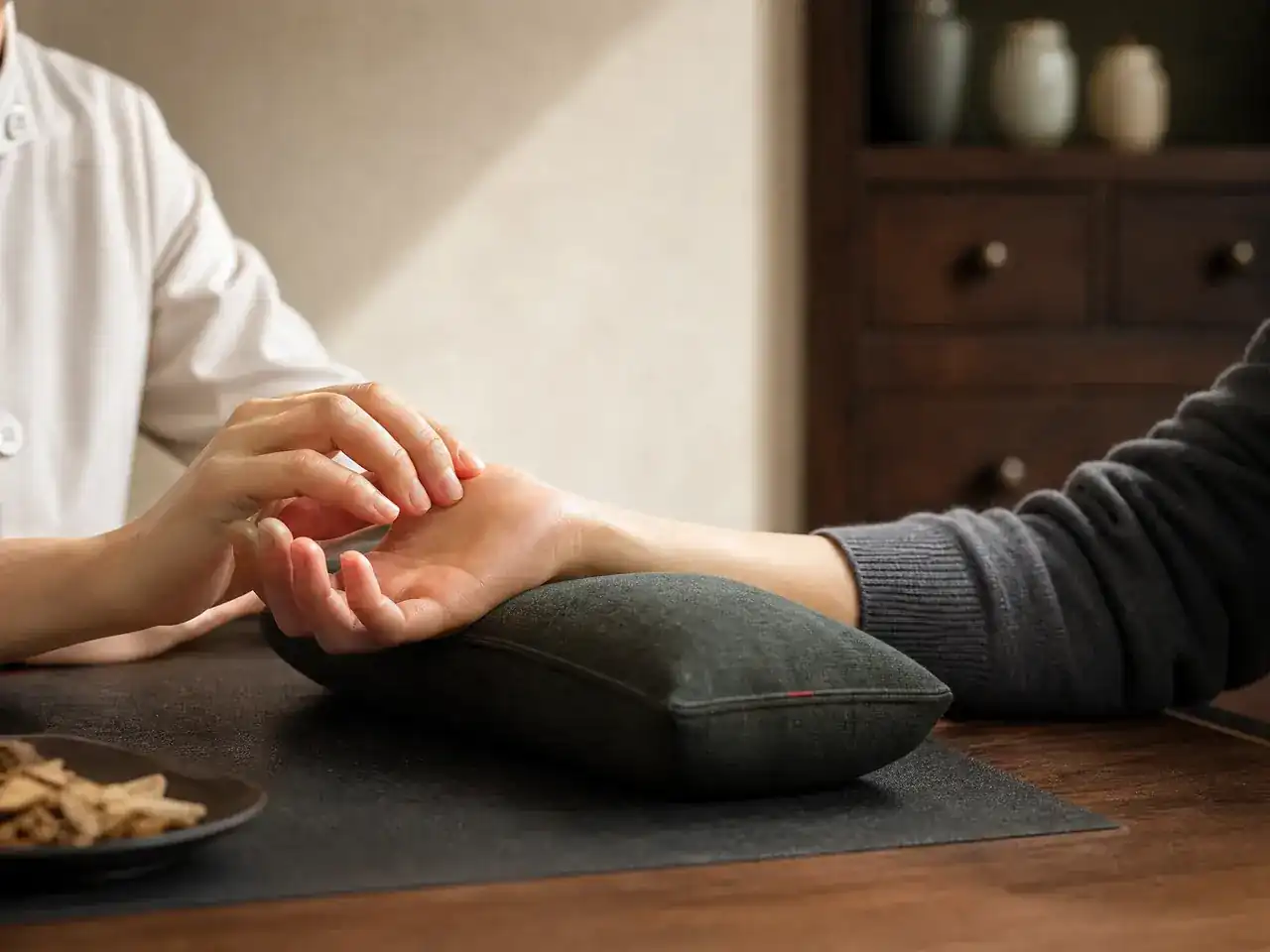
During a TCM assessment, practitioners typically utilize the four diagnostic methods: observation, auscultation and olfaction, inquiry, and pulse-taking and palpation. Observation involves examining the patient's outward appearance, complexion, and tongue characteristics. Auscultation and olfaction involve listening to the patient's voice and breathing, as well as noting any odors. Inquiry is a detailed questioning of the patient's medical history, symptoms, and lifestyle habits. Pulse-taking and palpation involve feeling the pulse and examining specific areas of the body. Through the comprehensive application of these four methods, TCM practitioners can gain a thorough understanding of the patient's constitutional characteristics and health status, thereby formulating an appropriate support plan.
Similar concerns can involve different symptoms, priorities and safety considerations. An assessment therefore considers your actual situation rather than relying on a service label alone.
Scope of TCM Services at Harmonia TCM in Kwun Tong
Harmonia TCM is committed to providing comprehensive TCM services covering various health aspects. Our service scope mainly includes general Chinese medicine consultations, pain-related care, and constitution-focused support. In general consultations, we conduct detailed assessments for common health concerns, such as digestive issues, sleep disturbances, and respiratory discomfort, and provide corresponding health advice. We emphasize that prevention is better than cure and encourage the public to focus on health maintenance in their daily lives to prevent issues before they occur.
For individuals troubled by pain, we offer specialized pain-related care assessments. This includes the observation and analysis of issues such as muscle and joint pain, strain, and sports injuries. Based on the individual's specific situation, we recommend appropriate care methods, such as acupuncture, Tui Na (massage), or the external application of herbal medicine, to help soothe discomfort and improve mobility and function. Furthermore, constitution-focused support is also one of our key services. We provide targeted dietary and lifestyle guidance based on individual constitutional biases, such as qi deficiency, yin deficiency, or phlegm-dampness, to help harmonize the constitution and enhance the body's adaptability.
TCM Constitution Classification and Support Directions
TCM classifies human constitutions into several types, each with its unique physiological and pathological characteristics. Understanding your constitution type can help you implement targeted support in your daily life. Common constitution types include neutral, qi deficiency, yang deficiency, yin deficiency, phlegm-dampness, damp-heat, blood stasis, qi stagnation, and special constitution. A neutral constitution represents a relatively healthy state, while other types reflect an imbalance in certain aspects of the body.
For different constitution types, TCM recommends different support directions. For example, individuals with a qi deficiency constitution are prone to fatigue and shortness of breath; the support should focus on replenishing vital qi. Those with a yin deficiency constitution often experience dry mouth and heat in the palms and soles; the support should focus on nourishing yin fluids. Individuals with a phlegm-dampness constitution may feel a heaviness in the body and chest oppression; the support should focus on strengthening the spleen and resolving dampness. Through dietary adjustments, improvements in daily routines, and appropriate exercise, constitutional biases can be gradually improved, enhancing overall health.
| Constitution Type | Common Manifestations | Support Direction | Lifestyle Advice |
|---|---|---|---|
| Qi Deficiency | Prone to fatigue, shortness of breath, spontaneous sweating | Replenish vital qi | Avoid overexertion, engage in moderate, gentle exercise |
| Yin Deficiency | Dry mouth and throat, heat in palms/soles, poor sleep | Nourish yin fluids | Avoid staying up late, reduce intake of spicy and hot foods |
| Phlegm-Dampness | Heaviness in the body, chest oppression, easily drowsy | Strengthen spleen, resolve dampness | Eat a light diet, avoid cold and greasy foods, increase physical activity appropriately |
| Damp-Heat | Greasy face, prone to acne, bitter and dry mouth | Clear heat, resolve dampness | Avoid spicy and greasy foods, keep the environment well-ventilated and dry |
| Qi Stagnation | Low mood, frequent sighing, chest and hypochondriac distension | Soothe the liver, relieve stagnation | Maintain a cheerful mood, participate more in social activities |
Assessment and Advice for TCM Pain-Related Care
Pain is a common reason many people seek TCM services. TCM believes that "where there is no free flow, there is pain; where there is no nourishment, there is pain." The occurrence of pain is often related to the unsmooth circulation of qi and blood or the lack of nourishment in the meridians. During a pain-related care assessment, a TCM practitioner will gather detailed information about the location, nature, severity, and triggering factors of the pain. For instance, stabbing pain is often associated with blood stasis, dull pain with deficiency syndromes, and heavy pain with dampness pathogens. Through these meticulous observations, the practitioner can make a preliminary judgment about the nature and possible causes of the pain.
Based on the assessment results, the TCM practitioner will provide corresponding care advice. This may include recommending non-pharmacological therapies such as acupuncture, Tui Na, or cupping to unblock the meridians and harmonize qi and blood. At the same time, the practitioner will also provide guidance on daily care, such as maintaining correct posture, performing appropriate stretching exercises, and keeping the local area warm, to help prevent the recurrence of pain. It must be emphasized that for acute or severe pain, one should promptly seek a conventional medical assessment to rule out potential serious underlying conditions.
Limitations and Precautions of TCM Services
While TCM services can provide beneficial support for many health issues, we must recognize their limitations. TCM is not a cure-all, and for certain acute diseases, severe organic lesions, or situations requiring urgent surgical intervention, TCM may not be able to provide immediate and effective management. In these situations, seeking emergency or specialist assessment in modern medicine is crucial. We encourage the public to maintain a rational and objective attitude when facing health problems and to comprehensively consider various medical options.
Furthermore, when receiving TCM services, one should choose a registered TCM practitioner to ensure the professionalism and safety of the service. During the consultation, you should truthfully provide the practitioner with your medical history, current medications (including Western medicines and supplements), and allergy history to avoid adverse reactions or drug interactions. At the same time, you should follow the practitioner's advice and not arbitrarily change the herbal prescription or care plan on your own. If any discomfort occurs during the support process, you should promptly report it to the TCM practitioner.
Harmonia TCM's Physical Clinic and Service Coverage
Harmonia TCM's only physical clinic is located in Kwun Tong, providing professional Chinese medicine consultations and care services to the public. We are dedicated to creating a comfortable and reassuring environment so that you can feel relaxed while receiving assessments and support. The service scope and information described here are primarily based on our practical experience at the Kwun Tong clinic. We hope that through this information, we can help the public better understand the content and process of TCM services.
It is important to specifically clarify that this page serves only as a reference for general health education and service scope, and it does not imply that we have branches in other areas. For some services that may involve home visits or specific arrangements, they are currently in a pending confirmation status. We recommend that you contact our Kwun Tong clinic directly when needed to obtain the latest and most accurate service information. We will be happy to answer your questions and provide appropriate advice.
Frequently asked questions
What do TCM services usually include?
TCM services typically include a health assessment conducted through the four diagnostic methods (observation, auscultation/olfaction, inquiry, and pulse-taking), as well as care advice such as herbal prescriptions, acupuncture, Tui Na, and cupping based on the assessment results. Additionally, practitioners provide guidance on diet and lifestyle to help harmonize the constitution.
How should I prepare for my first TCM consultation?
Before your first visit, it is recommended to note down your main discomfort symptoms, when they occur, and triggering factors. Also, please prepare a list of your past medical history and all current medications (including Western medicines and supplements) so the practitioner can fully understand your situation. Wearing loose, comfortable clothing on the day of the visit is advised.
How long does it take to see results from TCM support?
The effects of TCM support vary from person to person, depending on individual constitution, the nature of the condition, and its severity. For some mild or recent discomforts, improvement may be seen after a few sessions; for long-term constitutional biases or chronic issues, continuous support over a longer period may be required. The practitioner will discuss the expected progress with you based on your specific situation.
Are there any dietary restrictions while taking Chinese herbal medicine?
Dietary restrictions while taking herbal medicine usually depend on your constitution and the nature of the herbs prescribed. Generally, it is advised to avoid cold, raw, spicy, greasy, and hard-to-digest foods to prevent affecting the absorption of the medicine or increasing the burden on the gastrointestinal tract. Please follow your TCM practitioner's specific dietary advice.
Can TCM and Western medicine treatments be carried out simultaneously?
In many cases, TCM and Western medicine can serve as complementary health management approaches. However, to avoid drug interactions or affecting assessments, you must truthfully report all treatments and medications you are receiving to both your TCM practitioner and your Western medical doctor. In certain situations, doctors may advise you to take herbal and Western medicines separately or to pause one of them.
Does Harmonia TCM provide services outside of Kwun Tong?
Harmonia TCM's only physical clinic is currently located in Kwun Tong. The information provided here is primarily based on our service scope at the Kwun Tong clinic. Service coverage in other areas or specific home visit arrangements are currently pending confirmation. If needed, please contact our Kwun Tong clinic directly for inquiries.
Related topics
Sources
Learn More About TCM Support
If you have any questions about TCM services or wish to learn more about constitution-focused support, please feel free to contact us. Harmonia TCM's physical clinic in Kwun Tong will provide you with professional answers and advice.