Home Visits • Coverage Confirmation Required
Home Visit Tennis Elbow
We provide home visit assessment tailored to tennis elbow that combines a detailed history, tendon and functional assessment, and conservative TCM-supported strategies to help manage pain and support functional recovery. Availability and fees for home visits are confirmed case-by-case by the clinic.
Quick answer: Home visit tennis elbow treatment typically includes a focused history, tendon assessment and functional testing, followed by conservative TCM options such as acupuncture, manual therapy, topical applications and advice on exercises to support pain relief and functional recovery. Coverage and timing must be confirmed by the clinic.
View pricesRequest coverage confirmation
CLEAR PRICES
Interested in a treatment? You are always welcome to ask.
We clearly list our current single, trial and package prices so you can explore at your own pace. You are always welcome to message us on WhatsApp about any service, timing or arrangement.
| Category and service | Content / terms | Public price (HK$) | Booking note | Enquire |
|---|---|---|---|---|
| Hair & scalp | Scalp health and hair-loss support | AI scalp analysis, deep follicle cleansing and oil-control support | Trial offerPackageTrial 380; 6 sessions 3,480; 12 sessions 5,760; 20 sessions 8,600; 30 sessions 11,400 | Average per session for 6/12/20/30: 580/480/430/380 | Ask on WhatsApp |
| Hair & scalp | Hair acupuncture with herbal medicine | Scalp acupuncture with 3 days of decoction-free herbal medicine | Single visitPackageSingle 580; 6 sessions 3,180; 12 sessions 5,760; 20 sessions 8,600; 30 sessions 11,400 | Average per session for 6/12/20/30: 530/480/430/380 | Ask on WhatsApp |
| Hair & scalp | Integrated hair support programme | Acupuncture, herbal medicine and follicle activation; packages include shampoo and serum | Single visitPackageSingle 1,260; 8 sessions 8,640; 16 sessions 15,680; 20 sessions 18,600; 30 sessions 26,400 | Average per session for 8/16/20/30: 1,080/980/930/880 | Ask on WhatsApp |
| Weight management | Full-body acupoint embedding | Full-body acupoint embedding; packages include proportionate days of herbal support | Single visitPackageSingle 980; 10 sessions 7,800; 20 sessions 14,600; 30 sessions 20,400 | Average per session for 10/20/30: 780/730/680 | Ask on WhatsApp |
| Facial acupuncture | Brightening V-face (Essential) | Facial acupuncture, meridian support and swelling management | Trial offerPackageTrial 480; 10 sessions 5,200; 20 sessions 9,600; 30 sessions 13,500 | Average per session for 10/20/30: 520/480/450 | Ask on WhatsApp |
| Facial acupuncture | Firming and refining (Advanced) | Enhanced facial acupuncture for firmness and fine-line concerns with a moisturising mask serum | Trial offerPackageTrial 780; 10 sessions 9,000; 20 sessions 16,600; 30 sessions 23,400 | Average per session for 10/20/30: 900/830/780 | Ask on WhatsApp |
| Pain care | Extracorporeal shockwave therapy | Deep inflammation support and fascial relaxation | Prince Edward: 250 per area; Kwun Tong: 250 for 1 area, 450 for 2, 600 for 3 | Clinic-specific pricing; confirm location before booking | Ask on WhatsApp |
| Pain care | Manual therapy | TCM bone-injury assessment, manual alignment and tui na techniques | Single visitSingle 580 | Suitability is confirmed after assessment | Ask on WhatsApp |
| Pain care | Acupuncture with manual therapy | Acupuncture with manual structural support | Single visitSingle 680 | Suitability is confirmed after assessment | Ask on WhatsApp |
| TCM regulation | Acupuncture with herbal medicine | TCM consultation, whole-body acupuncture and 3 days of decoction-free herbal medicine granules | Single visitSingle 580 | Confirm clinician availability and service arrangement when booking | Ask on WhatsApp |

What is tennis elbow (lateral epicondylitis)?
This guide explains common considerations, the purpose of assessment, options that may be discussed, and key safety points. Individual advice depends on your circumstances.
Tennis elbow, or lateral epicondylitis, refers to pain on the outside of the elbow related to the common extensor tendons of the forearm. Despite its name, it affects many people beyond athletes — any repetitive use of wrist extension and forearm muscles can contribute to symptoms. Pain is commonly provoked by gripping, lifting or wrist extension and may be accompanied by local tenderness and reduced grip strength.
From a TCM perspective, elbow pain may be assessed in relation to meridians, local qi and blood stagnation, or tendon/soft tissue disharmony. Such correlations are used to guide supportive strategies but should not be presented as proven causes or guaranteed outcomes. Clinical assessment aims to differentiate tendon-related pain from referred pain due to cervical issues, nerve entrapment, or joint pathology.
How a home visit assessment is conducted
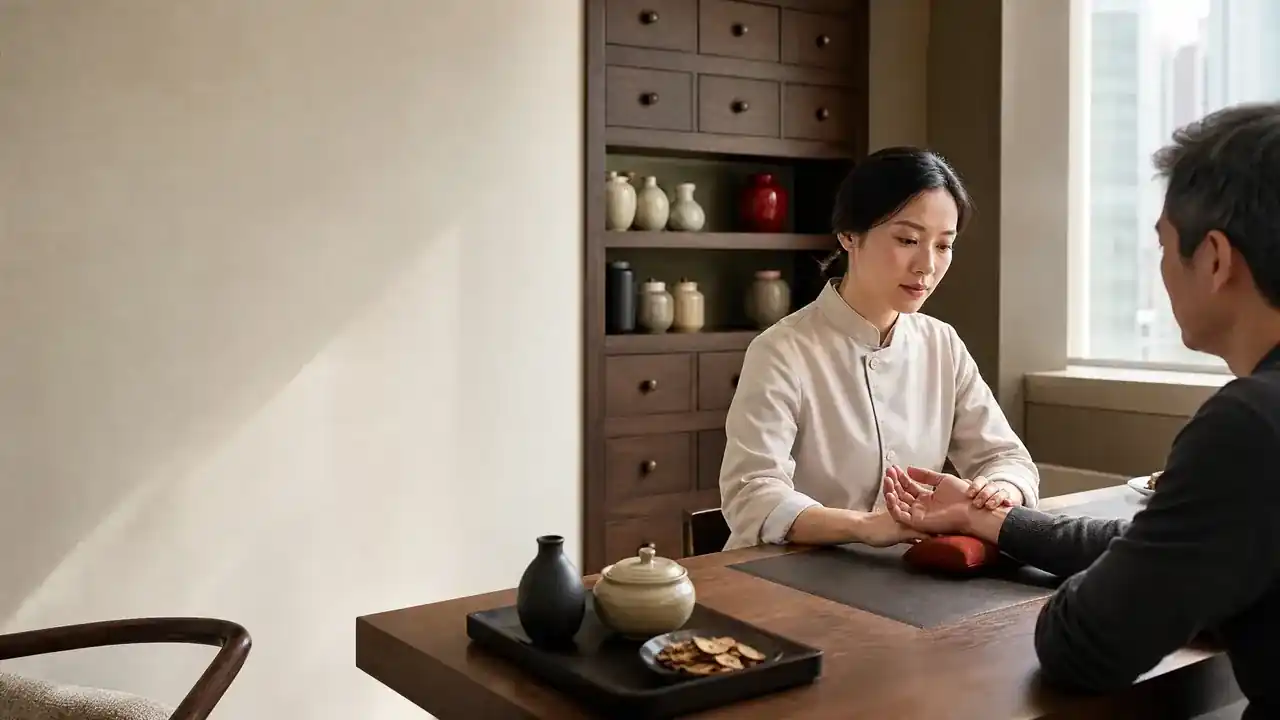
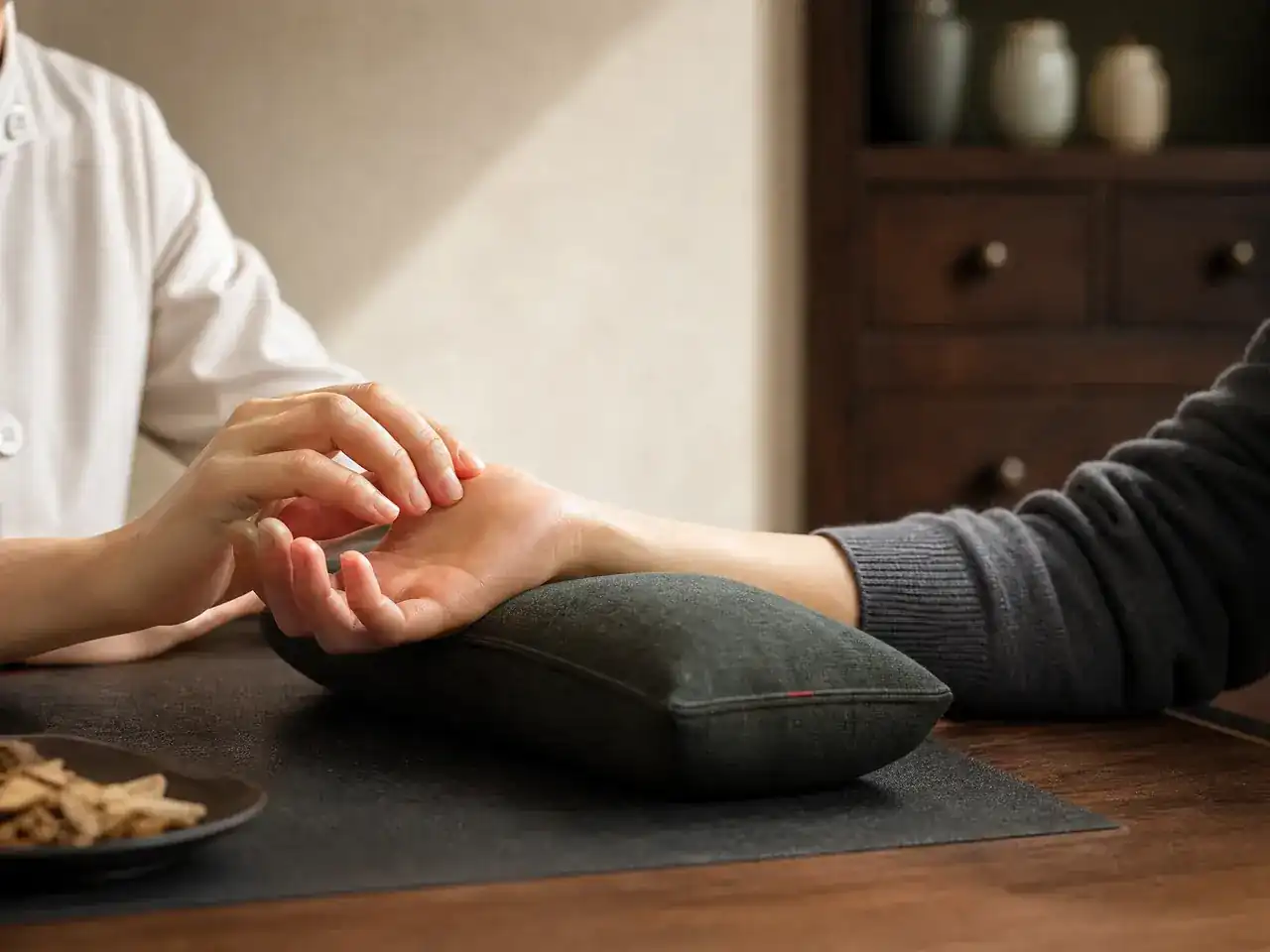
A home visit typically begins with a thorough history-taking that covers onset, aggravating and relieving factors, occupational or recreational contributors, prior treatments and relevant medical history. The practitioner then performs a visual inspection and palpation of the elbow and forearm to identify tenderness, swelling, and specific tender points, followed by basic functional and grip strength tests to determine the impact on daily activities.
These assessments help clarify whether symptoms are consistent with lateral tendon pathology or whether signs suggest an alternative diagnosis requiring further investigation. If the assessment reveals red flags or atypical features, the practitioner will advise further outpatient or specialist evaluation, as home-based conservative care may not be appropriate.
TCM-supported options and safety considerations
When conservative TCM support is deemed appropriate, potential interventions during or after the home visit may include acupuncture to modulate local pain sensitivity, manual therapy or soft tissue techniques to improve mobility, topical herbal applications to reduce local discomfort, and guided exercises for progressive loading and tendon conditioning. The choice of interventions is individualized and based on the assessment findings and patient preferences.
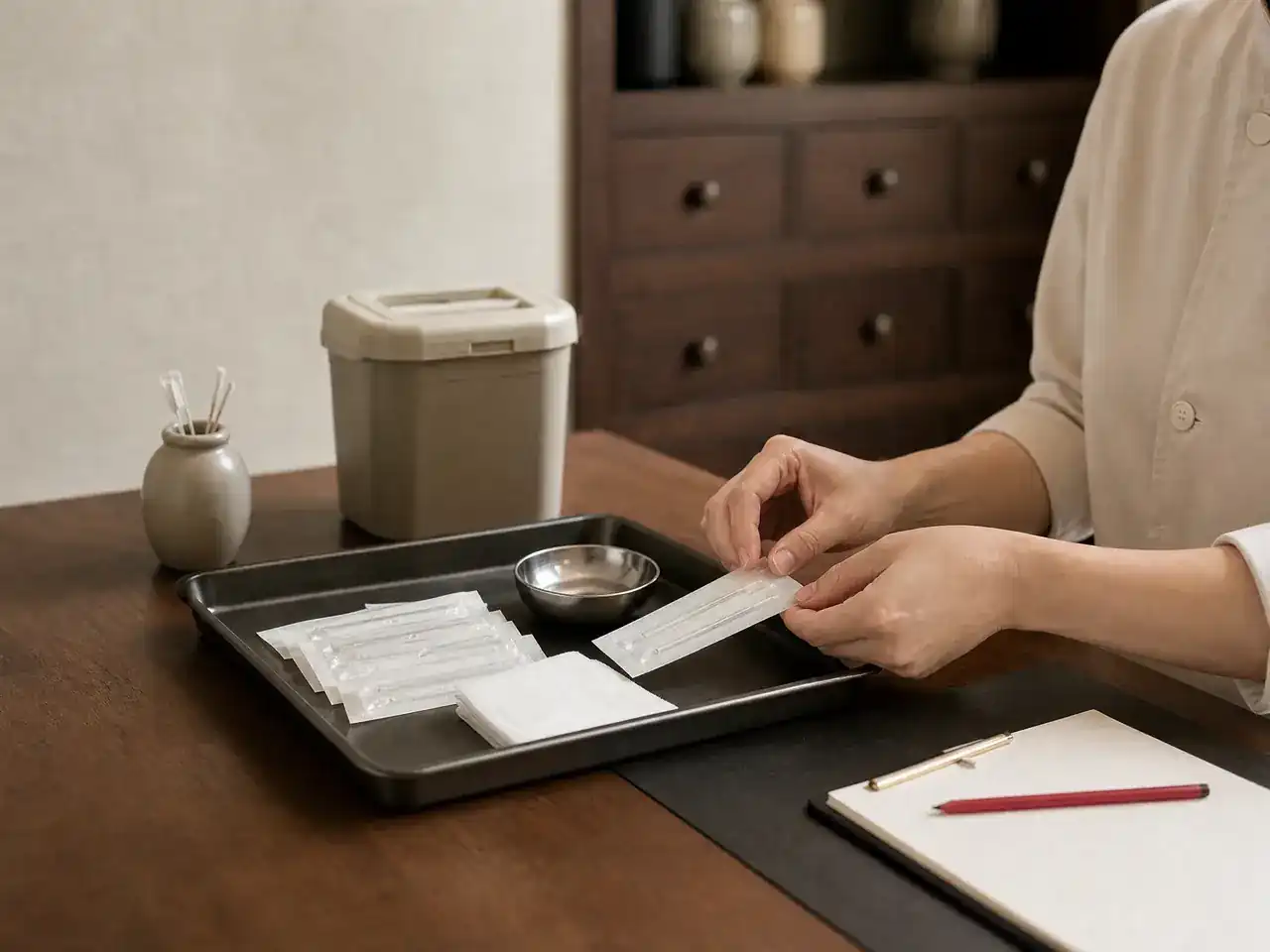
All interventions carry potential side effects and none are without risk. For example, acupuncture may lead to brief soreness, minor bleeding or bruising; topical preparations can cause skin irritation in some individuals. Practitioners will explain potential risks before treatment and will recommend immediate medical attention if symptoms suggest infection, severe inflammatory changes, or neurological compromise.
Assessment table: common checks, purposes and notes
The table below summarises typical assessment items performed during a home visit, their purpose, and brief explanatory notes. This is intended to clarify what each component assesses and its limitations in a home setting compared with clinic-based imaging or specialist tests.
If the home assessment indicates a need for imaging or specialist input, the clinician will advise onward referral rather than continuing home-based treatment alone.
| Assessment item | Purpose | Notes |
|---|---|---|
| History and symptom mapping | Identify duration, triggers and prior interventions | Clarifies acute vs chronic pattern and potential occupational contributors |
| Palpation and point tenderness | Localise tendon involvement | Helps identify classic lateral epicondyle tenderness and soft tissue changes |
| Functional and grip tests | Assess impact on daily tasks and strength | Measures limitations in gripping, lifting and wrist movements |
| Neurological and cervical screening | Rule out referred or nerve-related pain | Checks for sensory changes, reflexes, or neck movement limitations |
Rehabilitation guidance and realistic expectations
Home-based self-care commonly includes short-term relative rest from aggravating activities, protective support such as an elbow brace for activity, icing in the acute phase or heat for chronic stiffness, and a graded exercise program to restore tendon capacity. Practitioners typically provide tailored exercises to be performed safely at home and advice on activity modification to support recovery.
Recovery timelines vary widely and depend on how long the condition has been present, the degree of ongoing tendon overload, adherence to recommended exercises and modifications, and individual healing responses. Harmonia TCM offers supportive strategies aimed at symptom control and function, but cannot guarantee specific outcomes; if symptoms do not improve over a few weeks or worsen, further medical assessment is recommended.
Clinic location, coverage and suitability note
Harmonia TCM has one physical clinic located in Kwun Tong. This page describes home-visit coverage for reference only; actual availability, suitable timing and fees must be confirmed by the clinic case-by-case. Appointment availability should be confirmed before booking.
If you have severe acute pain, fever or signs of infection, sudden neurological changes in the hand or rapidly worsening function, seek urgent medical assessment rather than waiting for a home visit. Safety considerations will determine whether a home visit is appropriate in each case.
Frequently asked questions
Is home visit tennis elbow treatment suitable for everyone with tennis elbow?
Home visits may suit individuals with stable, non-urgent tendon symptoms who prefer care at home. During the initial enquiry the clinic will assess whether the presentation is appropriate for home-based conservative care. If red flags or signs indicating infection, fracture or neurological compromise are present, a clinic or hospital assessment will be advised instead.
What specific therapies might be provided during a home visit?
Typical interventions include a structured history and physical assessment, acupuncture to address local pain sensitivity, manual soft tissue techniques, topical herbal applications and guidance on graded exercise and activity modification. Specific treatments depend on assessment findings and patient preferences.
How long until I can expect improvement after treatment?
Improvement timelines vary and depend on chronicity, degree of tendon overload, adherence to rehabilitation exercises and individual healing. Some people notice symptomatic relief after a few sessions, while others need weeks or months of progressive loading and activity modification. If symptoms do not improve or worsen, further medical evaluation is recommended.
Does acupuncture cure tennis elbow?
Acupuncture may help reduce pain sensitivity and support functional improvement for some people, but it should not be presented as a cure or guaranteed solution. It is one of several conservative strategies that can be combined with exercise and activity modification, and individual responses vary.
Are there extra charges or area limits for home visits?
Home-visit coverage, available time slots and fees are confirmed case-by-case by the clinic. This page is for reference and does not guarantee immediate availability; please contact the clinic to request a coverage check and fee estimate.
What should I do if I have fever or rapidly worsening symptoms?
If you experience fever, significant redness or swelling of the elbow, discharge, or rapid loss of hand function, seek urgent medical care. Home-based treatments are not suitable for suspected infections, fractures or acute neurological compromise.
Related topics
Sources
Request home-visit coverage confirmation
If you would like a home-visit assessment for tennis elbow, please submit an enquiry via the Harmonia TCM website or contact the clinic to request coverage, timing and a fee estimate. Availability and suitability are confirmed on a case-by-case basis; this page does not guarantee immediate booking.